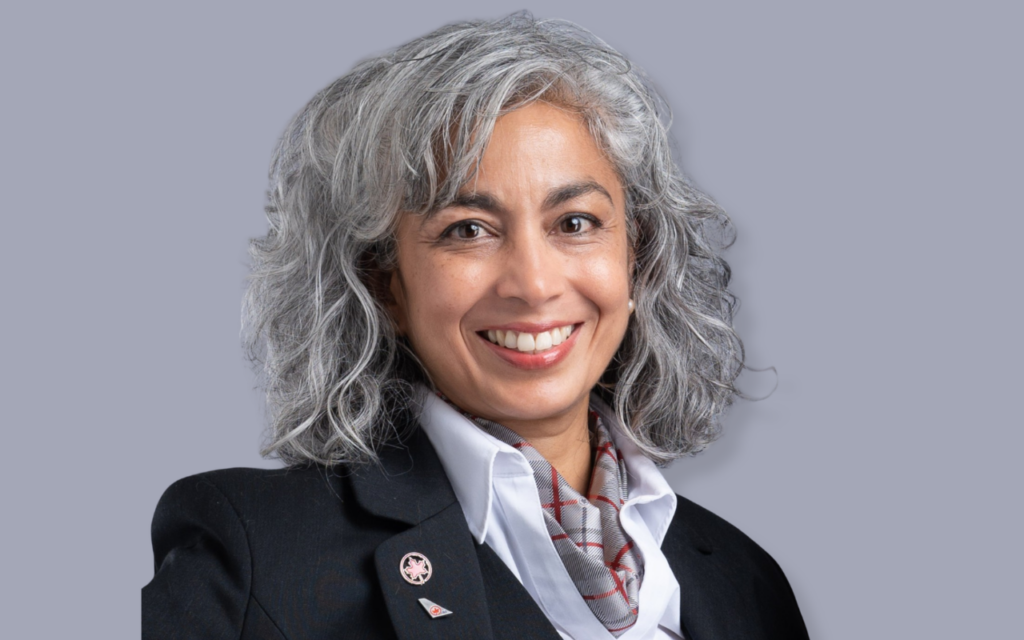


Jennifer Stewart: You started at RBC when you were just an undergrad at Wilfrid Laurier. When you first walked through the doors of the bank, did you ever think you’d build an entire career there?
Michelle Waite: Honestly, no. But I was young and didn’t realize what companies could really offer. It’s hard to believe, but a few weeks ago I celebrated my 25 years with this incredible organization.
Looking back, when I joined, I was really excited about getting a job. What I learned is that RBC offers a career, not just a job. I was doing the math the other day, and over those 25 years I’ve had 11 different jobs.
While I started off in the branch, or retail network as some people know it, over the years I’ve had the opportunity to work in strategy, enablement, human resources, business banking, commercial banking and so much more. That’s turned out to be one of the tremendous benefits of working for a very large organization.
Catherine Clark: What did you learn about yourself in that first role? And as you’ve navigated so many different responsibilities, what has that journey taught you?
Michelle Waite: That’s a great question. There are so many things that first role taught me, but a few really stand out.
First of all, working in the branch network is truly foundational, and I think it’s helped me in every role I’ve had since. It taught me communication, collaboration, critical thinking, financial acumen, problem solving, and really how humans interact. I use those skills every day, not just at work but in real life. They’ve actually made me a better human.
The other thing I learned was how rewarding it is to help clients thrive – whether that’s buying their first home, saving for their child’s education or retiring when they thought they couldn’t. That sense of contributing to something bigger, while helping people achieve important milestones, showed me how satisfying it is to have a higher purpose.
I also learned how rewarding it is to give back to the community. When you work in the branches, and certainly at an organization our size, you volunteer countless hours to causes that matter to you. Seeing RBCers rally together for community prosperity is incredibly satisfying. It’s a wonderful way to pay it forward.
Jennifer Stewart: What does it mean to work with people during those pivotal moments in their lives, like buying a first home or preparing for retirement?
Michelle Waite: I think there are a couple of things there.
When I started, I was supporting clients through experiences that I hadn’t gone through myself. I joined the organization as a summer student while I was still in university, so I hadn’t bought my first home, had a mortgage or started saving for children.
The learning curve was quite steep, but those experiences helped me understand what clients go through and how they move through different stages of life, and how we, as a financial institution, can support them.
Once I experienced those milestones myself, like getting my first mortgage, it certainly made me a much better banker because I had first-hand knowledge of what clients experience. That’s just part of the evolution. Moving through life’s different stages makes us better people and, in my case, a better banker.

Catherine Clark: You’ve progressed into leadership over the years. How has your leadership style evolved?
Michelle Waite: Leadership certainly isn’t for the faint of heart. It requires effort. I think a lot of people want to be leaders for the title or the paycheque without realizing what they’re really signing up for.
One thing I’ll say is that RBC has an amazing culture. It’s hard to describe unless you’ve worked here. We’re a purpose- and values-driven company with a very clear vision. That clarity is really important because people understand what’s expected of them and how to succeed.
One thing I learned early is that leadership isn’t about your title. Even as an individual contributor, there were opportunities to lead by mentoring others, being curious and learning from the people around you.
I also grew up in sport, which helped develop those leadership qualities early on. So when I got my first leadership role, while there was certainly a steep learning curve, I felt I already had some qualities that helped me succeed.
Jennifer Stewart: How has your definition of success changed over the years?
Michelle Waite: My definition of success has changed, but it also hasn’t. I think it’s evolved more than anything.
Growing up in sport, I learned to define what exceptional looks like. In sport, you always have clear goals and milestones, and understanding what exceptional looks like – not just meeting expectations – has really shaped how I’ve approached every role I’ve had at RBC, even when I was still training or working as an individual contributor.
One thing I learned very quickly was the importance of being resourceful. One of the best ways to be successful is to be curious. Find out what the best of the best are doing, engage them, leverage the people around you, and learn from them. I still learn so much from my colleagues and our clients every single day.
The other thing I’ve had to work on is perfection versus success. In sport, you strive for perfection because it feels more controllable. Some people would say success is an outcome, whereas perfection is a pursuit.
Over the years, I learned to measure myself by the quality of my effort and execution, not just the result. That became even more important in leadership because the highest-performing teams pursue excellence. They learn quickly, they’re agile, and they measure themselves by progress and impact rather than flawless execution.
That’s what I mean when I say my definition has evolved rather than completely changed.
Catherine Clark: You mentioned growing up in sport. What was your sport, and how do you think it helped shape you as a leader?
Michelle Waite: I grew up in competitive figure skating from a very young age.
People often think of figure skating as an individual sport, but there’s definitely a team aspect to it. You rely on your coaches, of course, but also on the people around you who push you every day to become the best version of yourself.
When you’re training in a highly competitive environment, you’re constantly seeing what’s possible through other people. Those are lessons that have stayed with me.
Jennifer Stewart: Do you still skate?
Michelle Waite: I try. It’s been many years since I left the sport, but I still like getting out on the ice with my family once in a while.
Jennifer Stewart: If every woman listening today remembered just one mindset shift from your journey, what would you want it to be?
Michelle Waite: There are a few things, but maybe I’ll start with something I really think women need to stop ignoring.
Being a woman in business and senior leadership is hard. There are things we still have to tell ourselves every day just to get through. That’s unfortunately still the reality.
We’ve all heard advice like fill your own cup first, be kind to yourself and know your worth. But something that truly changed my life about two years ago is what I call “No GRR” – no guilt, no regrets, no resentment.
It’s probably the best advice I can give women because I think we should apply it to every decision we make. We’d say no more often. We’d delegate more. We’d ask for help more. We’d probably sleep a whole lot better because we’d be carrying less stress.
There have been so many times in my career when I’ve said yes and ended up with guilt, regret and resentment. Those are three of the worst feelings in life.
Now I think about “No GRR” before I say yes. It’s still a work in progress, but it’s allowed other people to step up in meaningful ways while freeing me to focus on the things that matter most.
Catherine Clark: Did you used to believe you had to do everything to be successful, and have you since realized you can let some of that go?
Michelle Waite: Oh, 100%.
Visibility was probably the biggest thing. I felt like I had to be everywhere and there for everyone, and my boundaries became pretty blurred.
To be transparent, many of the businesses I grew up in were very male-dominated. I often felt left out of the water cooler conversations, the sports discussions or the networking that happened on the golf course because I didn’t know how to golf.
There have been so many moments where I said yes because of that. Looking back, every one of those experiences became a learning opportunity that has made me better today.
Jennifer Stewart: Many women struggle with confidence or imposter syndrome. How did you learn to trust your voice and instincts?
Michelle Waite: Be prepared. Know your audience. Practice what people might ask.
Another thing that’s really helped me is getting input from other people before I go into a meeting or presentation.
And again, this goes back to sport, but learning how to control your breathing to bring your heart rate down and reduce anxiety has made a big difference.
Someone told me very early in my career that anxiety comes from an unprepared mind and mouth. That has really stuck with me.
The more prepared we are, the more comfortable we become, and practice really helps.
Catherine Clark: What habits or routines help you feel grounded?
Michelle Waite: There are a few things.
An executive coach once taught me the 10-second rule. I’d literally turn my chair around to face the wall or the window and count from one to 10 through breathing exercises, then back down to one. It was a way of resetting between meetings when there wasn’t time to go for a walk or clear my mind.
I also think boundaries are incredibly important.
For example, I keep my laptop, iPhone and Teams notifications on mute all the time. My family knows they’ll probably get my voicemail because I don’t keep my phone on ringer. I’ve learned I’m not very good at multitasking. I’m much more productive when I focus on one thing at a time.
I also try to tackle the most mentally demanding work first thing in the morning. It’s much more liberating when the hardest work is done early, but that also comes from understanding when you work best. I know I’m a morning person.
I also really try not to send emails after 6 p.m. If something is urgent, of course I’ll respond, but I try not to send messages to my team in the evenings because I want to respect their time with their families.
Finally, I think it’s important for women to set personal goals and reflect on them regularly – not just work goals, but life goals too. Whether it’s getting workouts in, eating dinner with your family four nights a week or something else entirely, we need to write those things down and hold ourselves accountable.
If we don’t protect our time, we don’t protect our mental health.
Jennifer Stewart: Outside of titles and accomplishments, what makes you feel the most powerful, grounded and fulfilled?
Michelle Waite: I’d say two things.
First, helping people reach their full potential by helping them grow.
Second, overcoming challenges. I think I’m a very determined person, and I’ve learned so much through facing obstacles and figuring out how to overcome them. It shows how resilient women can be, how we navigate uncertainty and setbacks, build trust with others and persevere through determination.
Catherine Clark: Finally, financial resilience is such an important part of women’s independence. What’s your biggest piece of financial advice?
Michelle Waite: First of all, know your finances, even if you’re married or partnered.
I’ve seen so many situations with family, friends and clients where it’s so important that women understand all of their accounts, debt, insurance policies, investments, passwords, retirement savings, education savings – everything.
And once you know your finances, make sure your money is working hard for you. Make sure your money is working as hard for you as you work for it.