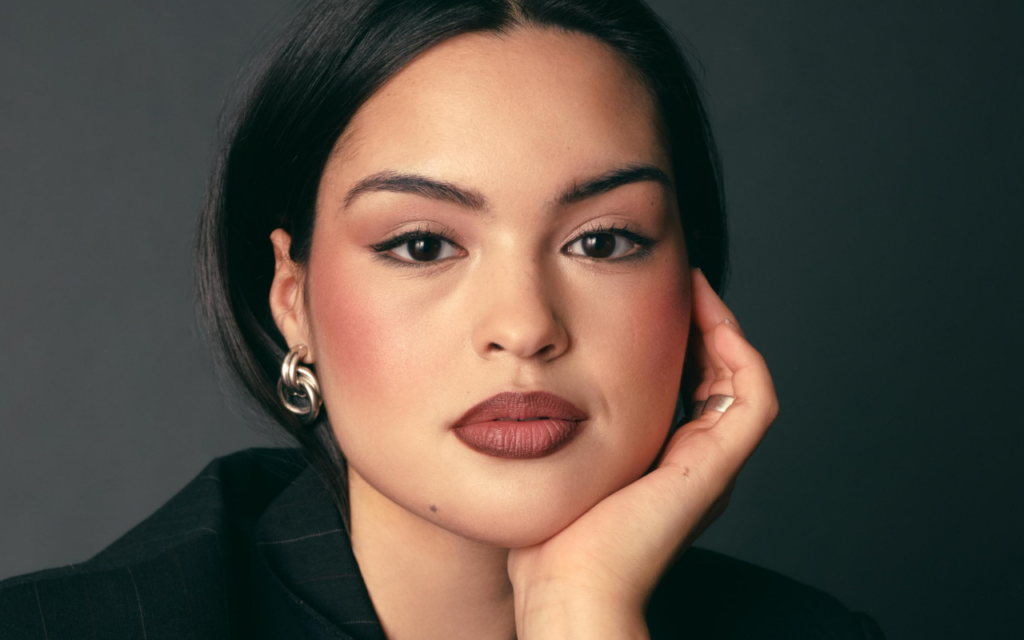
When Anna Lambe landed her first acting gig in the 2018 film The Grizzlies, she didn’t go into it thinking she wanted to be an actor.
“It sounded fun to me,” she said of the role, for which she later received a nomination for the Canadian Screen Award for Best Supporting Actress. “But the industry was so far removed from anything that I understood about work and life and what’s possible… I didn’t know what I didn’t know.”
Originally encouraged by her high school drama teacher to take the audition, Lambe, who was 15 at the time, says she really enjoyed the experience and felt “fulfilled by the power of storytelling and getting to connect with people.”
But it wouldn’t be until two years later during her time filming the TV series Trickster – her second breakout role – that things would start to click.
“I remember thinking, ‘I really like this, and I think it likes me…maybe this is what I want to do,'” Lambe said, smiling. “And that was seven years ago.”
Now, the Inuk actress is making waves yet again as one of the stars of Netflix’s North of North, a sharp comedy set in the fictional Arctic community of Ice Cove. The show is funny, stylish and full of life, but for Lambe, who grew up in Iqaluit, Nunavut, it’s a real opportunity to bring people into the heart of Northern communities.
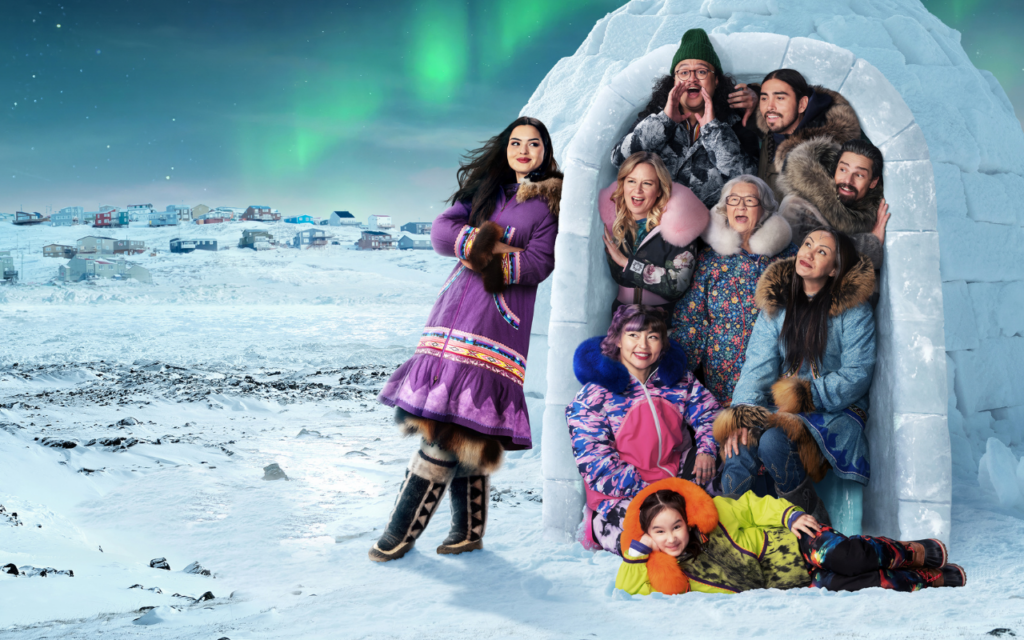
“Stories that reflected my community as it was living and breathing were so rare. A lot of the projects that got approved or that got the funding were based on what an outsider wanted to see of the North or how an outsider understood the North,” she said. “Even growing up, so many [Indigenous] stories, shows and movies were centred around trauma, around violence or addiction.”
It’s a problem Lambe says exists across a lot of Indigenous programming. While those stories are incredibly important to tell, people often expect Indigenous shows or movies to be educational or to focus on a part of history. It’s a reality, she says, other mainstream productions never have to face.
“It’s expected that we perform our trauma, that we educate, that we are only allowed to be depicted in ways that outsiders understand us and not how we understand ourselves. That autonomy and that narrative sovereignty is something that so many Indigenous storytellers are really taking and running with,” said Lambe. “What’s been so great, and what I’ve loved so much about doing North of North is that we talk about the issues that exist within our community, but the pressure of educating isn’t on us.”
Telling women’s stories
With a female creative team behind the show – writer and producer Stacey Aglok MacDonald, filmmaker Alethea Arnaquq-Baril and executive producer Miranda de Pencier – Lambe says that freedom is also extended to the women on the cast.
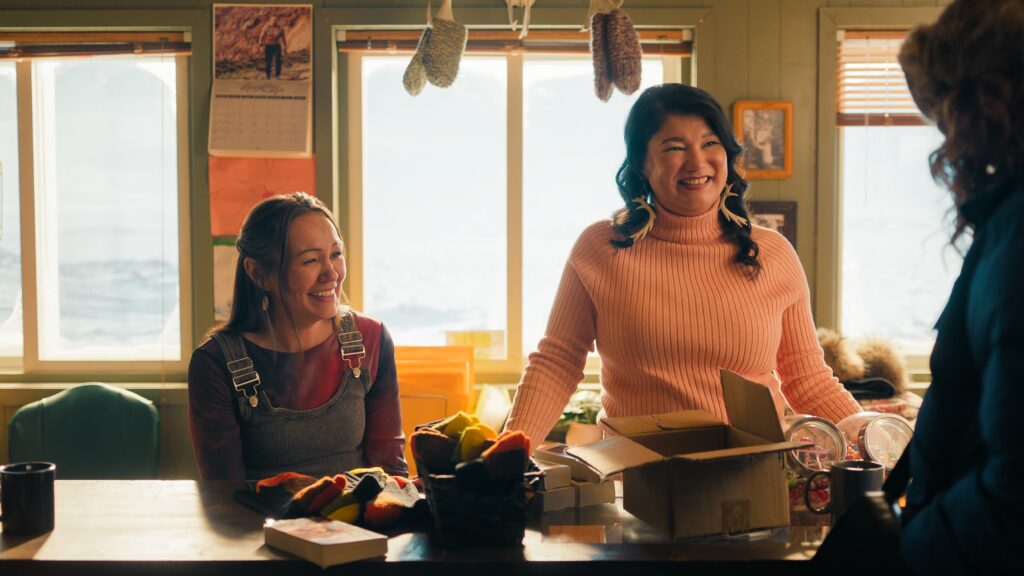
She says the characters feel like women we all know and love, with complicated, messy lives, but who are real people at the end of the day. While some in the industry shy away from a female lead for fear of her being “unlikable or annoying,” the North of North team is doubling down.
“Getting the opportunity to be angry, to be ambitious, to be loving, to be sexual…these are things that female characters so rarely get to be on television,” said Lambe, who plays Siaja on the show. “Getting to do all of that and having so much support… it just feels inherent and natural and reflective of who we are.”
There’s also something familiar in the women Lambe sees on the show. She grew up surrounded by women with strong personalities and a strong sense of who they were, including her mother, her aunt and her great-grandmother, a survivor of the relocations in Northern Quebec.
“Inuit women are often the leaders in our community, so I grew up around women who were so themselves – strong beliefs, strong sense of self, knew what they wanted,” said Lambe. “I have such a strong foundation where I don’t feel like I need to chase a version of myself because I watched women who grew, who let themselves change and be changed by life and became better versions of themselves.”
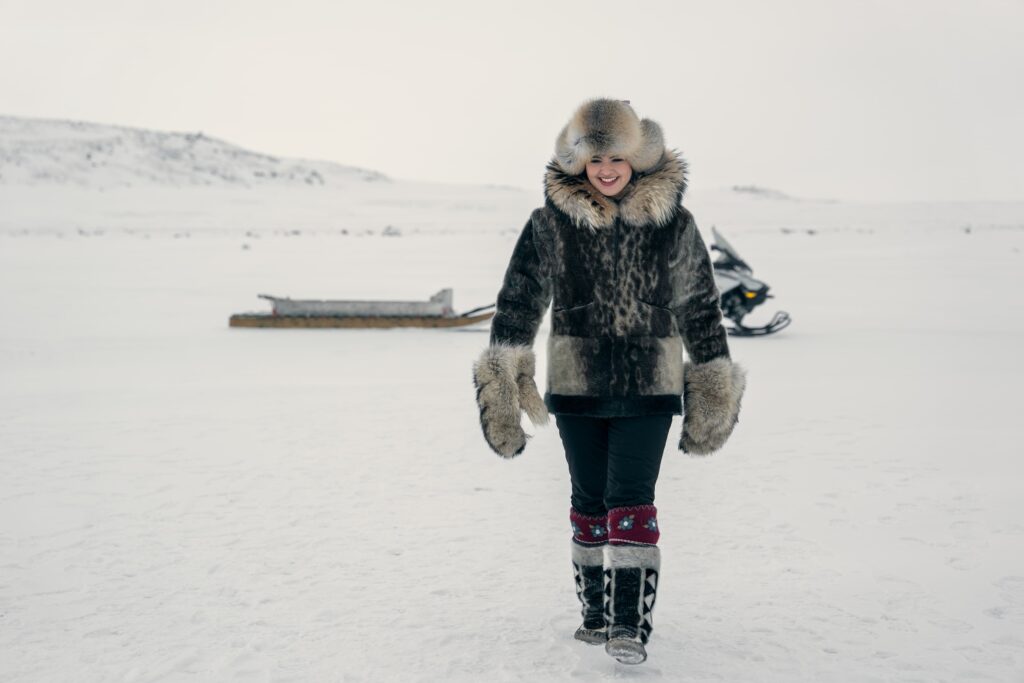
That sense of individuality shows up in the way the women dress, too. Fashion is a big part of the show, from the bright colours and oversized furs to the mix of contemporary clothing and traditional Inuit styles.
For Lambe, who has always loved fashion herself, it was another way the show could challenge assumptions about what life in the North looks like.
She even arrived at the season one read-through wearing her mother’s black parka with blue fur, a piece that had been in her own collection for years. The production team immediately noticed it and wanted it for the show.
“I was really excited to incorporate that into the season,” Lambe said. “I think fashion adds so much to the storytelling and it’s just so fun, and you really get a sense of the different characters based on the different things they wear.”
Finding the balance
For all the attention Lambe has received for the characters she plays and the communities she represents, acting has also changed the way she understands herself.
When she left her studies at the University of Ottawa to film Trickster, she was stepping away from the path she had always assumed she would follow. She was studying international development and globalization and had grown up believing school would lead to a career.
“It was really scary at first to deviate from that,” she said. “There was so much that was unknown to me at the time.”
Looking back now, she says acting ended up giving her a very different kind of education.
“I got so much life experience outside of academia,” she said, pointing to the many opportunities she has had to travel and meet new people. “I really feel like I’ve gotten to know myself in the time between jobs. You also learn so much about yourself in the way that you approach a character or a story, and finding the empathy and the relatability and the heart of it all…
“But I do really need to finish that degree,” she laughed.
That growing self-awareness has also changed the way Lambe approaches advocacy. She has been outspoken on issues like Indigenous rights, 2SLGBTQ+ issues or mental health – something she attributes back to the women in her family – but becoming more public has made her more conscious of the position she occupies and the responsibility that comes with it.
Growing up in Iqaluit, she recognizes that she had access to opportunities that other people in the North did not, including education and the chance to travel. She also grew up in a stable two-parent household. As she has become more visible, she says she has had to think more carefully about how she uses that privilege.
“Getting a little bit older, I’ve realized how careful you have to be about how you talk about things because language is really important,” she said. “How to advocate without centering myself, and when is the time to say something, and when is the time to empower somebody else whose voice I think is more appropriate for a cause is definitely something I’m working on.”
Lambe admits she’s also faced her fair share of scrutiny, which can get scary at times.
“People have said really horrible, horrible things to me, and have treated me as a target in the past, which has also created a bit of fear and anxiety,” she explained. “So I am more cautious these days.”
But despite the difficult parts that come with being public-facing, it hasn’t changed how much Lambe loves the work. If anything, with Season 2 of North of North now out, and a busy year ahead, she sounds more energized than ever about where her career and Indigenous storytelling can go next.
“There’s so much happening right now,” she said. “I feel like we’ve really marked a new period, and it’s just going to keep growing and blossoming from here.”