
When was the last time you looked at the ingredients list on a box of condoms?
For most of us, the answer is probably never. And for a long time, Rachael Newton hadn’t either.
That all changed when she started thinking more about the products women use for sexual wellness and realized how little most of us know about what’s actually in them.

Part of the problem, she discovered, is that brands aren’t required to list the ingredients on their condom packaging, and many condoms contain ingredients like spermicides, artificial additives/scents, phthalates and numbing agents, which can be irritating for some women and cause real issues when it comes to sex.
“It’s often thought that that’s the trade-off when you use condoms… you just have to deal with this irritation,” she explained. “We as women need to reset the baseline of our expectations. The baseline shouldn’t be that if we want to have safe sex, you have to suffer through discomfort.”
So Newton began thinking about whether there was a better option, and eventually created Nixit condoms, which are gluten free, free from harsh chemicals, parabens or UTI-triggering irritants, come lubricated with pure silicone oil, are pH-balanced, and are marketed specifically towards women.
“It’s empowering to use the condoms that are right for your body, and it shouldn’t be shameful or frowned upon,” said Newton, the founder of Nixit, a Canadian vaginal health company. “And actually, if you have a partner that cares about you, they’ll want to use something that isn’t going to irritate you.”
A new brand in the aisle
But Newton isn’t only trying to change what’s inside the condom. She also wants to change the way women see themselves in a category that has traditionally been marketed almost entirely to men.
Walk down the condom aisle, she says, and the packaging tends to look much the same.
“It’s like black, black, blue…” she said. “And it’s all Trojan this, and Max that. It’s entirely targeted towards men and, let’s be honest, their pleasure.”
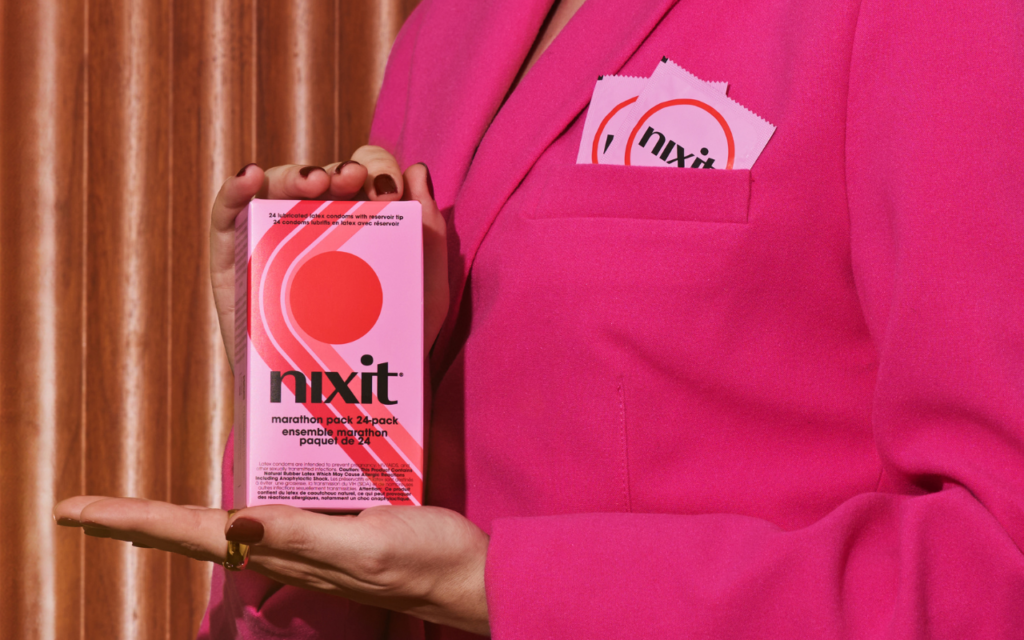
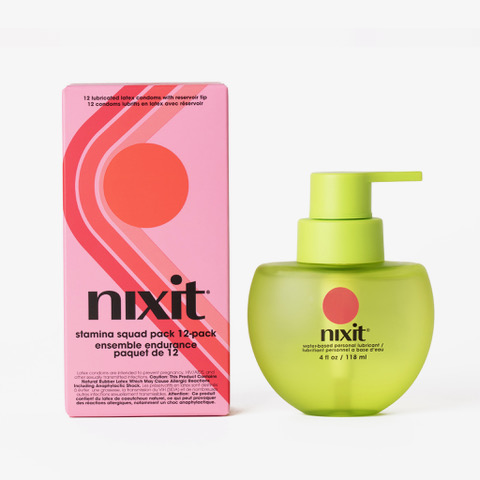
Nixit’s packaging is pink and bold, and clearly lists the ingredients on its “vagina-friendly” condoms. It’s another way Newton says the brand is pushing back against some of the stereotypes that have long surrounded the category.
“Historically, when men carry condoms, they’re seen as very responsible. But when women carry condoms, they’re slut shamed,” she said. “We want to take that power back, and hopefully encourage women to also feel empowered to have conversations with their partners about what is pleasurable to them, what is not pleasurable, what’s irritating, what isn’t. That’s only going to make the whole experience better.”
The company has also been intentional about getting the products into places where women are already shopping. Their lubricant and condoms recently launched in nearly 400 Loblaws locations, while the condoms are now in nearly 2,000 Walmart stores in the U.S.
For Newton, seeing Nixit on the shelves of major retailers is a significant milestone for a self-funded company entering a category dominated by familiar names. She says larger retailers are making a bet on a product that looks different, is marketed differently and is asking consumers to think differently about something they may have always bought without much thought – which can be challenging.
But luckily for Newton, this isn’t the first time she has disrupted the old ways of doing things.
Canada’s first menstrual disc
In 2018, she first had the idea for Nixit. At the time, Newton was living on a Caribbean island with her young children, where there was no recycling and household waste ended up in a huge landfill known as “Mount Trashmore.”
She was already thinking about the amount of waste her family was producing, but it was her own period that really got her thinking. A longtime tampon user, Newton learned she could go through roughly 11,000 tampons in her lifetime, all destined for landfill.
“I was like, I’ve got to make a change,” she said.
She started looking into menstrual cups, but found the traditional options confusing. There were different shapes and sizes, and she couldn’t figure out which one was right for her. Then a conversation with a friend about contraceptive diaphragms gave her another idea. Her friend told her that when she used a diaphragm, it could sometimes move higher up without her even realizing it.
Newton began thinking about whether that same concept could work for period care. The result was a reusable menstrual disc that sits higher in the vaginal canal, around the cervix, rather than lower down like a traditional menstrual cup. Cups use gentle suction to stay in place, while discs sit behind the pubic bone without suction.
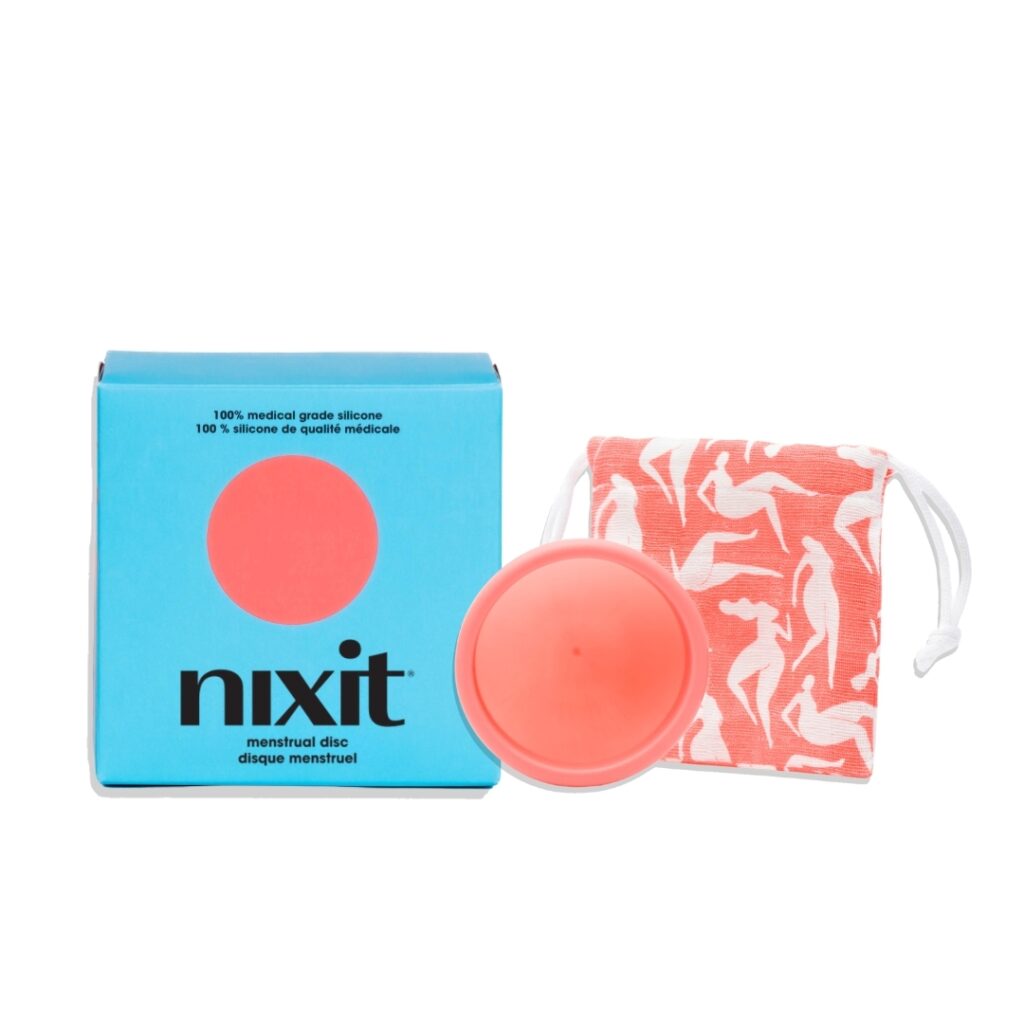
The disc was also designed as a one-size-fits-all product, removing some of the guesswork Newton had found initially so confusing. Its flat, flexible shape also leaves the vaginal canal unobstructed, meaning it can be worn during sex.
Nixit became the first reusable menstrual disc on the market in Canada, which was a real milestone for Newton. And much like the new condom branding, she also wanted to
rethink how period care was presented to women, moving away from what she calls “flowery feminine care.”
“There were just lots of ads of women riding around on white horses, and the aisle just kind of looked the same,” she laughed. “Our packaging is very bold and bright and colourful, and we speak in this non-shameful way about these historically taboo topics. We really wanted to create this unboxing experience for people with beautiful packaging, that people feel excited to buy and pleased to use.”
That approach has stayed with Nixit as the company has expanded from menstrual care into sexual wellness.
And for Newton, that means staying deliberate about what comes next rather than simply adding another product to the shelf.
“We’ve always tried to make our products as sustainable as possible, but also not just launching a product that I think is going to make us a load of money. That would be nice, sure, but we don’t want to launch products willy-nilly,” she said. “We want to be super intentional about it and really think about it. Is there a real need for it, or am I just adding to a whole suite of products that people don’t actually want?”
So far, the response suggests she’s onto something. Newton says customers regularly tell the company how much they love the products, including messages from women who say that, for the first time, they’re actually excited to get to try something new.
That in itself is enough to keep Newton fired up about the future of Nixit and what’s to come.
“This has unleashed a kind of creative part of me that I didn’t really think I had in me, but is the bit that I enjoy the most,” she said. “And to see people respond to and recognize that there is that need in the market for what we’re making, well, it’s really nice.”


Lisa Thibodeau