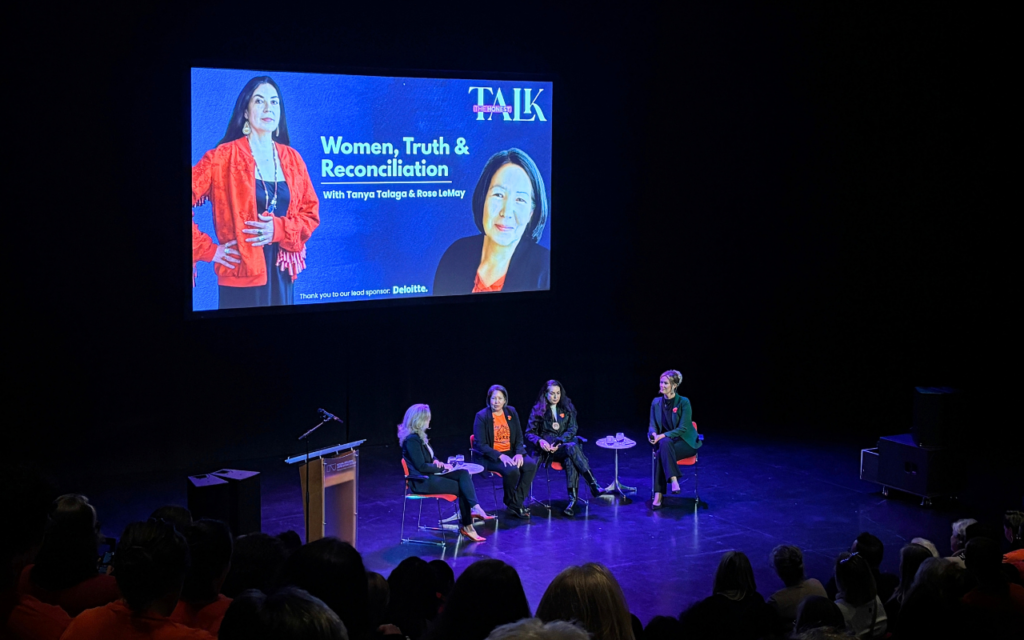
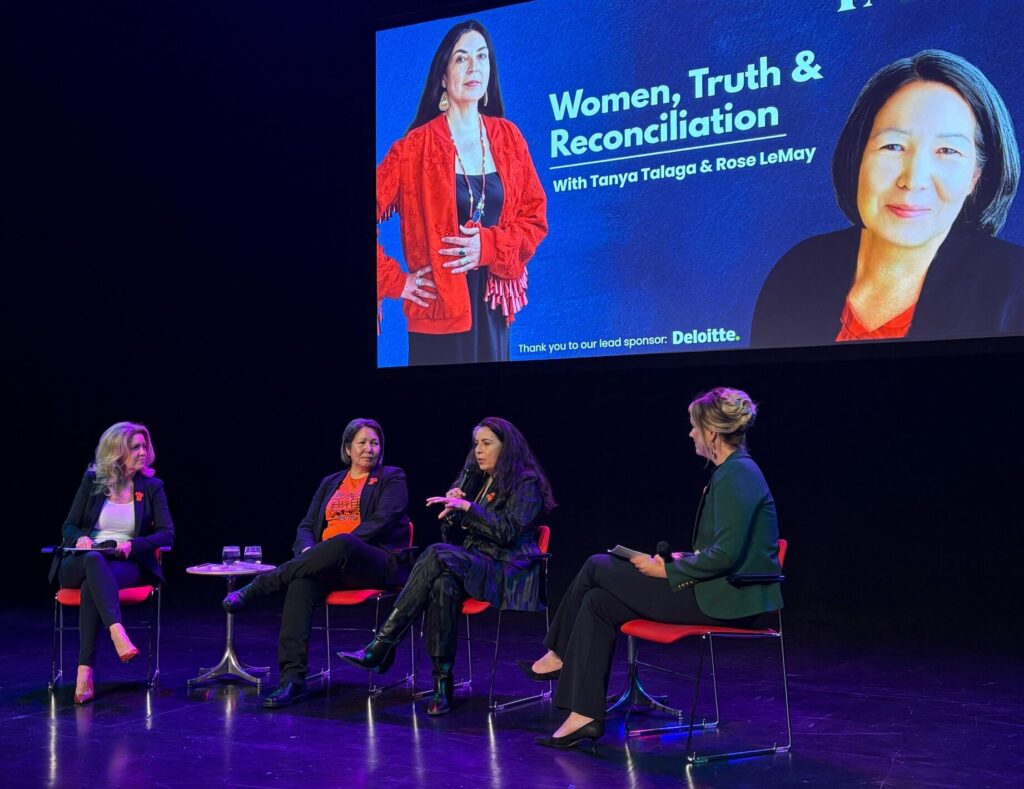
Know the history. Change the systems. Speak up. Those were just a few of the messages running through Wednesday night’s Women, Truth & Reconciliation event, hosted by The Honest Talk at the National Arts Centre.
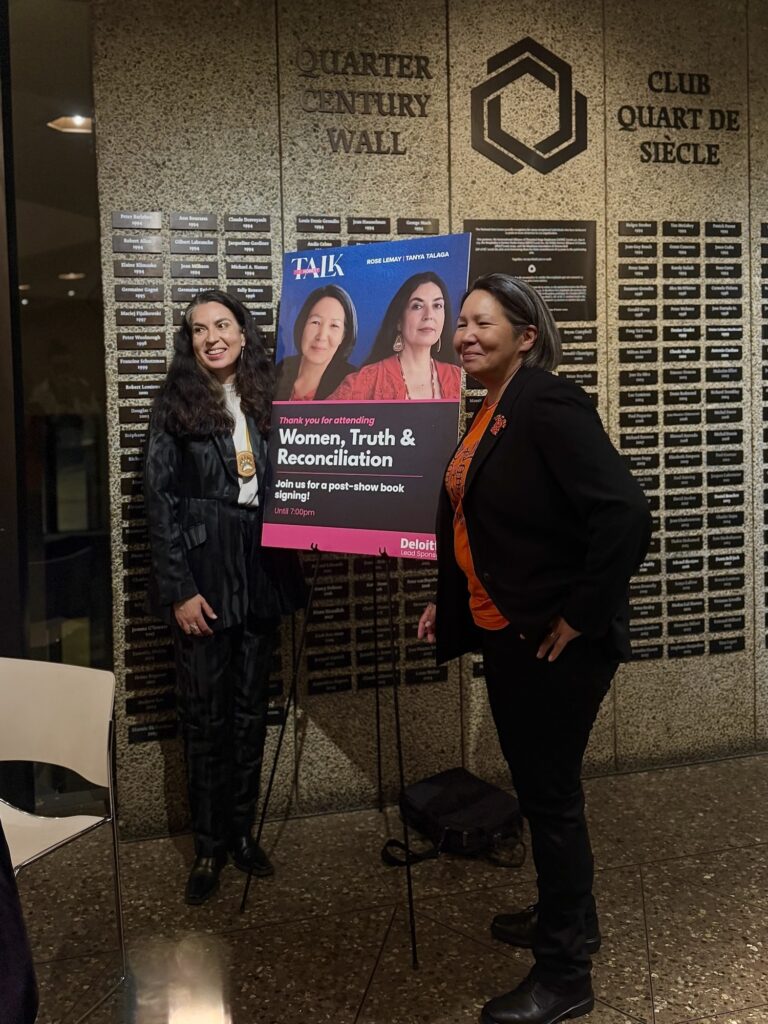
The room was a sea of orange as 300 people gathered to hear from Indigenous leaders, authors and advocates, Tanya Talaga and Rose LeMay, about what reconciliation actually requires – from learning Canada’s history to challenging denialism and pushing for meaningful change.
Sponsored by Deloitte Canada, the event also focused on what happens after the conversation ends: what we take with us, what we talk about with the people around us and what we choose to do next.
For Talaga, that work starts with an honest look at where Canada stands today.
“When I can say I don’t have to write another book about kids having no high school, having no clean water, being sent out – our children are 14 times more likely to be in foster care than non-Indigenous kids – when that is over, I can say that reconciliation is happening,” she explained.
Meanwhile, LeMay kicked off the evening by challenging the idea that progress can be measured by checking off the easiest items first.
“We need to set our standards higher,” she said. “We’re done with the easy. We’re done with the stuff we can measure. What we really need is significant system shift.”
That means changing the systems that continue to disproportionately affect Indigenous people, from child welfare and education to corrections and healthcare.
It also means understanding how we got here.
Both speakers returned throughout the evening to the importance of knowing Canada’s history – particularly for those who never learned it in school.
“The more that you know of history, the more urgent the need for reconciliation,” LeMay said. “I can’t stress this enough.”
Talaga called for education reform that would make Indigenous history a consistent part of the curriculum across the country.
“When the kids are small, they get it. We should have a curriculum right across the board, that talks about Indigenous people, that talks about the Indian Act,” she said. “Even just localize it, talk about the nation that your school is on.”
For Talaga, that education should go well beyond a textbook. It can mean learning about the people and communities where we live, bringing Elders into schools and broadening what Indigenous history looks like in the classroom.
“It’s not just history, like Canadian history,” she added. “It’s cooking. It’s music. It’s sports. It’s everything. Broaden your horizons, and that is how we bring change.”
And then there’s the question of what we do with what we learn.
The conversation turned to allyship and the moments when speaking up can feel uncomfortable – particularly when we see racism, misinformation or denialism around us.
“Say something,” Talaga said. “We have to say something because our kids are dying.”
LeMay’s advice was just as direct: “Don’t let the fear and the discomfort stop you.”
Being an ally, she said, doesn’t mean having the perfect words or knowing exactly what to do every time. Sometimes it starts with simply stepping in.
“It doesn’t need to be the masterclass mediation response,” LeMay said. “Simply stepping in and using your physical stance makes a big difference.”
There was also plenty of hope in the room.
LeMay pointed to the growth of Indigenous leadership across Canada over the past decade, while Talaga spoke about the younger Indigenous women she sees stepping into positions of influence.
“We would not have Indigenous journalists all across the country. We would not have Indigenous politicians at all sorts of levels of government. We would not have Indigenous doctors, Indigenous nurses,” LeMay said. “That all has come into being in this country in the last literally 10 years…and we weren’t even trying very hard. What would happen if we actually tried?”
But hope, both speakers made clear, doesn’t mean the work is finished.
As the evening wrapped up, LeMay asked the audience to imagine what reconciliation could actually look like if Canada committed to changing the systems that continue to create inequity.
“Spend some time thinking about your vision for reconciliation,” she said.
“What would it look like if, in 15 years, there was a First Nations baby born in Moose Factory, surrounded by midwives, surrounded by doctors and nurses? What if this child grows up and goes to a great, fully equipped school?
“And what if this child grows up and we have this discussion that, ‘Hey, did you know that one time, Canada used to be really racist?’ And this child has never known it. That’s social change. That’s societal change. That’s changing systems.”
Talaga left the audience with a similarly simple challenge.
“Just stand up to denialism,” she said. “Know the history, listen, and pass that on because it is now your responsibility. You all know the truth. You have to make sure that the next generation carries that forward.”