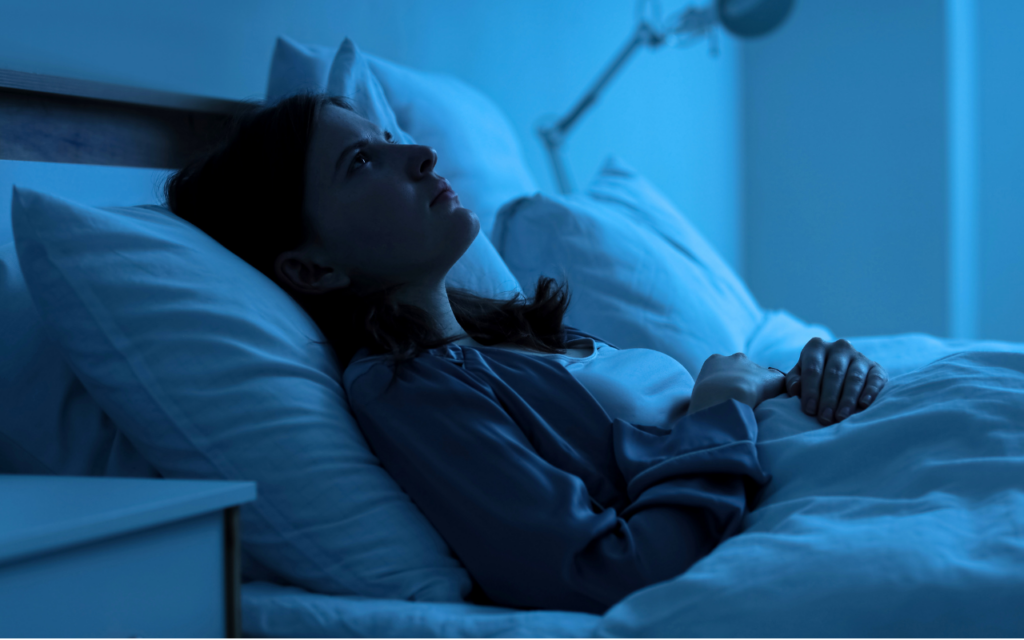
Do you wake up throughout the night or struggle with daytime fatigue? For many women, particularly those going through menopause, these symptoms can feel like just another part of getting older.
While it may seem easy to dismiss, there could be another explanation that’s worth paying attention to, one that can have much bigger health implications if it goes untreated.
Sleep apnea is a condition that can often fly under the radar, particularly in women who may not always recognize the signs or realize their sleep troubles could be connected.
We sat down with Heather Shantora, CEO of Resolve Sleep Health, to learn more about the condition and what women should know about getting tested and finding the right treatment.
So, what is sleep apnea?
Sleep apnea occurs when your breathing repeatedly stops or becomes restricted while you’re asleep, which means your body isn’t getting the oxygen it needs. This is usually caused by a closed airway, which can be attributed to your anatomy or weight, or worsened by things like congestion.
“At any point that your oxygen level drops through the night, that’s considered an apnea,” said Shantora. “There are a lot of misconceptions about it. While it happens at greater instances if you’re 50 and above, it can happen at any age, and to anyone.”
One of the biggest myths about sleep apnea is that it looks the same in everyone. While loud snoring, choking and gasping for breath are symptoms many people associate with the condition, women may experience more subtle changes in their breathing that are harder to recognize.
Shantora says that in some women’s cases, rather than the airway closing and completely stopping oxygen, it simply becomes narrower, restricting the amount of oxygen getting into the body. She compares it to breathing through a straw, with oxygen levels declining until the person changes position or takes a bigger breath.
“With men, it’s breathing…full stop… gasp for breath…keep going. With women, it can often be just slower and slower, and then they’re just not getting enough oxygen,” she said.
The risk can also change as women get older, particularly after menopause. Shantora explains that hormonal changes can cause fat to redistribute around the midsection and neck, creating additional pressure when breathing during sleep, even without significant weight gain.
However, sleep apnea can also trigger changes in someone’s weight and metabolic health. Untreated sleep apnea can disrupt the body’s metabolism, leaving you too exhausted to be active, and potentially contributing to weight gain over time. That can also worsen conditions such as insulin resistance and type 2 diabetes.
It’s entirely possible for a woman who never experienced sleep apnea in her 40s to start developing some of these symptoms after menopause, making it particularly important to pay attention to changes in sleep, she adds.
What should you watch for & what are the risks?
For women, some of the signs of sleep apnea can be surprisingly familiar. Along with fatigue and exhaustion, the condition can show up as insomnia, waking up during the night, morning headaches, anxiety, depression, mood changes, brain fog and low energy.
The challenge is that many of these symptoms also overlap with menopause, making it easy to assume they’re simply part of hormonal changes.
But there’s a much bigger reason not to dismiss them, said Shantora.
When your body repeatedly isn’t getting enough oxygen throughout the night, it puts considerable strain on your cardiovascular system, increasing the risk of high blood pressure, heart failure, stroke and other heart problems.
“Having a good night’s sleep, full of oxygen, is linked to lower blood pressure. Your cardiovascular system doesn’t have to work as hard to pump the oxygen around because you have sufficient oxygen,” she said, pointing out that this is particularly important for women, who already face an increased risk of cardiovascular issues later in life.
In fact, having sufficient oxygen during the night from something like a CPAP machine has been shown to decrease heart attack, stroke, and cardiovascular death risk by 17 per cent.
“Those are enormous statistics,” added Shantora. “Treating your sleep apnea brings some pretty big benefits.”
Testing and treatment
The good news is that finding out whether sleep apnea is behind your symptoms isn’t a difficult process – in fact, you can even do it at home.
While you can still opt for a night in a hospital sleep lab, Shantora says more at-home sleep tests can be purchased through sleep clinics.
Depending on the device, it may involve a sensor worn on your finger or a strap around your chest that measures your breathing and oxygen levels throughout the night.
The data is then reviewed to determine how often your breathing stops or your oxygen levels drop.
If you’re diagnosed, there are a few treatment options, she adds. The most familiar is CPAP therapy, which uses continuous air pressure to keep the airway open while you sleep. Another option is an oral appliance that holds your jaw forward to help prevent the airway from closing.
While CPAP is considered the gold standard, Shantora says treatment can depend on the individual and what’s most comfortable for them.
“Sleep apnea was wildly underdiagnosed for a long time, and some people also don’t want the diagnosis,” she said. “There is still some stigma around it because it’s not always the ‘sexiest’ therapy.”
But as Shantora points out, knowing you have the condition is half the battle. With a diagnosis, women can monitor other areas of their health, including their cardiovascular and metabolic health, and make sure they’re getting the right treatment to manage the condition.
“Knowledge is power,” added Shantora. “So I think determining one way or another is helpful for all women, especially postmenopausal women who are at greater risk.”


Lisa Thibodeau