
Truth and Reconciliation Day is a time to listen to Indigenous voices and make space for stories that haven’t always been heard or understood in this country. And Indigenous women have plenty to tell us – about family, culture, community, land, identity and the realities of living in Canada today.
Those stories can be difficult, and there is value in sitting with that history. But Indigenous women’s stories are not only defined by hardship. They are also stories of humour, love, resilience, creativity, connection and everyday life.
So, if you’re looking to learn more about Indigenous stories this Truth and Reconciliation Day, we’ve pulled together 10 books by Indigenous women that offer different windows into their worlds. Some draw on real histories and lived realities, while others are fictional. Still, they all give us a chance to learn more about Indigenous communities, families and cultures through the voices of the women who know them best.
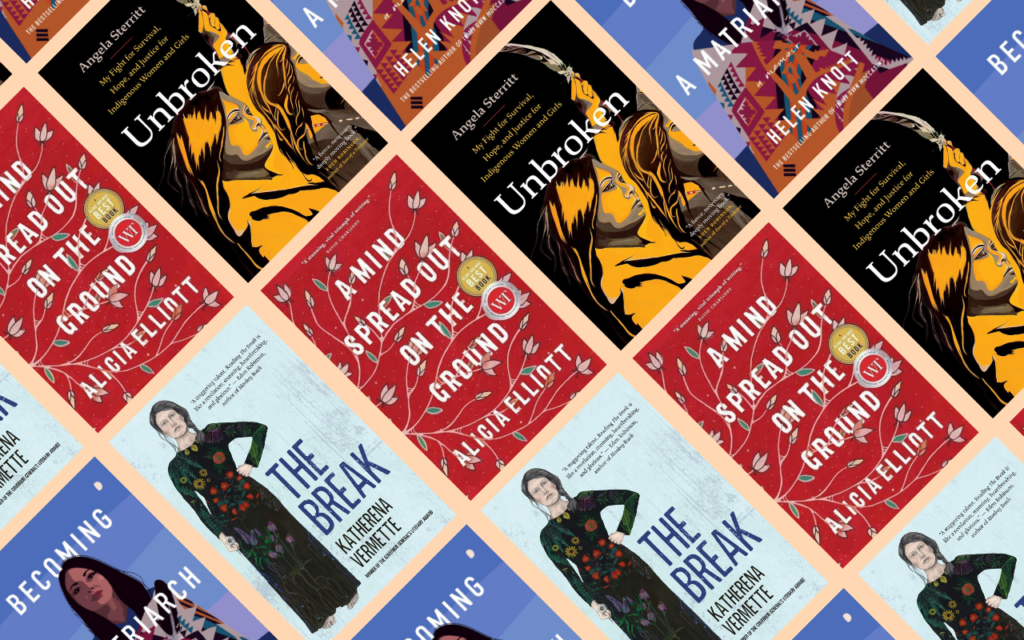
Unbroken: My Fight for Survival, Hope, and Justice for Indigenous Women and Girls — Angela Sterritt
Journalist Angela Sterritt shares her own story alongside those of Indigenous women experiencing homelessness and violence, shining a light on the systems that have failed them and the strength of the women pushing through.
Truth Telling: Seven Conversations about Indigenous Life in Canada — Michelle Good
Michelle Good tackles some of the myths Canadians have been taught about Indigenous people and history, offering a thoughtful look at what we still don’t understand about Indigenous life today.
The Break — Katherena Vermette
Set in Winnipeg’s North End, this novel follows a Métis-Anishinaabe family after a young girl is found badly beaten. Told through the perspectives of several women connected to her, the story explores violence, family, trauma and the bonds that hold generations together.
True Reconciliation — Jody Wilson-Raybould
Jody Wilson-Raybould asks what reconciliation actually looks like beyond apologies and acknowledgements, and what Canadians need to understand about the relationship between Indigenous peoples and the country.
Noopiming: The Cure for White Ladies — Leanne Betasamosake Simpson
Part novel, part poetry, this genre-bending book follows seven Anishinaabe characters living in and around the forests of Nishnaabewin territory. Through their stories, Simpson explores Indigenous identity, relationships, land, colonialism and resistance, blending humour, traditional teachings and contemporary life.
Ally Is a Verb: A Guide to Reconciliation with Indigenous Peoples — Rose LeMay
In Ally Is a Verb, Rose LeMay takes a practical look at what meaningful allyship with Indigenous people actually requires. She explores the gap between good intentions and meaningful action, offering readers a way to think about their own role in reconciliation and the everyday choices that can move it forward.
The Knowing — Tanya Talaga
Tanya Talaga digs into her own family history to trace generations of Anishinaabe ancestors, bringing together stories of family, colonialism, survival and the complicated history that connects them.
Becoming a Matriarch — Helen Knott
Drawing on the women who raised her, Helen Knott traces her family history through generations of Indigenous women, exploring motherhood, grief, land, culture and the responsibilities that come with carrying a family’s knowledge forward.
A Mind Spread Out on the Ground — Alicia Elliott
In this collection of personal essays, Alicia Elliott draws on her own experiences as a Haudenosaunee writer to examine poverty, racism, mental health, family and identity, while tracing how colonialism continues to shape Indigenous lives.
The Right to Be Cold — Sheila Watt-Cloutier
Inuit leader and activist Sheila Watt-Cloutier connects the changing Arctic to Inuit culture, health and human rights, making the case that climate change is also a question of Indigenous rights.