
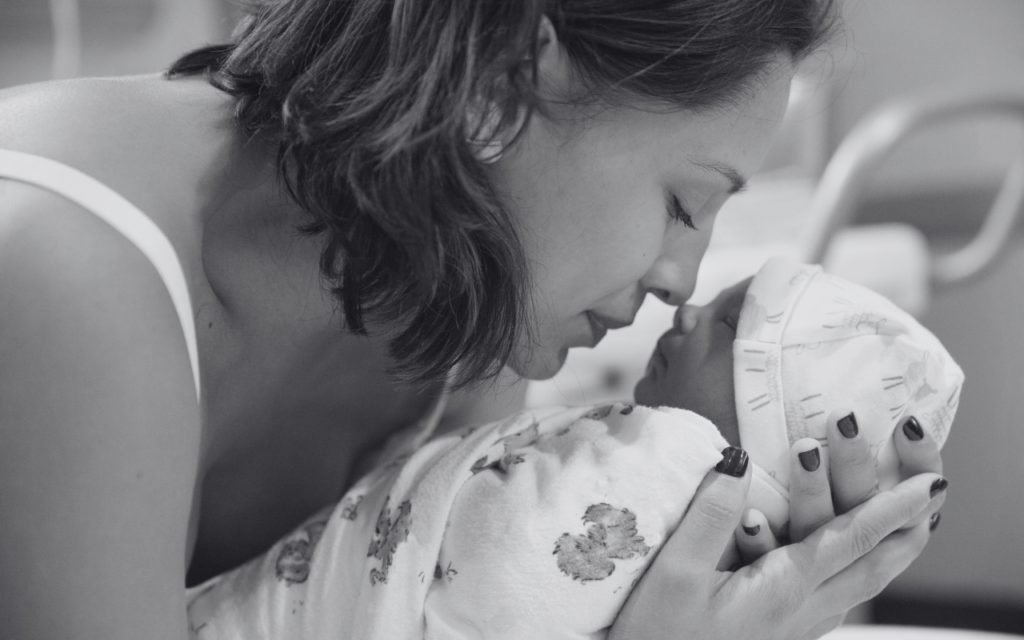
So much of the way we talk about childbirth centres on the outcome: a healthy baby, a sense of relief, and the beginning of a new chapter. But a recent Canadian report suggests that for many women, what happens in between – and what lingers after – is often far more complicated.
Birthmarks: The Cost of Motherhood, released by Toronto law firm Neinstein LLP, took a closer look at what childbirth is actually like for women, examining not just the physical realities of labour and delivery, but the emotional toll as well.
While many mothers surveyed described their births positively, the findings suggest that for a significant number, labour and delivery can also be overwhelming, confusing, and difficult to process.
What moms are scared to share about childbirth
More than one-third of respondents said their most recent childbirth was challenging or distressing. For some, that meant feeling like things unfolded too quickly or unpredictably. For others, it was the sense that decisions were being made around them rather than with them, or that they didn’t fully understand what was happening in the moment.
At the same time, 65 per cent of mothers said they feel social pressure to only focus on having a healthy baby, ignoring what mothers actually go through. Nearly four in 10 respondents also said there is still an unspoken message that childbirth trauma shouldn’t be openly discussed.
That disconnect between lived reality and social acceptance shows up through the report, and it’s something experts say can shape how women make sense of birth long after they leave the hospital.
“Not all birth experiences are the same, and by openly talking about the challenges many women face, we can learn from them and start to provide the support they need during what is an extremely unpredictable and emotionally intense experience,” Olivia Scobie, social work counsellor and educator who specializes in perinatal mood, birth trauma, and parental mental health, said in the press release.
Measuring the mental toll
The report also highlights what can happen after delivery, when the immediate focus shifts to the baby, but the emotional impact of labour can remain with mothers.
Nearly half of the respondents said their childbirth experience affected their mental health. Another 44 per cent said they still feel anxious or emotionally affected in some way.
And in the moments when women did try to speak up, many said they didn’t feel heard.
Over a third said their pain or discomfort wasn’t properly addressed, and similar numbers said their anxiety or fear wasn’t taken seriously. Some also described feeling dismissed, overlooked, or at times pressured into medical decisions.
“Mother’s Day is a time to celebrate the mothers in our lives, but it’s also a time for us to remember what becoming a mother asks of women and the reality of that experience,” added Scobie.
This conversation sits alongside a broader shift already happening in women’s health conversations, where topics like postpartum depression and perinatal mental health are being talked about more openly than in the past.
But as this report suggests, there is still work to do earlier in the story, too; at the moment of birth itself, where many of these challenges begin.


Lisa Thibodeau