It’s easy to think of a business story as starting at the launch – the new product, the early buzz, the moment everything finally goes live. But in food, beverage, and consumer packaged goods (CPG), that’s usually just the beginning.
What really defines success is what comes after: the years of refining, scaling, adjusting, and figuring things out as the market shifts.
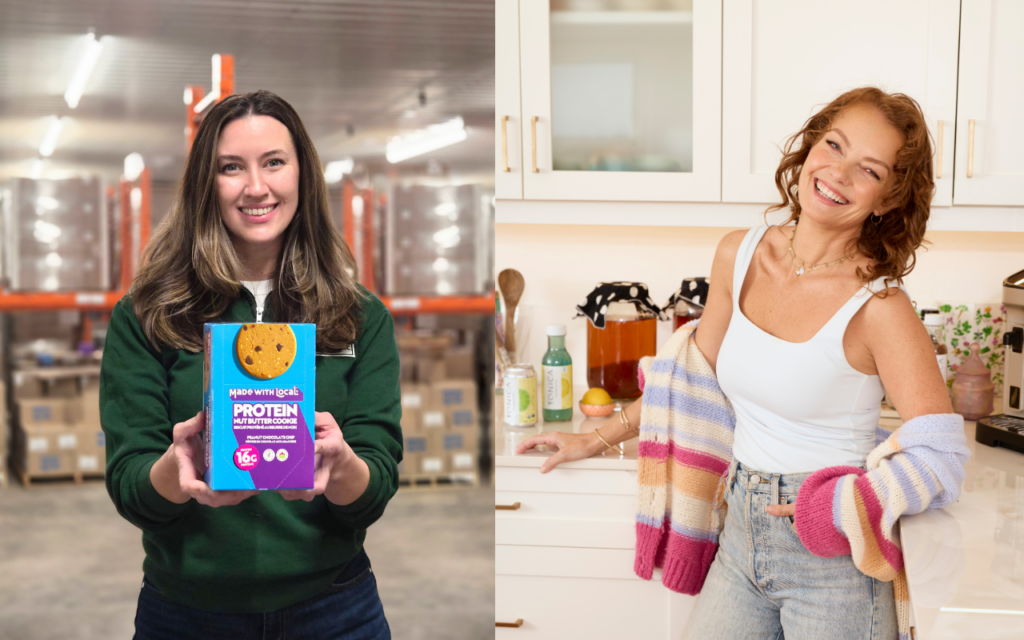
We had the chance to sit down with two Canadian female founders who know that reality well. For both of them, the story isn’t about a single breakout moment, but the long stretch of building something that lasts.
Now, each well over a decade into their respective journeys, both founders are still deep in that work – leading brands that have grown far beyond their early days, and continuing to evolve within an industry that never stands still.
Together, their experiences offer a closer look at what it actually takes to build staying power in the grocery aisle.
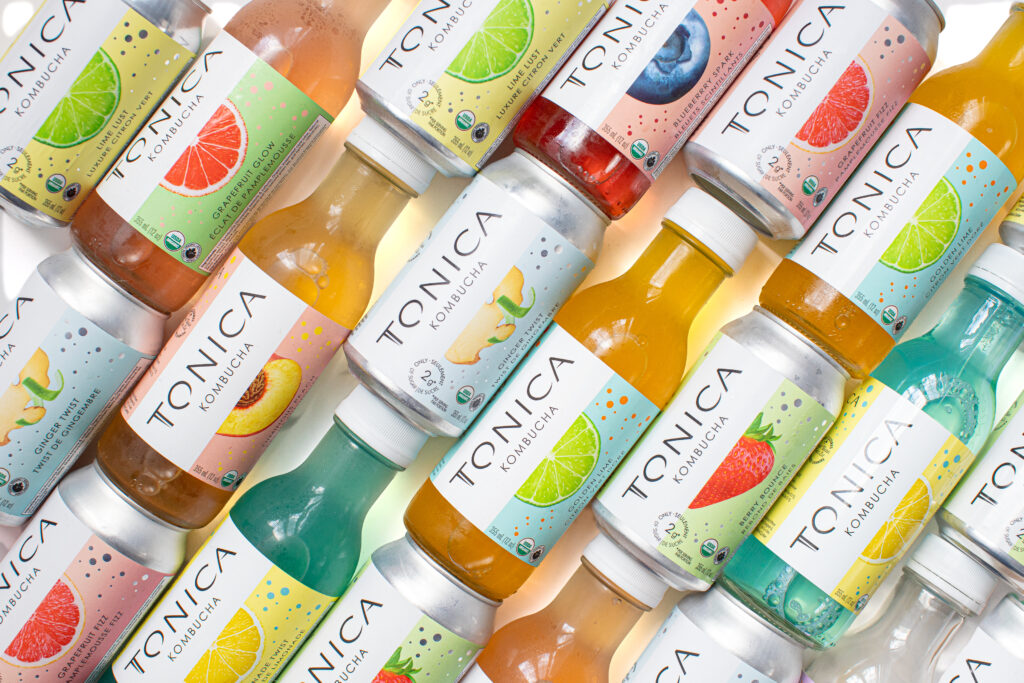
Tonica Kombucha: The first of its kind in Canada

Long before kombucha ever lined grocery store shelves across Canada, Zoey Shamai was delivering bottles by bike through downtown Toronto.
Back in 2006, she started brewing small batches in her kitchen using a culture she brought home from a yoga retreat, sharing bottles with friends and customers at her waitressing job. But it was one repeat customer that made her pause and see a bigger opportunity.
“The first order is great… someone wants to try. Second order means they like it. But the third order is like, okay, this is consistent,” she said. “That was the first time I realized there’s a bigger market for it.”
That early signal would eventually grow into Tonica Kombucha – the first commercial kombucha brand to launch in Canada.
But it wasn’t an overnight success. For the first few years, Shamai kept brewing from her kitchen, slowly building distribution through local health and wellness stores.
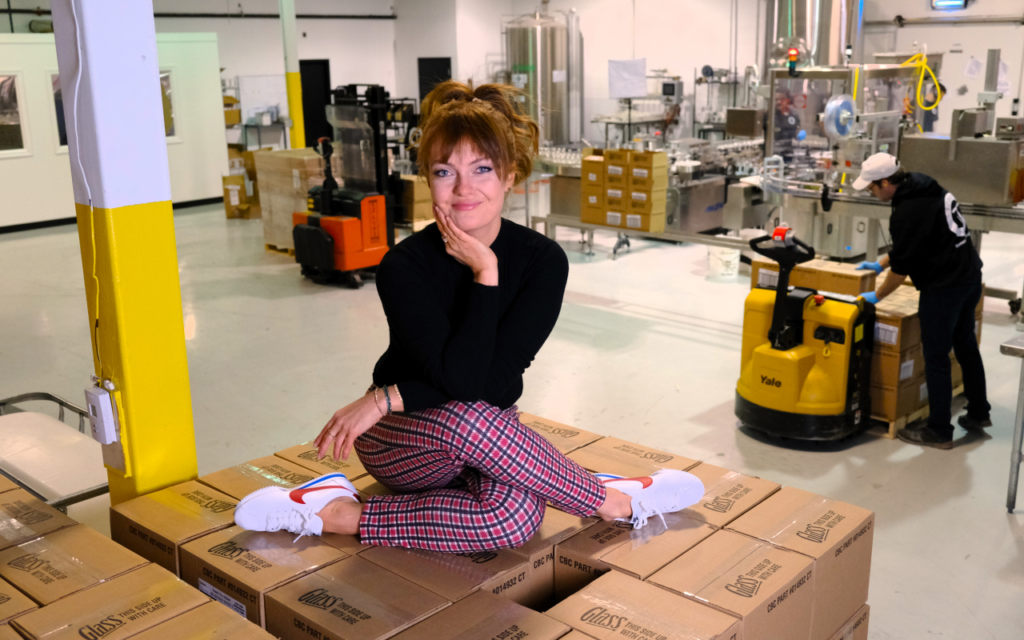
A real turning point came in 2011, when she moved into her first commercial manufacturing facility – a shift she describes as a moment of real commitment to building something lasting.
“It took us four or five years to get to that point, but that was really the moment of, ‘I’m going to fully invest in this,” she said, adding that the brand has since expanded to five facilities.
From there, Tonica began moving beyond independent health food stores into larger retail channels. A national appearance on Dragon’s Den in 2012 helped accelerate that shift, opening doors to grocery and pharmacy chains that had previously felt out of reach.
“After the show aired, that’s when Metro reached out… Shoppers Drug Mart… places I had emailed so many times in the past,” she laughed. “But that was also when something shifted in the market, and these mass market retailers started to look for more health-focused foods.”
Now, 20 years on, Tonica is sold in 2,500 stores across Canada, in a category Shamai helped define – one that has gone from niche wellness product to everyday grocery staple.
But that growth has also come with complexity, from increased competition to what she describes as a wave of “greenwashing” in the category.
“There are products that appear to be organic and natural, and then you look at the ingredient list, or you find out how it’s processed, and then it’s really something quite different,” she said. “And the downfall with that is that it takes away from the people who are in the companies that are doing authentic production, which takes a lot more time.
“It takes us about 30 to 60 days to ferment our starter, which then goes into our larger vats where we flavour and blend. That’s why Kombucha is premium, because it requires a lot of love and attention.”
That level of attention, she said, has required more than persistence. It’s meant full personal buy-in: long hours, and at times, putting the business ahead of everything else.
She also reflects on what it means to build as a woman in the CPG space, from early self-doubt to learning how to occupy rooms that didn’t always reflect her leadership style.
“It’s something prevalent amongst women, regardless of which industry they’re in, which is generally a feeling of imposter syndrome… that you don’t have the skills, you’re not good enough,” she said of her early years as a founder. “I constantly felt like I wasn’t doing what I was supposed to be doing, but I would be doing as much as I possibly could.”
Over time, she says that shifted into a deeper trust in her own instincts.
“I think it’s required a ton of work, a ton of hours, late into the night, on the weekends. But I don’t look at it as a sacrifice. I don’t feel that I’ve lost anything over the years,” she added.
“When I started this company, I had many people question if it was the right move. But I knew it felt right, and I trusted my gut. And look how the tables have turned, because it’s been pretty amazing!”
Made With Local: Telling the story behind the ingredients
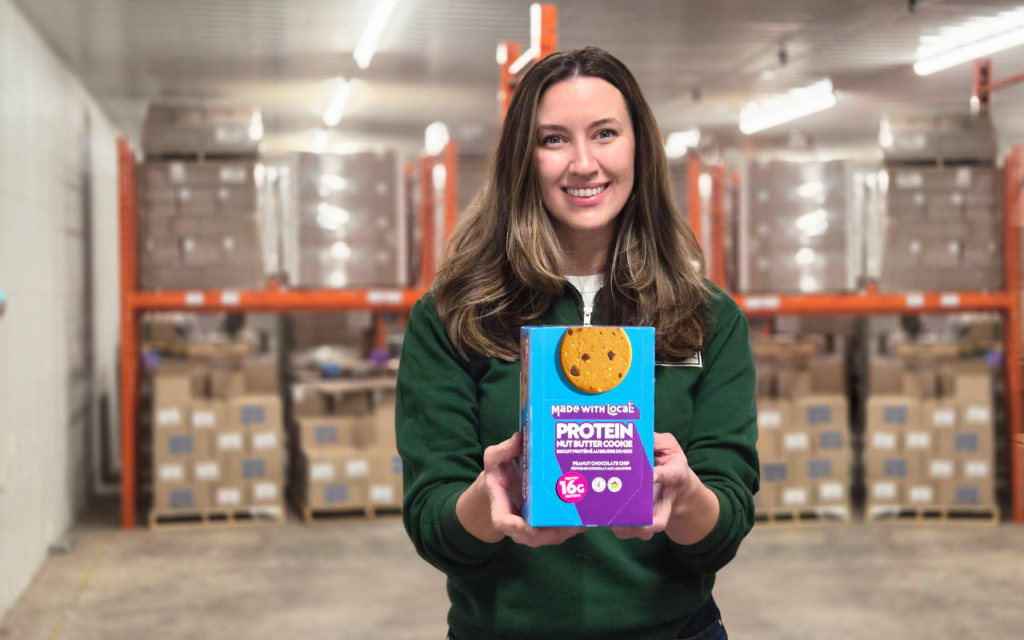
A few provinces over in Nova Scotia, Sheena Russell’s snack brand Made With Local had a very similar start.
Back in 2012, she started bringing homemade snack bars to a local farmers’ market. It was a side project at first, something she was doing alongside a food blog and a bit of kitchen experimentation.
“We just thought, why don’t we try bringing it to the market and see what happens,” she said. “It really started that casually.”
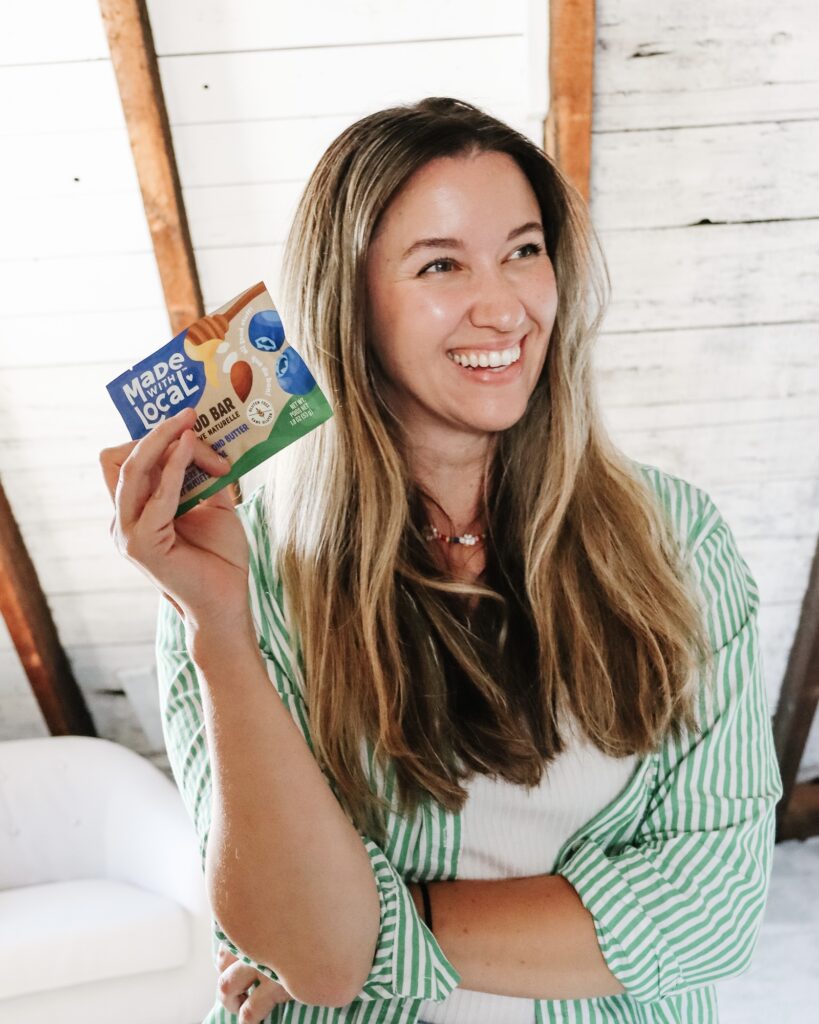
But like so many early-stage food brands, the real signal came from customers. People didn’t just buy once; they kept coming back. And, they started asking questions about where the food came from and who was behind it.
“That’s when I realized I really loved the storytelling side of it,” she said. “Talking to people about farmers and producers became just as important as the product itself.”
At the core of Made With Local is exactly that: a commitment to using Canadian, family-farm ingredients to make its snacks, without the unnecessary additives.
That focus on local sourcing didn’t just shape the brand story; it shaped how the business grew.
Momentum started building in a fairly organic way, Russell said. First came emails from local health food stores and cafés. Then larger retail opportunities followed, including Sobeys’ local program, which helped small producers trial products in select regions.
“A lot of these opportunities just started coming to us, which was really fortunate,” she said. “But it was a lot of baby steps. I always joke that we’re like Taylor Swift… we’ve had a lot of eras.”
One of the biggest shifts came a couple of years in, when Russell became pregnant and decided to leave her full-time government job to focus entirely on the business.
“I can’t have a baby, and a small business that I love, and a full-time job,” she laughed. “So the full-time job got the boot. And that was the moment when I said to my husband, ‘We’re in this now.. we have to make this work.”
From there, distribution continued to expand steadily. Then in 2021, Russell and her husband – who also joined the business – took a major step and bought an 8,000 sq. ft. manufacturing facility in rural Nova Scotia.
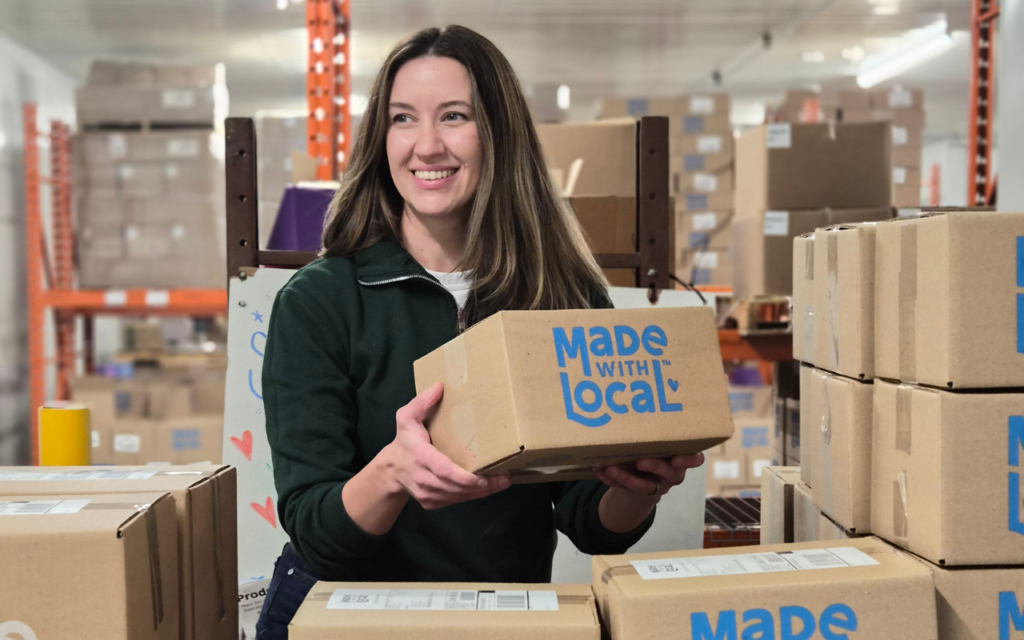
“That was a truly make-or-break time for us,” she said. “But bringing the manufacturing in-house has revolutionized the company and really allowed us to put the pedal to the metal.”
Now, nearly 15 years into the business, Made With Local is in roughly 3,500 stores across the country, with no signs of slowing down.
And even at that scale, Russell says the approach hasn’t really changed – steady growth, close relationships with Canadian farmers, and keeping the ingredient story at the centre of everything.
It’s something she’s deeply proud of, and something that’s taken on an even bigger meaning over time.
“It’s not just about supporting local in this feel-good way,” she said. “It’s about food sovereignty… about actually understanding where our food comes from and what it means for Canada to have more control over that system. It’s something we need to keep thinking about, something we’re definitely passionate about, and we’ll try to continue to be a voice on.”


Lisa Thibodeau