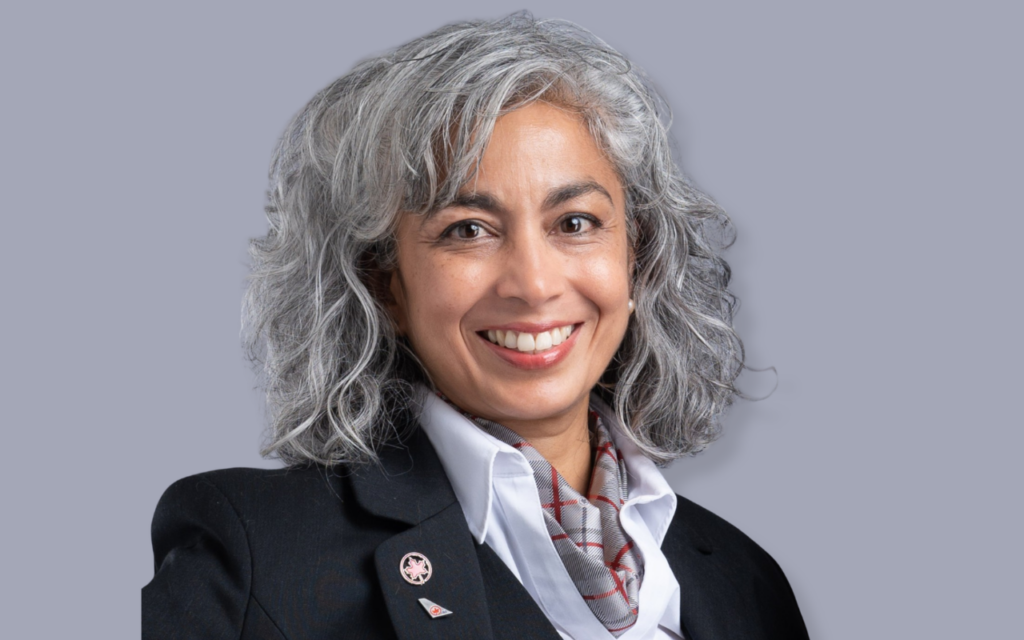
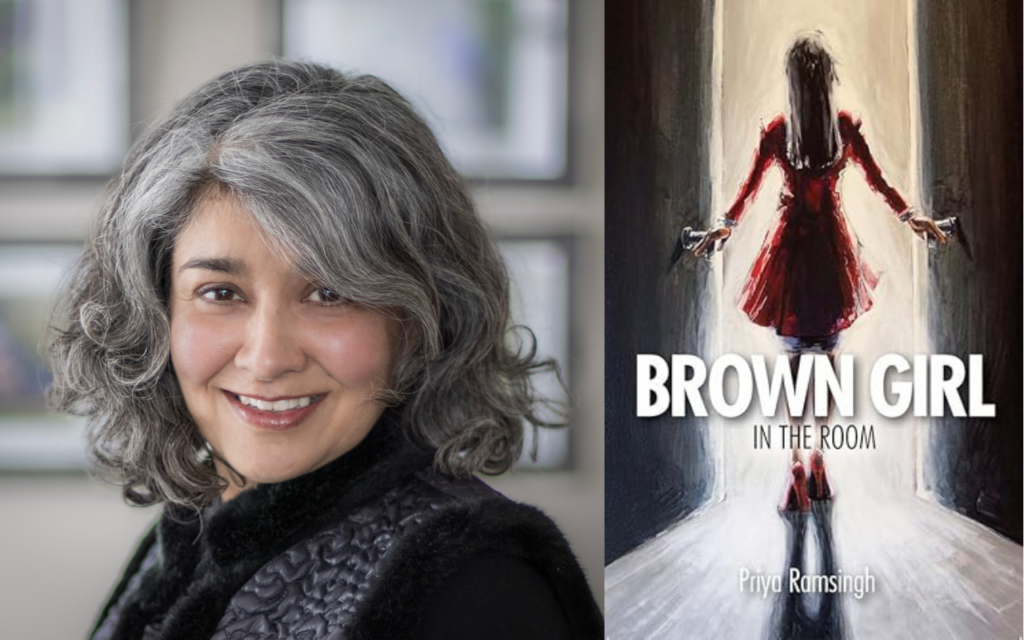
When Priya Ramsingh wrote Brown Girl in the Room, she secretly hoped readers wouldn’t still be seeing themselves in its pages nearly a decade later.
But as the novel is re-released, its themes of workplace discrimination, bias, and belonging still feel as timely as ever.
We spoke with Ramsingh about the inspiration behind Brown Girl in the Room, what has – and hasn’t – changed in workplaces over the past decade, why the novel continues to resonate with readers, and the importance of telling stories that help people better understand experiences that too often go unseen.
THT: Can you take me back to 2017 and talk about the original inspiration for the book and how it came together?
Priya Ramsingh: I had been working in communications for a few years after I graduated from university. I wasn’t expecting corporate culture to be the way it was, and I certainly did not believe discrimination was real. I really, honestly didn’t. I grew up in Toronto, in North Etobicoke, in a multicultural society. I thought, we’re in Canada. I never really felt discrimination among my peers because we were all multicultural.
When I got into the workforce, I started realizing that I was being treated differently, and I didn’t know what it was. It’s not overt; it’s covert. It’s very subtle. I started realizing I was being held back from certain things. Other people were given opportunities, and I didn’t know why. Nobody actually admitted what it was, because people don’t want to admit, “Oh my gosh, it’s because of the colour of your skin or your name.”
I went back through 20 years of experiences – not just mine, but experiences I witnessed, things I saw happen to other people – and I put it all together into this story. I created these characters, and that’s how the book came to be.
I wrote it out of my gut. It’s fiction. The characters are fiction. They’re loosely inspired by people I’ve met, and the story is loosely inspired by real events. I wouldn’t say it’s exactly my story, but it’s made up of snippets from years of watching, seeing, and experiencing this kind of discrimination.
THT: Did writing through a fictional character help you think about those situations differently?
Priya Ramsingh: Yeah, it did a little bit. When I write books, I don’t want the character to be me. I don’t want it to be a biography. Sara isn’t necessarily me. She would do things I wouldn’t do. She’s a little less vocal than I am. She’s more likely to stand back and think, “What’s going on?” I’m a little more bold.
Writing fiction does make me step back and look at situations from different perspectives. It’s also important for me to look at things from the other person’s perspective. I want to understand their motivation. Are they insecure? Are they unsure? What is it about this person that makes them feel threatened or makes them want to marginalize someone?
THT: When you wrote the book, you hoped it wouldn’t still be relevant a decade later; that discrimination in the workplace wouldn’t be as rampant. How do you reflect on the fact that it’s still so timely today?
Priya Ramsingh: I’m surprised by that.
I will say this book was written before DEI became a common term. Back then it was called diversity, and companies were just starting to create diversity mandates. I remember freelancing for organizations that had diversity initiatives, and honestly, I didn’t understand them at first. I thought, why do you need a special mandate to hire qualified people?
Then I realized that without that awareness, nothing would change.
People often resent DEI because they think it’s tokenism, and in some ways it can be. But what I have noticed is that it has built awareness.
Compared to where we were back then, I do see more effort being made to diversify workplaces. Maybe it’s not always for the right reasons, but the effort is there.
Organizations are increasingly realizing that if they don’t have diversity in leadership, it reflects poorly on them. Consumers and audiences are looking at organizations and asking whether they want to engage with them.
So DEI has created awareness. But, it hasn’t necessarily changed mindsets. I still question whether people are diversifying workplaces because they genuinely value diverse talent or because they want to appear progressive.
THT: Why is it important to have stories – be it fictional – like this out in the world?
Priya Ramsingh: Because it helps build that awareness.
The book was picked up by the Kawartha libraries. The librarian there told me that the majority of people borrowing it are older Caucasian women. She said they love it and that it’s almost always checked out.
Women understand marginalization because they’ve faced it before. Which could be why many women who are Caucasian have empathy with Sara, the protagonist from the book.
Of course, younger racialized women read it and connect with it because it makes them feel less alone. But it’s equally important for people who aren’t racialized to read it and understand that these things really happen.
What I’ve been told is that readers become invested in Sara. They root for her. They care about her. They get frustrated by what happens to her. If I can get people to read the book and walk away saying, “Wow, this isn’t right,” then that’s important to me.
THT: Almost 10 years later, how do you hope readers connect with Sara’s story?
Priya Ramsingh: What I really hope is that people read it and realize this book was written almost 10 years ago.
I want them to ask themselves: Where are we now? Are things better? Are they worse?
Sometimes I wonder whether what’s happening south of the border has made people feel more comfortable expressing beliefs they used to keep hidden. Maybe some of these attitudes were always there, but they were more covert.
Now some people seem to feel it’s acceptable to say things openly that they wouldn’t have said before.
That’s why calling it out is so important. Someone has to say, “What you’re doing isn’t okay.”