

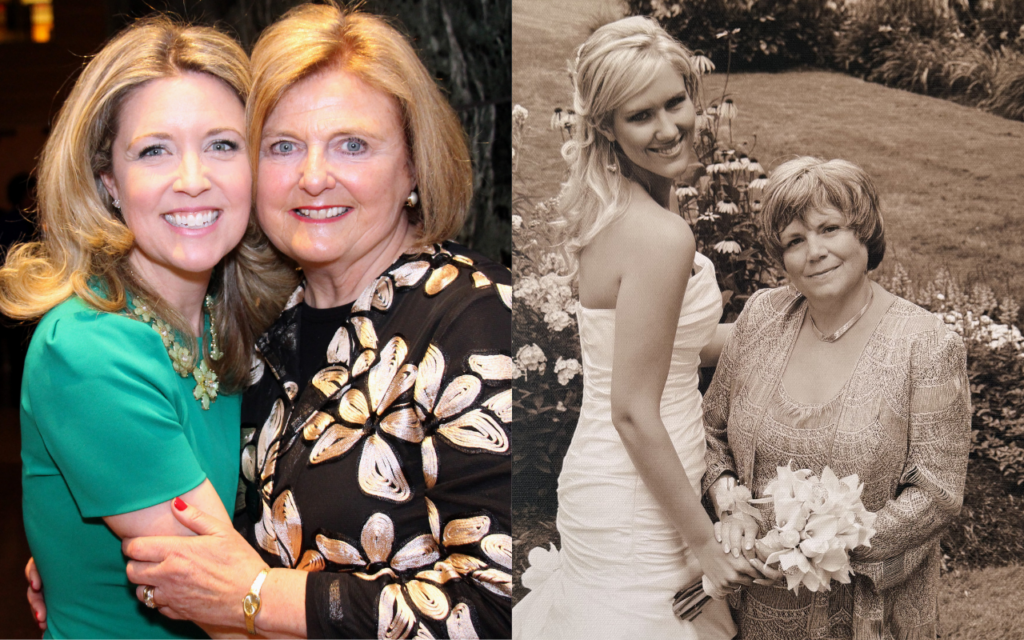
Jennifer Stewart: Mom, I’m going to start with you. We’re going to go back to the start of your career. So I’ve got fond, chaotic, beautiful memories of you running a law firm, four kids at home, frankly, balancing it all. What were the unspoken and spoken expectations about women’s roles at work and at home back then, and how did you navigate them?
Jane Wilson: Okay, so I guess I’m talking about 1980, which was when I opened my own small law practice in the Ottawa Valley in the town of Renfrew. I was the mom of two daughters at that point, a six-month-old and a three-year-old. I was the first woman to practice law in Renfrew, so expectations were somewhat murky because I wasn’t quite sure what I was doing. Quite frankly, I started in a renovated room at the back of a home which we owned. Expectations in a small town were hard to gauge. It just hadn’t been done before.

Catherine Clark: You know what I find interesting is that both of you come from a legal background, and Mom, one of the things that happened to you when you were in law school is the Dean at the time told you that you can either be a lawyer or you can be a mother, but you can’t be both. Is that the kind of response you received throughout those early stages of trying to balance both having a career and a family?
Maureen McTeer: Well, if you backtrack to law school, I think one of the things that marked me most was that we were the first class in the fall of 1973 where more than eight girls were allowed in. And that was because the Dean felt we would lower the standards. So he was replaced, and another Dean came in who was equally charming… I went to him and asked if I could take a take-home exam, like other students had been allowed to in the past. I was pregnant, I got migraines, and I was terribly ill in the morning. And he said, “No.” So I asked if I could write them in the afternoon, after I’m over my sickness. And he suggested that I might cheat, that someone would give me the questions when I went in. And apparently that was not uncommon. Women were treated that way, but it also offers a really exciting opportunity for younger women to see just how far we’ve come.
Jennifer Stewart: Mom, what was the law school experience like for you?
Jane Wilson: I was going to say I had a little bit of a different experience with law school. I was pregnant with our first daughter in my third year of law school, the last year. I found it relatively accommodating. I was lucky; I managed it fine. But one thing I will always recall is that your sister’s due date was mid-August, and we graduated in June. A female professor, and I’ll give her a shout-out: her name was Professor Winifred Holland, she hired me at eight and a half months pregnant to research a book on family law for her. And of course, I was waddling around the library, but I was doing work right up until the time I went into labour. And Professor Holland was wonderful in basically hiring a very pregnant woman in 1977. There was no pushback in our law school. The Dean at the time was David Johnson, so shout out to what is now Western University, because I really didn’t experience the same difficulties as Maureen did.
Catherine Clark: A lot of the women who are guests on the show talk about the power of having someone who’s either a mentor or someone who stands up to help you at a difficult time, who is there to support you, and some women find that over the course of their career, and others don’t. But both of you have really done your best as you’ve moved through your careers to support other women in your profession and to raise awareness about the role that women play in society.
Can you talk to us a little bit about why that was important to both of you?
Jane Wilson: For me, my mentorship probably didn’t come until later on in my career, because, quite frankly, there were no other females around in 1980 when I started practicing to mentor. That came later, particularly when I switched careers in 1998 and joined the Ontario Court of Justice. I certainly had many young lawyers and others come in, sit on my couch, and ask how they were going to manage being a mom and a lawyer.
Maureen McTeer: I think you raise an interesting point there, Jane, because I just finished reading Catherine McKenna’s book. She is a lawyer, but then ran for parliament and was a cabinet minister. One of her comments in the book was that we all go in saying I’m a mom first. And of course, the reality is, yes, you are a mom – but you are also in a very high-powered, difficult situation. If you’re going to succeed, usually there’s an expectation of very long hours.
When I taught, I used to say to my students – the younger women especially – look, you’re very fortunate being here, because you can work in the federal government. Two of the women from my class, for instance, shared a job. It was the first time in the federal government that women were allowed to job-share. They, in fact, got two full-time employees for half price. Because, as you know, women don’t shut off, they take the work home with them. So I often say that to young women, because the reality is the discrimination – and I say it’s discrimination – happens when you’re married with children. It didn’t really happen before. We have the majority of law school students now being women; the job openings are there for them, whether or not they choose the aspects of law that make the big bucks. It’s another issue, perhaps worth addressing. Why family law, wills and estates and those kinds of things, are not as well paid as some of the big commercial type practices. But I always say to them, think about where you’re going to be if you want to marry and have children, you want to be in a practice of the law that is going to allow you to very much take charge of two very intensive jobs.
Jennifer Stewart: It’s a really excellent point, and kind of where I want to go with my next question. We’ve talked about this, Mom, and I hate the term work-life balance, because it’s typically only directed at female professionals. I love work-life integration. I think what you really showed me was that you can have it all, but you need to put systems in place to support other parts of your life. What did a typical day look like, and what systems did you put in place to integrate your life with your work?
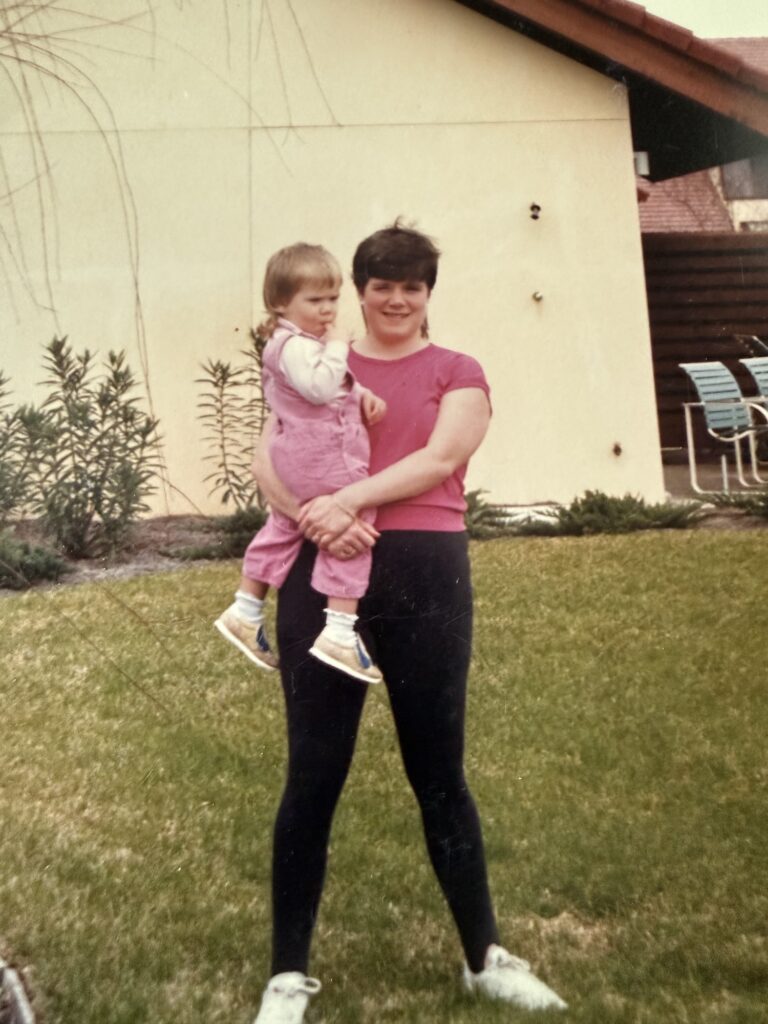
Jane Wilson: Well, first of all, I want to point out that I had a different experience from Maureen. I was in a very small town and was my own boss. When you open your own practice, you become your own boss. So as a team, your dad and I spoke long and hard about how we were going to do this. When I started, we had two children, and a few years later, there were four of you. So we sat down, and we planned to a certain degree. You’re quite correct. We decided we needed help in the house. Even though I’d run my own practice, quite a bit of it became litigation. You simply can’t call a judge at 9am and say, ‘Oh, sorry, Jennifer vomited last night. I won’t be in.’ That just can’t happen. So you have to put some support in place.
Catherine Clark: The support element that you described is really interesting, Jane, because I think it’s very similar to Mom’s. What you needed to do was to put supports in place. On the other hand, Mom, I wonder if, because of the public scale of your life, you felt judged for needing to put those supports in place?
Maureen McTeer: Well, I felt judged just because I used my own name… So you can imagine, if you send your child to daycare, when absolutely no PM spouse had ever found it necessary to send their child to daycare before. And of course, we had the unlikely daycare name of the Cambridge Baby Academy, which, of course, sounded like a super elite snob joint. There was also no staff at Stornoway, so we had to hire someone, and it had to be a multifaceted person, as you know, Jane, just like a woman who’s running the house would be. And in fact, I remember when I was articling, everyone was making me feel like I was abandoning you at home. And so I remember you used to make the biggest fuss when I’d leave screaming, crying, and I’d arrive at the office a basket case. Then one day, I forgot my sunglasses, went around the block, and came back in the door. You were sitting on the kitchen floor with pots and pans. Pauline had given you a wooden spoon, and you were banging away, having a wonderful time. And she said, ‘I’ve been telling you every morning, it’s for your benefit that she does this just to make you feel bad.’ And that’s when I thought, okay, others can judge me. And they will. I can’t do anything about that, but I’m not going to feel guilty, because I’m going to do my articles while you’re banging away on the kitchen floor with the pots!

Jennifer Stewart: I find a lot of my peers still struggle with mom guilt. We talk about it on The Honest Talk. I’d love to say I haven’t experienced it as a working woman, but I have. How do you compartmentalize that? Like, if you were to give a working mom some advice today – and we all know the advice is just leave it, don’t feel guilty – but how do you actually do that?
Jane Wilson: Well, I don’t think you can always leave it. In my case, and I’m sure it happened to you, Maureen, there are definitely times when you get that call that something has happened at home with your caregiver or your child, and it needs to be addressed. And that does happen. You try to plan for those events, but it can happen.
Maureen McTeer: I agree. And I think that that’s a wonderful philosophy, because there seems to always be this suggestion somehow that if anything goes wrong, it’s the mother’s fault. You know, if she had organized herself better, then this wouldn’t have happened. And I don’t know how you get around that, because I don’t think it helps the child.
I really think that children need to know that life is not a bed of roses. We have to teach them resilience…we have to treat them in a way that they realize they have responsibility in the family too. And that’s not easy when they’re little, obviously, but as they get older, they do understand.
I used to say to Catherine because we had to be away at least half of every month, and sometimes we would deliberately bring her with us. And I’d say, ‘No, we’re working. This is about work. I have to do this. Daddy has to do this. Now you have to come too and see us work. We’re not abandoning you. We’re just working. And this is, unfortunately, the work that daddy chose. But think about it, if Daddy were a long-haul truck driver, he would have to be away a great deal, too. So you’re not the only kid in the world whose father’s away a lot.’
Jennifer Stewart: You have said so many things on this podcast where I’m like, “That’s what my mother says!” I didn’t understand this as a teenager or in my 20s, but tough love is something I’d love to talk about. And now, as a mother and a woman in her 40s, I’m like, that was always extremely intentional, because the world can be hard, and, you know, you can’t always be triggered or set back by something. You need to digest it, move on, and keep moving forward. Was that an intentional choice to parent from a, very frankly, tough place?
Jane Wilson: Yes, it was absolutely. I have a very soft side. I’m probably much more so with my grandchildren. But, you know, I don’t think that we were harsh. Jennifer was the youngest, and I always had a rule: if I said something, I was going to follow through.
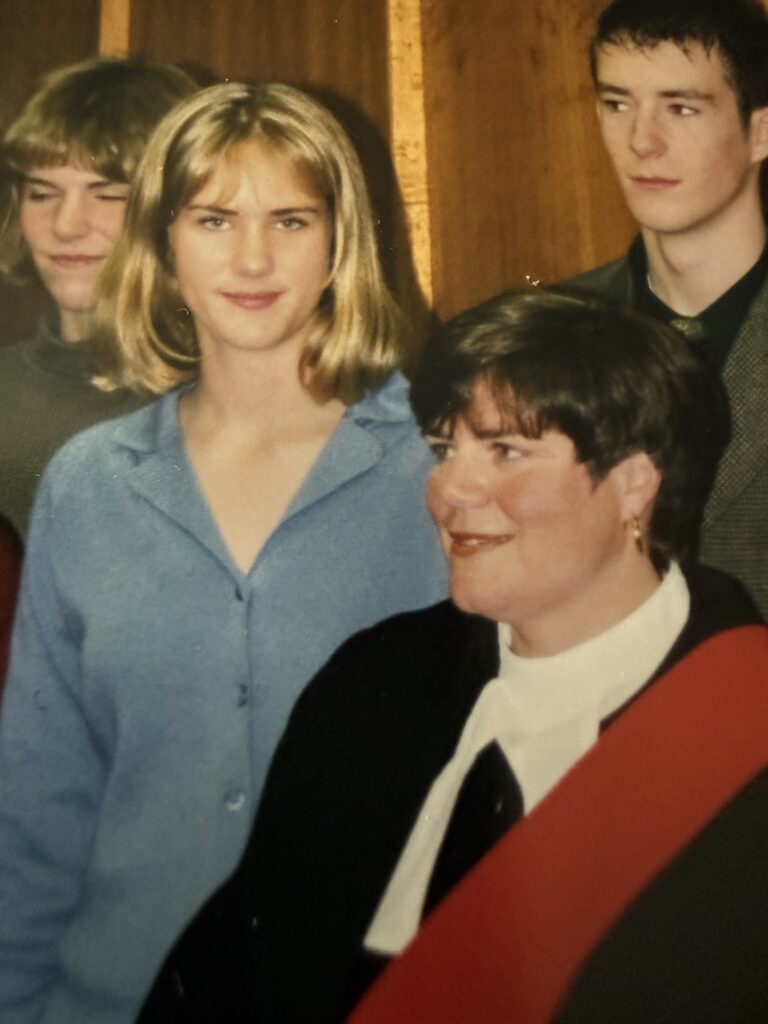
And unfortunately, I learned a lesson on this one. Jennifer was the youngest of three older siblings. She was sometimes scrabbling for attention and to keep up with them, and they were sometimes hard to follow. And we had a trip to Boston booked. And I made the mistake of saying, if you don’t stop whatever it was she was doing, we are not going to Boston. And guess what…she didn’t stop. And my husband and I had a little conversation, and we cancelled the trip to Boston. We lost the deposit, a fair bit of money at the time, and I don’t think any child in the Wilson family ever quite forgot that.
Jennifer Stewart: Oh no, the Boston trip is ingrained in me, that’s for sure! But that behaviour turned around right after Boston! We’ve had a few little moments with our kids where it’s like, oh geez, we threatened this, and now we need to follow through…because at the end of the day, Boston was a good thing.
Jane Wilson: It was my mistake. I shouldn’t have said it. I should have made the consequence much less serious, for lack of a better word, but I didn’t, and I knew that we had to follow through, and we did.
And I, too, have come across people, as Maureen says, who are very upset. The world today is pretty upsetting, and it takes a lot of moral courage to deal with it and to speak to young people about it.
A couple of years ago, we were in Toronto, and a law firm was having a meeting in one of the big hotel meeting rooms, and I went in to use the washroom. Three young ladies had come from that meeting, obviously lawyers, and one was in tears. And so I was listening a bit and finally identified myself as someone who has been in the career. She was just completely overwhelmed by the large law firm and what it expected of her.
I talked to her, and at the end, she was just so grateful, which makes me think you need more mentorship. And I’ve actually seen the same dynamic at the Women’s Summit. I have gone into your washroom at the locale, seen people, and heard young women speaking. I’ve identified myself, and they are so grateful to have a venue that speaks openly and honestly about the struggles they are facing on an everyday basis.
Catherine Clark: What advice have you gleaned from having survived raising your children, having a very successful career and having bumps along the road like having your Boston’s? What have you learned, and what advice would you give?
Jane Wilson: You don’t have to have everything perfectly figured out. You need to be pragmatic and put some necessary support in place, but it is impossible to micromanage not only your life today but also everything that could happen. Relax!
Maureen McTeer: Put some barriers too. I agree, Jane. I think you also need to consider putting barriers around the input, which, to me, means negative.
If you’re around negative people, you’re going to feel negative. If you’re around positive people, you’ll have hope. You also need to limit your time on your machines and screens. I think that’s important.
I find great comfort in nature. I grew up in the country, maybe that’s one of the reasons. But try to change your mind by doing simple things like stopping the negative as much as you can, and getting some fresh air. Go out and look at the flowers and find beautiful things. Go to an art gallery.
And I mean that sounds pretty mundane, but it changes your thoughts. And if you’re around beautiful things and positive things, it does make you feel better.
Jennifer Stewart: You know, there’s a saying in politics, ‘See her be her,’ and I want to apply that to our mothers today.
I can say this to you, Mom, and I’ll speak for Catherine. I don’t think you quite get it as a kid watching your mom balance it all and still be present. You get it, as a mother, that you’re stretched and doing the best you can.
But thank you both for the examples you set, and the ceilings you broke. I’ve really loved having you guys on!
Jane Wilson: Last comment here, and I think Maureen would agree with this. You want to give your children roots, but you want to get them wings… and I think we have succeeded, Maureen. We’ve got some good flyers!