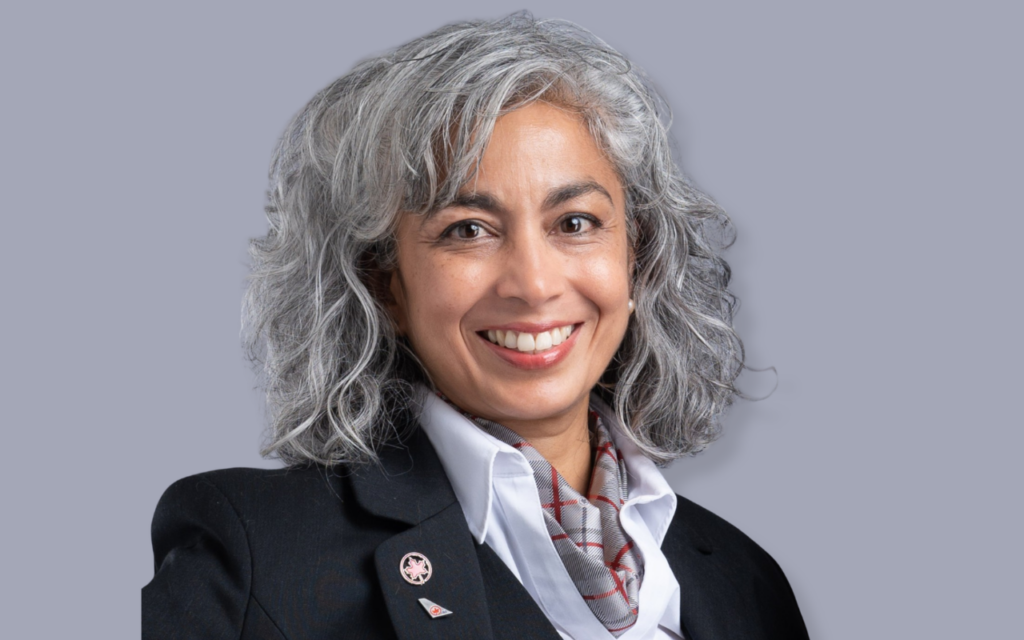

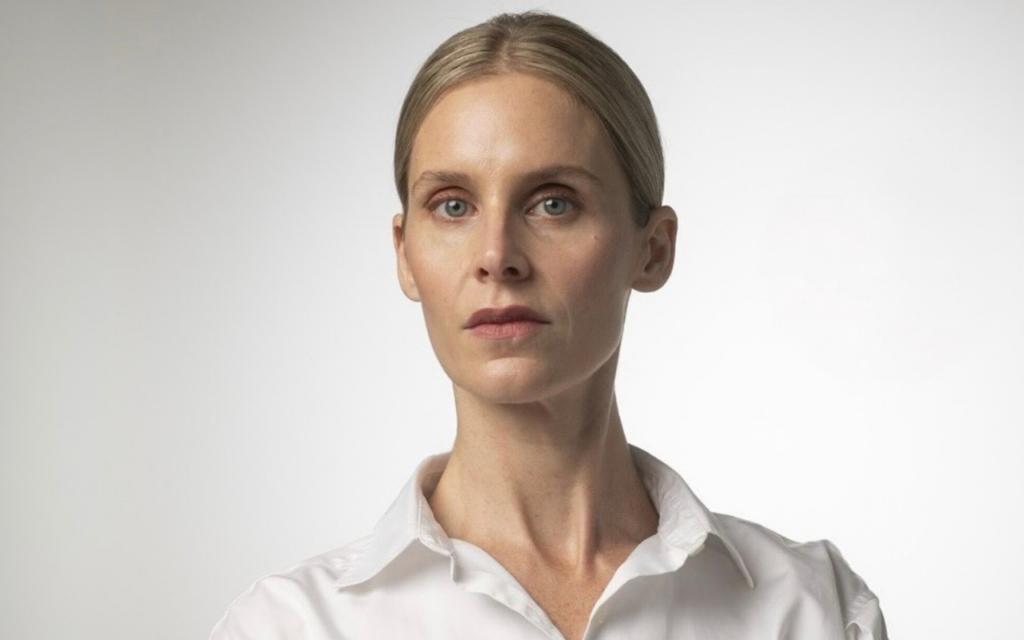
Jennifer Stewart: I want to talk about how you came to be on the fertility journey in the first place. Can you tell us a little bit about what happened that set this whole journey in motion?
Kathryn Blaze Baum: Sure. So my husband, Dan, and I had our daughter, Sydney, in early 2018. She was naturally conceived and relatively easy to make, straightforward pregnancy, and easy enough delivery. It was when it came time to give her a sibling that it became quite literally like a health hellscape. It was a really, really treacherous time for us because we would conceive, but then we would have losses.
And so, in early January 2019, when Sid was about one, we had a loss, and that required a D&C, and it just sort of set off this chain of events. I had multiple miscarriages and undiagnosed uterine scarring from that procedure, and ended up turning to IVF because, as they say, the definition of insanity is doing the same thing over and over again and expecting a different result.
So I was through with – well, I thought I was through with – loss, and we wanted to try to see if modern science could help us. So we turned to IVF in late 2019.
Catherine Clark: Just for listeners who may not know what a D&C is, give us the definition so that they have a full understanding of what you went through.
Kathryn Blaze Baum: Sure. So a D&C is a dilation and curettage procedure. They sort of dilate the cervix and then scrape the uterus to remove what are known as retained tissues of pregnancy. So this is required or desired when your body doesn’t sort of pass a pregnancy naturally.
So in my case, it was clear that I was having a miscarriage. I was having bleeding and symptoms of miscarriage, but my pregnancy hormones didn’t go down to zero. And when we investigated why that was, it was determined that I still had these retained tissues of pregnancy.
Catherine Clark: So you and your husband decide that path for you is going to be through in vitro fertilization. And what did you do next? I mean, did you have a doctor who referred you to a clinic? Did you rely on word of mouth? Was it Google reviews? How did you find the place where you were going to go through this process?
Kathryn Blaze Baum: Being a reporter, I asked a lot of smart people in my orbit a lot of questions, and in some cases it was, you know, if it was a clinic that somebody I trusted had selected, and I kept hearing the same clinic’s name over and over again, it seemed like a good idea.
And so we ended up with a clinic in downtown Toronto, and showed up there and had the sort of testing to see if we would even be good candidates for IVF, and we were deemed to be excellent candidates for IVF.
One of the key hormones that they tested at the outset is called AMH. Mine was quite high, which is what you want. It signals that they’re going to be able to retrieve a large number of eggs during an egg retrieval, and that’s good because the more eggs you have, the more likely you are to have more embryos that survive to sort of the day five stage of development, and the likelier you are to have multiple of those that are genetically balanced and could lead to a viable pregnancy.
So my levels looked good. My husband’s sperm looked good. We had a great prognosis, and that’s what was reflected back to us by our doctors. So we went into it with very high expectations that not only it would work, but that it would work the first time.
And so, you know, we did our first retrieval in the late fall. Actually, it was the winter of 2019, and I responded very well to the medications. I think 53 follicles were drained, and follicles are sort of within the ovaries that can – there are these fluid-filled sacs that contain the eggs.
So they drained, you know, 53 follicles. They got 30-some-odd eggs. Twenty of them fertilized, and then six of them made it to what is known as blastocyst stage, which is like earlier embryo stage.
But then, devastatingly, we found out that only one of those was genetically balanced. And in that same phone call, when we found that out, that’s when we also learned that it was quite likely that I had scar tissue in my uterus from that dilation and curettage procedure I had to manage an earlier miscarriage.
So it was kind of like the first of a series of bad news that we got at the outset of what became a several-years-long journey.
Jennifer Stewart: And Kathryn, I want to walk through the process because I’m so grateful to you for shedding light on this process, because I don’t think a lot of women, unless they’ve been through it, appreciate how difficult it is. If I’ve read this correctly, you were at two IVF clinics, you had numerous failed embryo transfers, you had two surrogates, over 100 transvaginal ultrasounds, and nearly 200 eggs removed. And countless drugs. What was this like on your body? And when you look back, can you – what does it feel like to even reflect on that time in your life?
Kathryn Blaze Baum: I mean, when you were just describing that to me, I get this full-body shiver because the way I write about it in the book is that my body was taken over and overwhelmed. Like, I had no idea how difficult IVF could be on a person’s body.
I think that my expectations were not properly calibrated at the outset. I think women are often told that you’ll go in for your egg retrieval procedure, the doctor will harvest your eggs, and it’s probably good to take that day off of work because you’re going to be under some sort of sedation. But you can go back to work the next day.
I soldiered through and went to work the next day sometimes after my retrieval, but on several occasions I was in bed. I was exhausted, fatigued from the high estrogen levels. My ovaries felt as if they had been poked dozens of times because they had been poked by a needle dozens of times. There’s a long needle that goes through your vaginal wall and into each of your follicles.
I filled with fluid because of this imbalance in my hormones and the follicular disruption, and so, I couldn’t wear pants. My blood pressure tanked. A couple of times, I fainted. I ended up on the floor in the middle of the night in a pool of blood because I had split my face open and needed 11 stitches.
Another time, I fainted and went into shock and was vomiting, and the paramedics had to come. Those sound like extreme physical responses, and in a way, they are, but honestly, I spoke with lots of patients for this book, and I can tell you that their experience was also physically very difficult.
And I think we expect a lot from women in general, and I think that we spend a lot of time dismissing women’s pain and quieting their concerns. And this is an area where we need to give voice to that. It hurts a lot for a lot of people, and it is very disruptive to your body and to your mind and your relationships.
Catherine Clark: I don’t even really know where to go after hearing you describe all of this, Kathryn, because you’ve been through so much physically, but you also just talked about the emotional toll and the relationship toll that it has taken on you and on your spouse, and probably on the other people that are around you, family and friends as well. Why did you keep going? What kept you going through all of this? And would you have felt better if you’d actually known the truth about what it was like before heading into it?
Kathryn Blaze Baum: Great question. I think I would have been better equipped to deal with the bad news as it came in. I think I would have been less blindsided by it if I had not expected it to work, but just hoped that it would work.
That’s a message that I have for patients who are going through it or supporting those who are going through it. It’s that there’s a difference between expecting something to work and hoping that it will.
And so I think, by virtue of me expecting that it would work the first time, the second time, the third time, the fourth time, the fifth retrieval, the sixth, seventh, eighth embryo transfer, I think I would have been better off kind of having a better sense for what success rates actually look like to protect my heart.
And then you asked what kept me going. It’s something that I really explored in the book because I did have a daughter, so I had a child, and I don’t know the hell of going through my reproductive years striving to become a mother, and I have so much compassion for people who are in the trenches fighting that fight right now. It’s not fair, and I wish it wasn’t the case.
For me, I think it was some combination of, like, biological primal urge, social conditioning. I’m sure, you know two under two, and when you’re having your next. Like, there’s a reason people get asked these questions.
But ultimately, for me, in sort of reflecting during the course of reporting and writing this book, I really think that, for me, it came down to my own childhood. I am one of five kids, and I am very close with all of my siblings. And I grew up in a house that was full of noise and love and laughter and chaos and fighting and crying and screaming and joy.
And that’s the vision that I had for my family. That’s a vision that Dan, my husband, had as well, and so it was really hard for me to sort of let that go.
I will say that there did come a time when I was kind of able to let that go in my mind and in my heart because I decided that maybe I would be able to keep going physically and move along, sort of move the ball down the sort of the yard lines, but maybe feel less emotionally invested.
Like, could I feel less but still do a lot? And that’s something that I had to really work on. It’s something that I sort of took comfort in books like Man’s Search for Meaning, where the key message there is about this idea of forces beyond your control can take away everything from you in life, except for one thing, and that is your ability to control your response to it, and that the idea that there’s a stimulus and a response, and that your power lies between those two things.
And so, for me, it took years to sort of realize that and allow myself to mine the strength to tackle life that way, but it really helped me get off of the emotional roller coaster.
Jennifer Stewart: Kathryn, you have a big career. You’re one of Canada’s top investigative journalists with the Globe and Mail, and I think there is – you touched upon it – a bit of an expectation that IVF is just a thing women do to have a child, and they kind of trivialize it in society. And we also have an expectation that when you’ve climbed the career ladder, you keep going, and that’s a bit of a beacon of success. How did you manage your career during this period, and what kind of lessons learned do you have if you could go back and do it again?
Kathryn Blaze Baum: I am so fortunate that I work at a place where I am free to be very transparent about things that I am going through. I had a debilitating concussion many years ago while I was a Globe and Mail reporter, and they were so good to me in terms of giving me the space I needed to heal, and this was no different.
You know, I was given a lot of grace by my editors and by the people here, which I’m so fortunate for because I interviewed people who work very big corporate jobs, and there was a 0% chance they were going to be speaking to their bosses about this. There were concerns that it would actually have career repercussions as they tried to climb the quote-unquote ladder.
So I was really fortunate that way, and I’m also somebody who I took solace or reprieve or good distraction in my work. So there were times when I don’t know what I would have done if I didn’t have this job that I love so much and that I’m so passionate about.
And, you know, I’ll never forget during COVID, we got a bunch of bad news over and over again. Not the least of which being the clinics closing down when we were about to do our first transfer, and I was writing about temporary foreign workers and the conditions that they were facing in the sort of, like, on-farm work housing conditions that they had, and it was very bleak, and it was a really good reminder of what other people are going through. And it sometimes was good for me to get outside of my own life and see beyond it.
Catherine Clark: What stage, Kathryn, did you realize that this wasn’t just a personal journey that you were on, but also a reporting story?
Kathryn Blaze Baum: I mean, I think it was honestly, like, when I walked into the clinic and I just saw so many other people sitting there waiting and realizing that I was really one of many, and knowing how desperate and vulnerable I felt, and surmising that they too felt desperate and vulnerable.
And maybe they didn’t know all the ways that they were vulnerable. I certainly didn’t. But, you know, by virtue of being a fertility patient and by virtue of finding yourself at the clinic, I think I can say with some amount of certainty that you’re pretty fixated on the goal of a baby, and that’s a very existential fight. And a lot of people will do whatever it takes.
Obviously, financial constraints are a massive issue, and we can talk about that. But, you know, we as patients don’t know what we don’t know.
And I just remember looking around, going like, “Why are you here? And do you already have a kid? And are you fighting for your life for a second, like I am? Or are you in a same-sex relationship, and you need to turn to IVF? Like, what brings people here, and how is their journey going to go? And what should we know about each other’s journeys?”
Jennifer Stewart: You write that IVF is often discussed with optimism, but rarely realism. From your experience, what’s the biggest misconception people have about fertility treatment?
Kathryn Blaze Baum: It works the first time, because it doesn’t typically work the first time, even under the most favorable of circumstances. It usually will take more than one retrieval and more than one transfer.
Catherine Clark: And, you know, one of the striking ideas in the book, and I would like for us to be able to talk about the cost element too, because I think that that’s also something that people aren’t 100% aware of. But one of the striking ideas is that fertility medicine exists in this strange space between healthcare, which is what we assume it is, and then the consumer marketplace. Can you tell us a little bit about what surprised you once you started investigating the actual business side of the industry?
Kathryn Blaze Baum: I think you put that really well, especially because I think Canadians sort of view healthcare as a public payer system that our taxpayer dollars support, and most people would view fertility treatment as healthcare.
However, not a single province or territory has decided that fertility treatment is “quote-unquote” medically necessary, which means that it’s not covered as part of its insurance programs. Which means that the vast majority of IVF cycles that happen in Canada are out of pocket, and they do cost $15,000 to $20,000 roughly per cycle, depending on medication protocols and several other factors.
And as I said before, it usually takes more than one cycle, so that’s a lot of money that adds up very quickly.
I should say that there are some provinces and territories that do offer some funding programs or tax subsidies, but they are limited. There’s things that even the most generous programs don’t cover, like the fertility medications that can cost several thousand dollars alone.
And then you asked about this idea of sort of the consumer marketplace, and I was really struck by the lack of consumer protections. We don’t have a regulator. We don’t have a federal regulator that is dedicated to fertility treatment, like they have in, for example, Britain, where they have an authority that requires that clinics submit their success rates, is a central repository for standardized clinic error reporting, and also does this sort of traffic light system to explain to consumers, the patients, whether certain add-on treatments are greenlit, amber lit, or red lit.
Add-on treatments are these additional sort of services or treatments that can be layered over top of sort of the core IVF treatments that may or may not increase a patient’s chances of having a viable pregnancy.
I should note that I’m pretty sure I have this right, that not a single add-on treatment is greenlit by the British authority. My husband and I spent $25,000 on add-on treatments alone.
Catherine Clark: Because you were told that they would enhance your chances?
Kathryn Blaze Baum: That they could, right? And when you’re desperate, all you hear is, “Well, they could.” And the greatest fear you have is not availing yourself of a service or treatment when financially you’re able to, because what if the cycle doesn’t work? What if the transfer doesn’t work? What if you miscarry and you didn’t do this thing that your doctor said, you know, maybe there’s a study that supports it, and you didn’t do it?
You’re going to blame yourself and wonder what if. And so, if you can afford it, you do all of the things.
Jennifer Stewart: What was it like managing your relationships during this time in your life?
Kathryn Blaze Baum: Thankfully, the relationship with my husband was, like, really locked in, and we were very similarly minded about a lot of the decisions that came our way.
We kind of took turns needing support. Like, we kind of took turns being the quote-unquote strong one, holding the other person up or holding their hand and kind of dragging them along.
So I’m very fortunate because sometimes this can tear apart marriages, right? It’s a lot of stress, financial and otherwise. And for us, it made us stronger, and I’m really grateful for that.
It certainly took a toll on my friendships, especially with friends who were getting pregnant easily, who were having their second kids, and in some cases maybe weren’t super sensitive to what I was going through, or maybe I was just so sensitive that nothing they said or did was going to be palatable to me.
And so I did take a step back from certain friendships or relationships, and found myself kind of throwing myself into friendships or relationships with people who were going through similar problems as I was because we could really relate to one another, and we didn’t feel triggered by one another.
Catherine Clark: Yeah, boy, it’s been a journey you’ve been on. What do we need to be doing differently, Kathryn? I mean, what you talked about – the difference between the system here in Canada and how the UK system treats this whole approach. Are there jurisdictions that are getting it right, and what do we need to be doing differently here in Canada?
Kathryn Blaze Baum: I think first thing is we need to do a better job of educating people about what to expect when they go through IVF.
I think we also need to do a better job of educating people at younger ages about how they can better get a handle on their own fertility, so that they can get ahead of any potential concerns. Like, if somebody’s having their AMH tested and it’s looking good, and then they get it tested the next year and it’s tanking. Like, that’s your sign that you’re going to need to take your fertility seriously. That things are changing quickly.
I think we need more stringent consumer protections. I mentioned the British system. I think many experts would point to that as a gold standard of sorts.
I think we need to mandate that clinics report their success rates. I know that you can argue against that because there is the potential for clinics to turn away patients that have what look to be difficult cases because they don’t want to bring their success rate down. But in the United States, they have gotten around that because they have a federal law requiring clinics to publish their success rates at a very granular level based on, you know, the age, whether they’re using their eggs or donor eggs, and all these different sort of considerations.
So I think there’s a way to do it because I think it’s really tricky when you’re a patient and you’re figuring out, you know, that’s a very important decision. Where are you going to start treatment? And we’re going into it completely blind.
I think we need to have, like, a standardized national reporting system for clinic errors. When I ended up in the hospital with ovarian hyperstimulation syndrome, I don’t think that that would have been reported to any public body as a – not necessarily even a clinic error, but a complication.
I think we need to think more about access geographically. There are treatment deserts in this country, and access in terms of sort of the financial piece, more funding.
I don’t think that this kind of treatment should be reserved to the wealthy. I think it’s really sad to think that we, as a country, have made the decision that this is privatized healthcare for people who can afford it.
There are many other countries who have made the decision that that is not the case, and they offer very generous funding programs. And I think we need employers also to step up and offer more funding through their own benefit programs.
There’s so much work that needs to be done in this space, and I think talking about it and bringing awareness to what it’s actually like is just the beginning.
Jennifer Stewart: Kathryn, there’s a line between documenting suffering and reliving it. Was writing this book therapeutic, brutal, or both?
Kathryn Blaze Baum More therapeutic than brutal, but definitely parts of it were brutal.
I think it was really interesting to turn sort of the reporter lens onto myself. As a journalist, you always want primary documentation. You want to see their communications with other entities or individuals. And I had access to that because I had my own email inbox, and I had my own text messages, and I had my own photographs.
And going back through emails, of which there are 4,000 directly related to the creation of a child through IVF, was really confronting. I saw a version of myself that I didn’t allow myself to really see at the time.
I was unfathomably anxious, tired, and sad, and overwhelmed, and, you know, going back through some of the key lows in our journey was, in some ways, really difficult.
Obviously, writing about them, and sort of closing my eyes and typing and mining my emotions, so I could really give the reader, like, what was that actually like, was hard, but it was also therapeutic.
And one thing that I am tremendously thankful for is this book because, like, for me, for my own self, reporting on my journey, writing about my journey, it made me so grateful for how I managed to come out of it.
And so I would come home from a writing session and, like, walk in the door and hug one of my kids, and that went on for three years. Like, it was three years from book proposal to pub date, and so for three years I was rooted in this, like, constant reminder of what we went through.
And yes, it was sort of retraumatizing, but in many ways, it was protective, and it kept me rooted in gratitude.
Catherine Clark: So, what was the end result? I know we have to wrap up this conversation, but what was the end result of your IVF journey?
Kathryn Blaze Baum: Well, my IVF journey had quite a plot twist.
So, we had our first daughter in 2018. Like I said, naturally conceived, and we were fighting for our life to give her a sibling. Well, we got two siblings for her.
One of them was born via surrogate, and the other one was born unexpectedly and magically, miraculously via me.
And so what happened was, our surrogate was around 20-ish weeks pregnant when I looked at my husband and said, you know, I’m not feeling great, and if I didn’t know any better, I would think I might be pregnant.
Well, lo and behold, I was, and that was my sixth pregnancy. And we assumed that I would miscarry, and I didn’t.
So we ended up with a baby boy via surrogate named Oliver in January of 2023, and a baby boy via me in May of 2023 named Benjamin.
They both came into the world and gave us quite a fright. Both of them were emergency C-sections. Both of them had the cord wrapped around their neck. One of them was born at 35 weeks and had to be in the NICU for three weeks, and the other one I wasn’t even awake during the C-section, so it was pretty harrowing times.
And very crazy to be, you know, 20-odd weeks pregnant while in the NICU with a newborn and a five-year-old at home, and then have a newborn and a four-month-old. Your body’s just not really computing, and your mind, or, like, not really computing what’s going on because it’s not supposed to be biologically possible, and yet here you are.