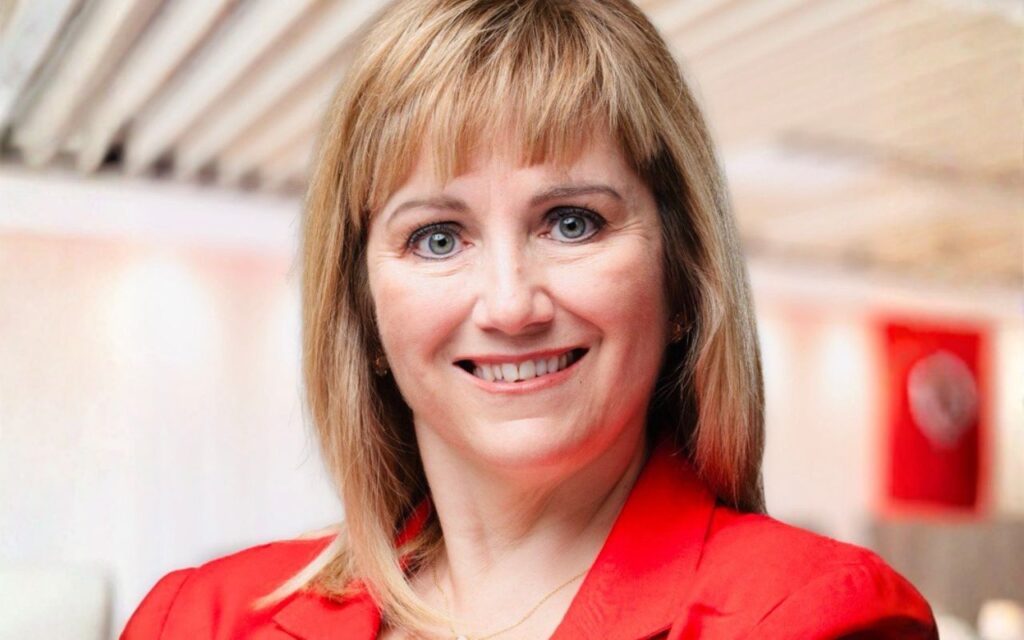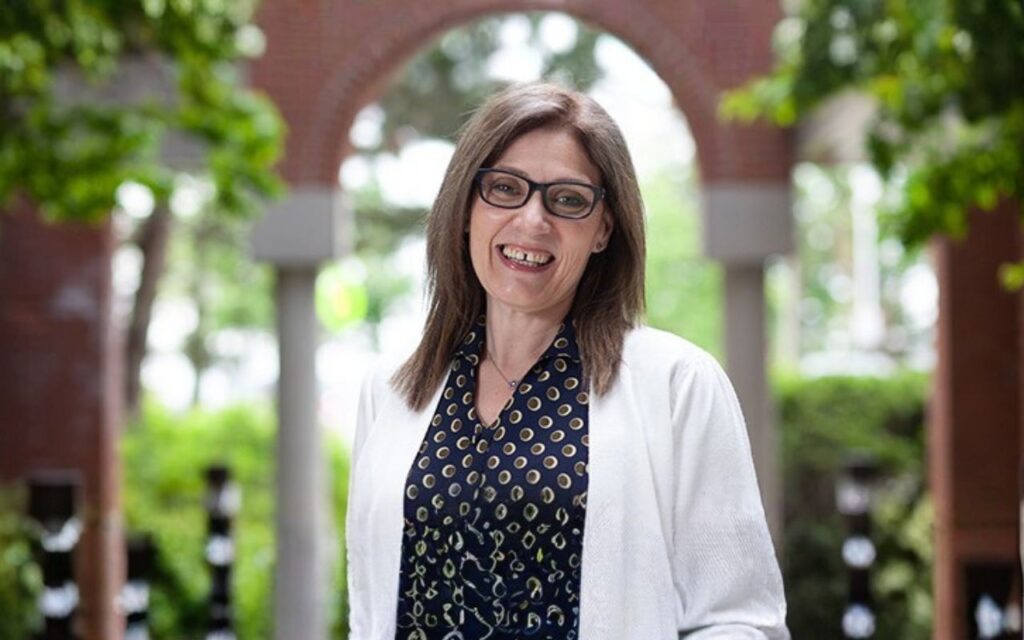


Jennifer Stewart: Jessica, I want to go back to your childhood – we’re just going to dive right in your early years! What moments or influences do you think most shaped your sense of humor? Because you’re very funny! Were you always funny?
Jessica Holmes: Oh, thank you so much. And I also wanted to say thank you for having me at The Honest Talk. I’m still reeling at what a happy, supportive, warm, and fun atmosphere this was. So thank you very much – you put on a good show.
For my childhood, watching Carol Burnett was incredible. I loved the way that they would crack up during the scenes – that meant so much to me. But it never occurred to me that I could be a funny person. I just knew I loved seeing comedy. I loved when people were happy. I used to pretend to be asleep on the sofa when all of my aunts and uncles would be together, because I loved listening to them tease each other and joke around. I always just thought of myself as a spectator.
Then in high school, I opened my yearbook and was voted funniest female. I was like, “What? Who? Huh?” It never occurred to me that I was funny or that I could make a living at this. Then in university, some friends dared me to try stand-up. It’s like getting on a roller coaster – you think, “Why do I do this? I make bad life choices. This is terrifying.” But then I got my first laugh, and it just feels good. It feels good to make people laugh, to make people happy.
Catherine Clark: Is there a kind of pressure that goes along with the idea of being funny? I think some people are naturally funny, right? They just make those around them laugh. But then, because you’re known as a comedian, do you feel like you have to try to be funny all the time?
Jessica Holmes: 100%. A thing that used to make me feel incredibly awkward was when I was on the Home Show and the Royal Canadian Air Force. If I was at a party or something, someone who was a big fan might come over and say, “Oh my gosh, come meet my family!” And then they would tell their family, “This is the funniest woman in the world,” and they’d all sit there and wait for me to perform. I’d be like, “I don’t know, I’m at a party with my kids. I didn’t have anything prepared.” I would just launch into Celine Dion or something. And a lot of times, the family would just be like, “Can you go now?” It was absolutely humiliating to have that expectation and then fall short.
I have to say, I became a mental health advocate because I really wanted to help people feel good about their well-being and feel optimism around well-being. But a side benefit is I’m not expected to be hilarious now. It’s more like, “Oh, if I say something funny, that’s icing on the cake,” I guess.
Jennifer Stewart: Do you rehearse your jokes, or do they just come to you naturally? What’s your comedic process? If we looked behind the curtain, what would that look like?
Jessica Holmes: All the shows I do – most of the material is tried, tested, and true – but I always like to leave room for improvising with the audience. Do you remember at The Honest Talk when I asked the audience who knows how to fold a fitted sheet? There was this one woman, and I loved it. I kept coming back to her throughout the show because she was clearly accomplished and knew how to fold a fitted sheet. That became a kind of running gag. I love those moments because the audience knows it’s fresh and happening right now.
More and more, audiences want an experiential change – they want to be surprised. That’s the trend comedy is going in. People like to be shocked; they don’t want to hear the same old stuff. I wouldn’t say I’m great at writing new material, but I love finding a nugget, marking it in the app on my phone, and maybe trying one or two new lines every show. I’m always looking for the funny in life – that’s just who I am. That’s the joy I find in life.
Something hilarious? I was in Ottawa for a funeral recently, and a man delivered the eulogy – it was beautiful. My dad leaned over and said, “Hey, I want that guy speaking at my funeral.” I started laughing. Moments like that go on my funny list.
Catherine Clark: So do you then draw from everyday moments? Like the things that happen to us in a grocery store, or when we’re driving through a car wash – those are the moments you mark down in your phone and then build into something because they’re relatable to everyone else. Is that your process?
Jessica Holmes: 100%. I test it out on family and friends first. I don’t just say, “Here’s a joke, I’m going to try it,” but I will run something by them. Like, if I’m at the dinner table, I’ll say, “Hey, have you guys ever seen when you’re at a grocery store, there’s always a lady in heels walking around doing her grocery shopping? I’m like, what is that? Where’s her tiara? Why is this a special occasion? Why the long fur coat?”
When I’m trying out stuff like that, I try it on people first. If it seems relatable, then I’ll try it in front of an audience. And there are some bits I’ve tried that no one ever laughed at – I just kept trying them for a while, thinking maybe it would land eventually.
Jennifer Stewart: Jessica, you’ve been really open about sharing your struggles with mental health and your challenges. I think it started with postpartum depression, and then you’ve had what you termed kind of “everyday run-of-the-mill depression,” which I thought was funny, but it’s not – it’s a serious topic. Can you talk about that time in your life, and how you flipped the switch from experiencing a really dark struggle to talking openly about it, creating a space where people feel comfortable sharing their experiences? I saw that thread at Summit afterwards – people were opening up, maybe for the first time, about their own experiences with depression.
Jessica Holmes: Yeah, I think that’s one of the main reasons I love hopping on stage – to let people know this is the “after.” There is a before and a during with depression, but this is the after. Most people do come out of depression and go on to live very happy, full lives.
It’s important to me to talk about the very, very dark and painful side of it – the part where I was trying so hard, and people kept telling me, “Why don’t you just…?” That just compounded the shame I felt, because I knew there were things I could and should do. I felt like I was buried in cement – every movement felt taxing and hopeless.
When I came out the other side, it took me a while to trust life again, to feel like maybe I don’t have to play it safe all the time, to stop looking over my shoulder, and not be scared to get a little too happy. I had to make a decision: I can’t make up for lost time, but I can celebrate every day. I can wake up feeling grateful. I can do the teeny, tiny little things – like making my bed even when I don’t feel like it. They say that’s your first win of the day. It shows yourself a little self-love. It’s short-term pain, long-term gain.
The more I do this, the more I realize I don’t need to live every day waiting for something bad to happen. Depression may come back – if you’ve been depressed more than once, you have a higher rate of falling back – but I have complete faith that what got me through once will get me through again. Plus, I have more support and more wisdom now. I live as though I’ve never been hurt, and that’s how I want my days to be. It fills my heart and allows me to give good things to the world.
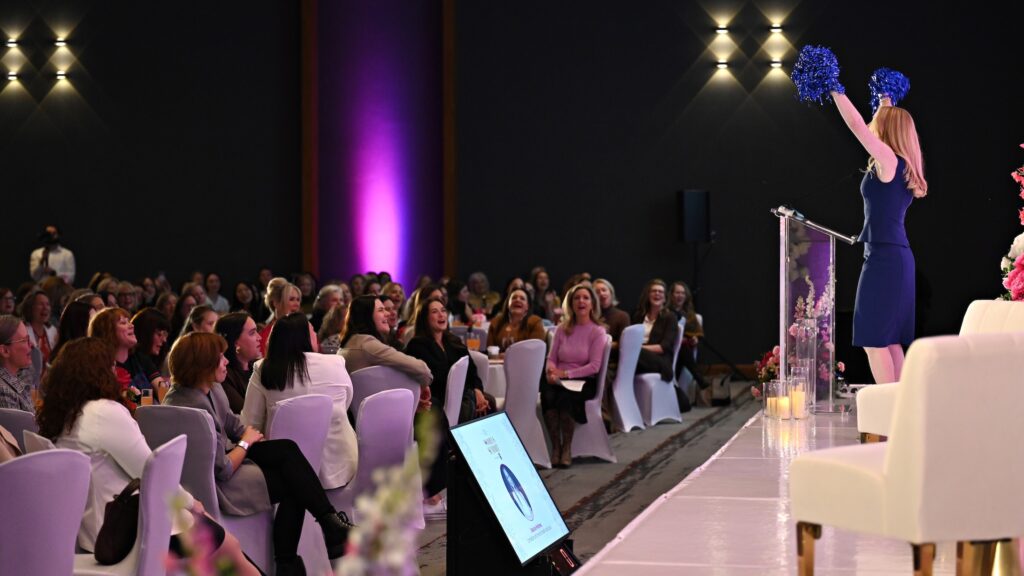
Catherine Clark: Can you talk about how your openness has affected how audiences connect with you?
Jessica Holmes: Yes. I love when someone comes up to me after a show and feels comfortable sharing their experience. The biggest thing I hear is someone talking about their spouse who’s going through something hard, and then often, they share that they themselves are struggling. I’m always grateful for it. I don’t want to be anything but genuine on stage.
I don’t have much stage fright – first of all, I do a killer vocal warm-up, which makes me so happy. When I get on stage, I think, “If anyone needs to hear this, please let me speak from my heart and connect with them.” That makes it good, because audiences vary – some are warmer, some cooler – but I know there’s always someone who needs to hear it. Maybe they don’t need it now, but later, it’ll give them insight.
Even reducing the stigma around my own depression started with reading Brooke Shields’ book Down Came the Rain about her postpartum depression. It helped me navigate once I got my diagnosis. I choose to talk about it with levity – I’ll dip into the deep end and then jump back into the shallow end. That’s my comfort zone, and I take care of my health so I’m not dwelling in dark memories all the time. But yeah, I love connecting with people.
Jennifer Stewart: What do you do to take care of your health?
Jessica Holmes: Small, sustainable changes are the only ones that are going to stick. Statistically, those are the habits best formed. You don’t want to, on January 1, join three gyms and say, “This year I’m climbing Mount Everest.” You’re more likely to climb Mount Everest if you start with tiny, sustainable goals. Like, “I’m going to walk twice as much as I usually do.” Each day, you just add a little bit to that. You’re competing with yourself.
For example, I know I’m never going to do a one-hour workout – that’s just not me. I just can’t get myself to the gym. But what I do is a four-minute Tabata workout – that’s high-intensity interval training – and I do four minutes of sun salutations. Usually that makes me feel so good about myself that I say, “Hey, maybe I’ll throw in another four minutes,” and sometimes even another four minutes. The point is, there’s no day where I don’t have four minutes, even if it’s right before bed and I’m already in my PJs. I committed to this, I do it, and it makes me feel good.
I encourage anyone to figure out what’s sustainable – even on your worst day, what can you still accomplish? I love multitasking. A friend recently asked if I could jump on a Zoom call next week, and I said, “How about we both go to a park near our houses and do an old-timey phone call while we walk through nature?” I’d rather meet a friend for a walk than a drink. I’d rather do a forest hike on the phone than sit through the 12th Zoom call of the day.
It’s just about making little choices that are good for me and manageable. And, I’m sure you’ve learned this too in life – boundaries aren’t just boundaries, they’re my happy place.
Catherine Clark: I also liked your point about the four minutes that you take to do something. I had someone tell me once – I said, “I just don’t have enough time today,” so I did 15 minutes on the treadmill. The person said to me, “That’s worth nothing, right? That doesn’t do anything for your body.” And I just remember thinking, oh my God, how am I going to stay fit? How am I going to stay healthy? And then I realized, as I got older, any little thing we can do for ourselves is good for us. If it’s four minutes, 15 minutes, or an hour, it all counts. But we have this sense that we have to conform to what society tells us is right, as opposed to what instinctively works. That’s a tough journey.
Jessica Holmes: Sometimes, oh 100%. I’m shocked. Someone actually told me, “That yoga instructor said your four minutes of sun salutations does nothing.” And I thought, not everyone works out for the same reasons. I do sun salutations because I like to be flexible. I do them because they ground me spiritually.
Your 15 minutes on the treadmill? First of all, hallelujah. That’s a big accomplishment. It gets your heart rate up, so it’s wonderful for your cardio. But also, I bet those 15 minutes make you feel empowered and give you a little more energy to go after what you want in your day. So no judgment.
Also, boundaries are huge for me. Saying no to things – that was my New Year’s resolution last year. To just say no and walk away. To not feel like, “Okay, I said no to this, so I have to send a fruit basket or make up for it.” You’re allowed to just say no and walk away, and not think about it anymore. If you set a boundary and then feel guilty, you lose either way.
I was really worried I’d be seen as bossy, but a few women have complimented me on my assertiveness – women I said no to, where I explained, “I’ve made a commitment this year to only do this and this, so I can’t help out. I wish you all the best.” And they said, “Wow, that was very effective. You communicated, and you didn’t need to do a song and dance to make up for it.”
I don’t know if that makes me come across as bossy. I super don’t care. I’ve got stuff to do – kids to drive here and there, work to do. I just feel more comfortable this way.
This transcript was edited for length and clarity.