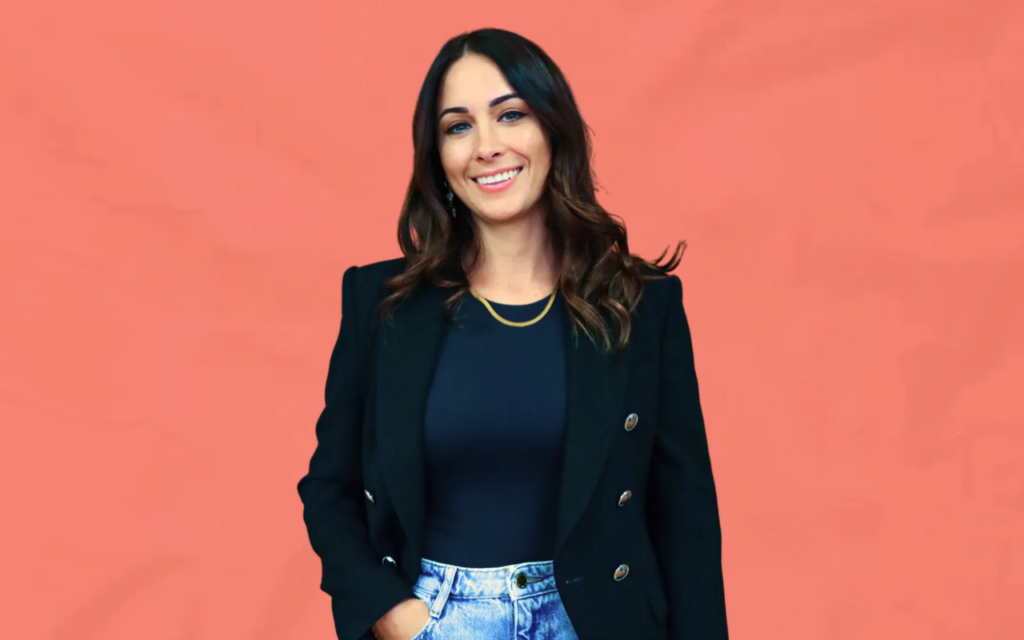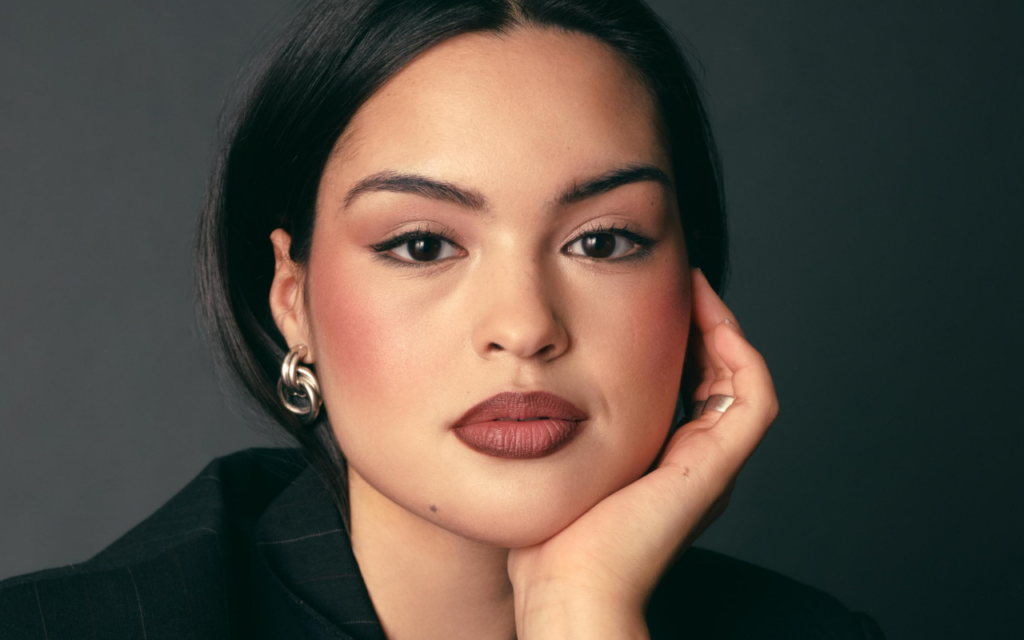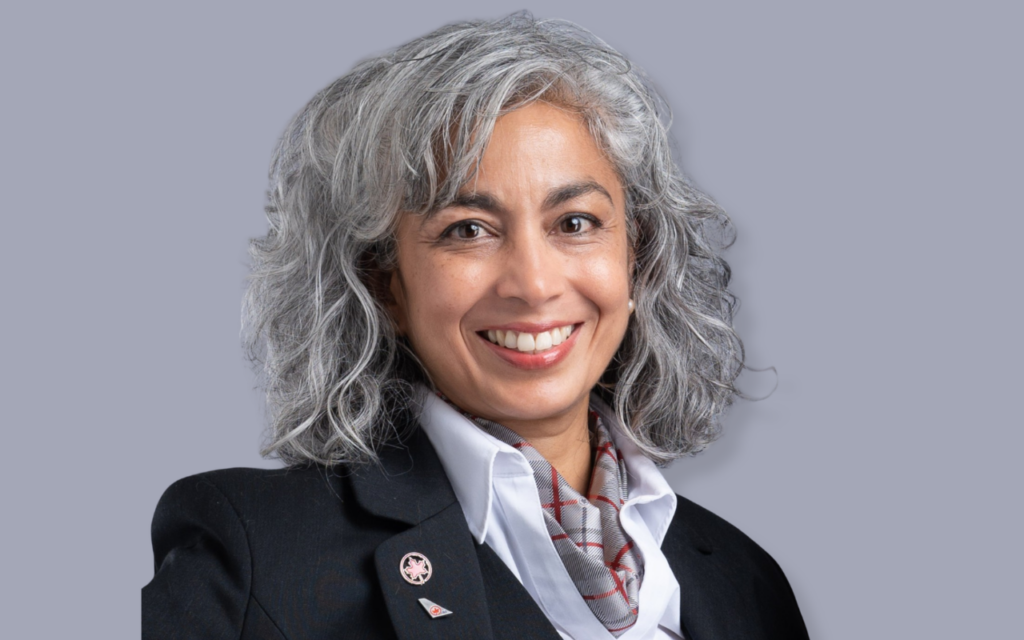

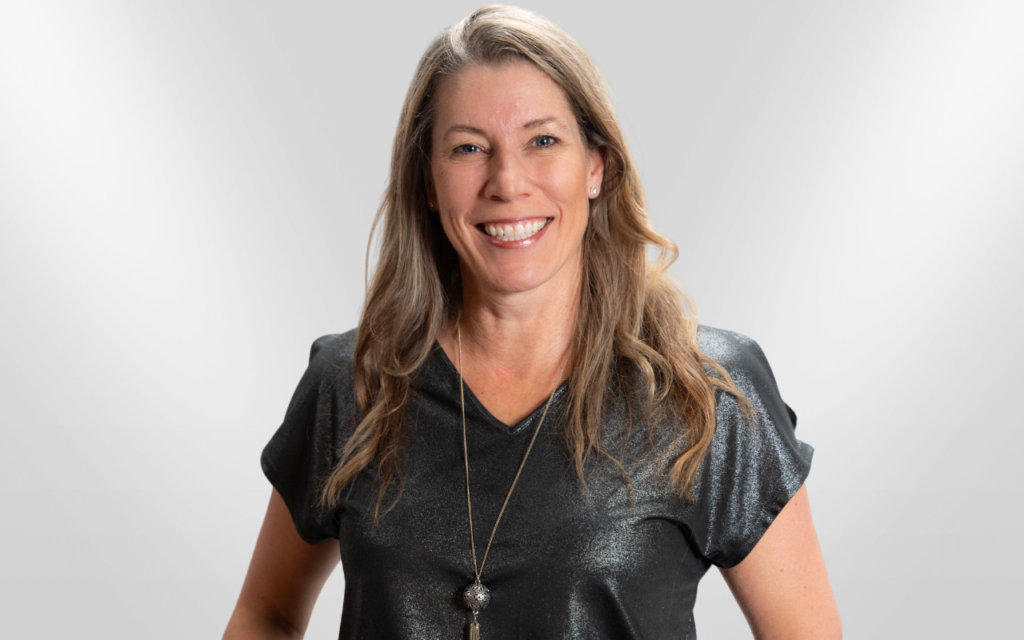
Catherine Clark: You’ve been with GoodLife Fitness for a pretty long time. Can you take us back to how it all started? And, what’s kept you there all this time?
Kim Lavender: It’s a great question, and I can honestly say I’ve grown up a lot at GoodLife. I’ve been with the company for 26 years. Prior to that, I had another 10 years leading up to GoodLife Fitness coming into my life, and I did a lot of different things, whether it was in the education sector or corporate fitness.
I was working at a small club in Belleville, Ontario, where I was doing personal training and instructing on the side, when fitness was really just emerging as a service you could turn into a career. If I dial back all the way to my schooling, I was actually registered to take nursing. Two weeks before I was supposed to start, I decided I wanted to be on the proactive side of health and well-being.
Despite my parents probably being a little upset with me at the time – my dad is an immigrant, and he thought nursing was the way to go – he said, “You’ll never make a living doing this fitness thing.” Needless to say, I can honestly say I’ve proved that to be untrue.
GoodLife has been a place where there’s been a ton of opportunity for a fitness professional to try different things. At the time, GoodLife had only about 50 clubs across the country, many of them franchise locations. This company came in, and I was so impressed by the ambition and vision that Patch had to truly make a difference across the country and grow what started as a small company into this juggernaut that has such an impact on the overall health and well-being of the nation.
I’m a team player. Athletics brought me into the fitness profession, and I just thought there was something about this company that intrigued me and that I wanted to be part of. Success leaves clues, and when we saw the success of the company and how it was growing, I wanted to trust the process.
I was hired as a PT coordinator as well as a group fitness coordinator. I ended up leaving my other jobs to commit fully to GoodLife, and the rest, as they say, is history.
But your question about what has kept me here is the one that hits closest to my heart when we talk about honest talk. This has been a company that has shown tremendous care and invested in individual success, while also recognizing that we have lives outside of GoodLife.
I’ve had instances where my father unfortunately passed away after facing some very difficult health challenges, and the team at GoodLife rallied behind me and made sure I was supported while still being able to do as much as I could in my role at the time.
I’ve done both personal training and group training from a leadership perspective, so what I bring to the role I’m in now is a great perspective on how we continue to serve people both on an individual basis and through that strong sense of community and belonging.
When people ask what’s kept me here, I challenge them to identify another place where you can work while being constantly surrounded by people trying to become the best versions of themselves, each with their own unique story. I think that’s part of what has kept me here. There’s a sense of purpose. It’s the team I get to play on, and it’s the difference we can make – not just in Canada, but in some cases around the world.
Jennifer Stewart: I love that, and what really stood out to me was that you were focused on preventative health.
I actually went to GoodLife over 22 years ago when I was 19 and training to compete in Miss Canada. It was the midst of diet culture, and it stood out to me that the emphasis was on muscle, lifestyle, and sustainability, which felt counterintuitive to everything you heard in the media at that time.
I’m intrigued by how ahead of its time GoodLife was and that it was attracting people like yourself who were focused on prevention when there was such a different culture for women. How have you seen that culture evolve?
Kim Lavender: Jennifer, you called out something that is so true. We’re bombarded by image and by what we look like on the outside, and we all know how great it feels when we work out, right?
That’s one of the things that sets us apart in terms of cultivating environments and giving people permission to be where they’re at, while enabling us to lead them along the way – not by telling them what to do, but by inviting them in. We invite people in and educate them because we know that when we provide education throughout these experiences in fitness or otherwise, we also elevate empowerment.
As soon as someone feels like they know how to do something, even if they’re still learning how to do it really well, they’re learning. As our skill increases, so does our confidence.
I think where GoodLife has always been, or at least strived to be, is a place where people can come and feel safe being their authentic selves. We open the door and meet them where they’re at.
Longevity, strength, and mental wellness are all things that are at the top of people’s lists now. If we dial back 20 years, when you asked someone, “What’s your fitness goal?” it was to lose pounds. It wasn’t framed around what you could gain from doing this.
I think society is slowly catching up to that, and we’re excited to help more people by giving them the tools, resources, opportunities, and, most importantly, a supportive community where they can feel a sense of belonging.
There are too many people working out with headsets on. They go into a place, but they’re really alone. It’s incredible. I have a passion for group fitness because I think there’s so much power in coming together and sharing that experience.
Catherine Clark: A lot of the women listening today are probably doing multiple things at once, maybe even while they’re listening to this podcast. They’re juggling careers, families, and everything else in between. What’s your real-world advice for these women when it comes to making time to take care of themselves?
Kim Lavender: Start by acknowledging that it can be hard, but it’s not impossible.
We often lean on our schedules as a reason why we can’t make time for ourselves. Whether we’re moms – I have two older boys now, they’re 26 and 23 – I remember those times.
My biggest thing is that everything counts. It’s not like you have to do something extreme to make a difference. You could start by taking two stairs at a time instead of one. That’s a lunge.
It’s about these little micro-bursts, but it’s also about acknowledging that, first, you’re worth it, and second, you’re capable of doing it. Just start with something you enjoy. It might be dancing in the kitchen. It might be whatever movement you can fit into your life.
Do that, but know you’re doing it not just for yourself, but for the people around you as well, so that you can show up as your best self.
Jennifer Stewart: I want to pick up on moms a little more because Catherine and I are both moms. I don’t know about you, Catherine, but the thought of getting back into the gym postpartum was really daunting. Your whole body has changed, and what you could do beforehand isn’t necessarily what you can do afterward. How do you make it welcoming for moms to come back to the gym and not feel intimidated by that group setting?
Kim Lavender: Very good question. I remember that day too, and I am a fitness professional. I remember trying to get back into it and thinking, “My body’s not working the same way it did before I had the boys.”
Again, I think number one is to be informed, and if you need help, don’t be afraid to ask for it. A lot of our trainers and instructors have knowledge related to pre- and postnatal fitness, including the physiological effects on the body, what someone should start with, and what they may want to avoid.
But it all comes down to taking that first step and getting back to it, while building confidence along the way. Connect with someone who might be in the same situation as you. A lot of moms-and-babies workouts aren’t just about the workout itself. People come because they have a mom group.
If you peel back all the layers, what you really need is a support system. Sometimes you have to ask for it.
I applaud any mom who is trying to fit personal health and well-being into what can be a chaotic and demanding schedule, where you’re constantly looking after everyone else.
Create a support system that enables you to find the time and energy to get your workouts in and get movement into your day. I always say you want to train to be your best so that you can be your best when your best is needed.
Catherine Clark: Can we take it to the other end of the reproductive spectrum? There are a lot of women who are perimenopausal or menopausal who are legitimately busting their rear ends to stay in shape, and the things that used to work may not work quite so well anymore. Or they may notice that parts of their body that used to fit well into their pants don’t anymore.
How should women handle those changes, whether it’s their first time getting back into the gym because they feel they need it, or they’re trying to adapt a fitness routine they’ve used for years to suit this new phase of life?
Kim Lavender: Exactly. We sometimes say you can’t always use old tools to fix a new problem – and it’s not a problem, because it’s a natural process that so many of us experience.
I can speak to that personally. You notice things like, “Geez, I’ve put on a little bit of weight,” or “I don’t feel as mobile as I once did,” and you’re still doing all the things you’ve done your entire life.
What we recommend to people is, first, understand that what you’re going through is normal. The beauty of our industry right now is that there’s never been as much dialogue around menopause and perimenopause. A lot of the research in the fitness industry has historically been based primarily on male bodies and male physiology, so we’re still learning as we try to teach people about many of the changes our bodies are going through.
I think it’s important that any fitness routine be something you enjoy. If you enjoy it and feel some level of success, you’re going to repeat it. But just because you did marathon running before doesn’t necessarily mean your physiology is aligned with doing marathons now.
Start with something you like. Focus on strength. It’s probably the biggest – I don’t want to call it a trend, because it’s not a trend. We’ve always known strength is important. But so many women were afraid of bulking up. I’ve been doing this for 30 years, and I’m not bulking up, right? There are ways to do this safely so people feel stronger in their bodies.
What I’m personally noticing is that a lot of women have focused so much on their children and careers that they’re only now starting to get back to themselves. Many of them say, “I’d like to start, but I don’t know where,” or “It’s too late for me.” And I’m like, girl, it’s never too late.
It’s time to learn how to lift simply and effectively. Number one is strength. Number two is cardiovascular fitness. Get out and start walking. Elevate your heart rate for a sustained period of 15 to 20 minutes, two to three times a week.
The other piece is looking at how well you’re functioning in your day-to-day life. Tell me about that. Sometimes these changes happen so subtly that one day you wake up and think, “Wow, I feel really stiff.”
Your hormones are changing, and that impacts your physiology. Remaining active is one of the key ways to approach managing menopause. We want to ask: How do we manage this? How do we learn? How do we educate ourselves?
I love when people ask questions. We might not always have the perfect answer, but we can consistently research, learn, and discover.
The careful point I want to make, Catherine, is this: don’t make it complicated. Move your body. Lift weights. Increase your heart rate. Start there. That way it feels more doable than when you’re bombarded with information and wondering where to begin.
Start with you. Just start moving. That’s all it takes.
Jennifer Stewart: How does GoodLife communicate that message? As a woman, whether it’s on Instagram or any website, you’re constantly seeing advice about step counts, weighted vests, macros, sunlight, supplements – it can be overwhelming. How do you break through that noise and say, “Let’s simplify this process. It doesn’t have to be all or nothing”?
Kim Lavender: Start with the basics and master the basics first. Make it attainable. Make it inclusive.
One of the best-kept secrets about GoodLife Fitness is our women’s-only sections in many of our co-ed clubs. People often feel safer there. And when I say “safe,” I mean they feel more comfortable and can remove some of the intimidation they might feel in a heavy lifting area or another part of the club.
When we’re talking about sifting through all the noise, it’s about having the power to focus on one thing at a time. Start with showing up.
There is a ton of information out there. And you know what? If somebody wants to wear a weighted vest, and it actually gets them moving more, then wear the weighted vest. If it helps you feel like you’re doing something, that you’re on trend, and you’re empowered to do it, great.
There are always going to be two camps around every piece of fitness advice. There will be people who are completely for something, and people who think you shouldn’t do it.
At the end of the day, if you’re moving, you’re pain-free, and you’re feeling confident, that’s it.
Catherine Clark: Is there one fitness myth about women and working out that you wish we could all retire and get rid of? Is it this idea that women should shy away from building muscle, or is there something else?
Kim Lavender: One hundred percent, that’s it.
The other thing I would say is that, in my classes and when I’m training groups, I often think, “I wish you could see what I get to see from the stage.”
Those moments when a woman realizes how truly strong she is are incredible. We often don’t push our boundaries. I tell people all the time that they’re afraid to fail, but you never know what your best is until you fail. Failure is just feedback.
The more you do that, the more you push your limits and build confidence.
The number one myth is that women can’t lift heavy. Let’s debunk that. Let’s pick up heavier dumbbells. Let’s pick up heavier plates. Put the pin lower on the stack. Be okay with doing only four to six reps with good form and know that you’re still making changes.
When you start building muscle and feeling stronger, you carry yourself differently. You think differently. You show up differently.
It’s the muscle, but it’s also the mindset that changes.
Jennifer Stewart: Kim, if you could design the ultimate women-only group fitness class with no limitations – nothing is off the table – music, vibe, format, everything – what would it look like?
Kim Lavender: It would look like vitality in motion.
What I mean by that is it wouldn’t just be about pumping music. I do DJ on the side – that’s one of my fun facts. Women’s-only events, I might add.
The music would be both empowering and soulful. We’d focus on strength, mobility, and balance. It would be all-encompassing so that when somebody walked out of that class, they felt capable of taking on something they didn’t think they could do before.
We would support one another. We’d sing at the top of our lungs. It would be pure joy and bliss in motion – with a purpose.
And that was just off the top of my head.
Catherine Clark: I love that. It sounds like you’ve been thinking about that one for a while.
Kim Lavender: It doesn’t have to be a single focus. That’s what I’m trying to say. It doesn’t have to be one modality or one goal. It can mean a lot of different things for a lot of different people at different times in their lives.
Catherine Clark: Maybe that’s the perfect way to end this conversation. What advice would you give women who feel the stigma of walking into a gym, who are trying to change their body, who prefer to go it alone, or who are struggling to stay motivated and stick to healthy habits? What’s the one piece of advice you’d leave them with?
Kim Lavender: Think of it this way: it’s not about how far you still have to go to reach your goals. It’s about how far you’ve already come.
If you’ve walked into a club, a studio, a fitness centre, or a wellness centre, you’re already in the top 10 percent of the population. We often feel like our goals are so far out of reach that we forget where we’re standing today.
If you can recognize that simply deciding to show up has already put you on an elite team, then now it’s your time to shine.
If you’re thinking about getting active or taking that first step, know that you’re already halfway there – maybe more than halfway there.
Now it’s time to honour your potential.
Are you ready?