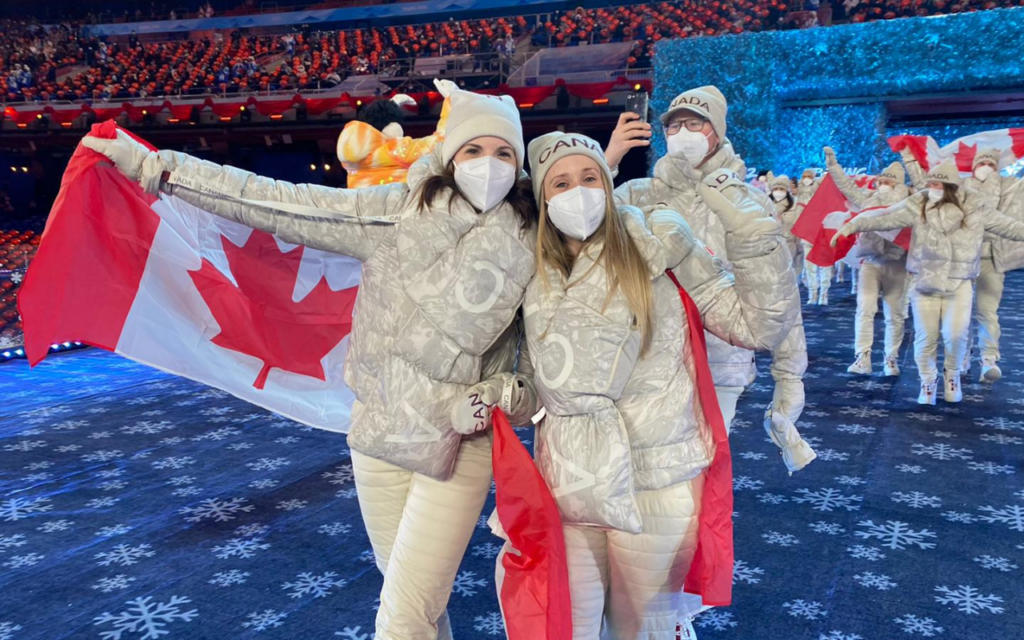
As athletes from all over the world make their way to the Milano Cortina 2026 Olympic Winter Games, it has me feeling nostalgic over my own Winter Games experiences as a curling athlete in 2018 and 2022.
Before my first Olympics, I didn’t know what to expect. It’s often described as Disneyland for athletes, and in many ways that’s accurate. There is always something happening, and many moments feel magical and surreal.
I remember one of my first days in the Olympic Village, I was sitting in the massive dining hall, soaking it all in. Suddenly, two familiar faces sat down across from me: Scott Moir and Tessa Virtue. They started a conversation like it was the most normal thing in the world, meanwhile, I was trying not to act starstruck! It was one of those “pinch me” moments where I felt so lucky to be living my Olympic dream. That’s part of the fun of being part of a bigger team; when you’re wearing Canada gear, there’s always someone to sit with.
What I wasn’t prepared for was how overwhelming the Olympic environment could be.
When I had previously competed at world championships, curling was the only sport. I was used to my routines and the rhythm of competition. At the Olympics, your sport is one sport among many. There is heightened security, constant media attention, and an energy that never really turns off. Even something as simple as seeing your family requires careful planning. There are social events, media obligations, other sports to watch, and an endless list of things you could do. You want to soak it all in, but you also know you’re there to perform.
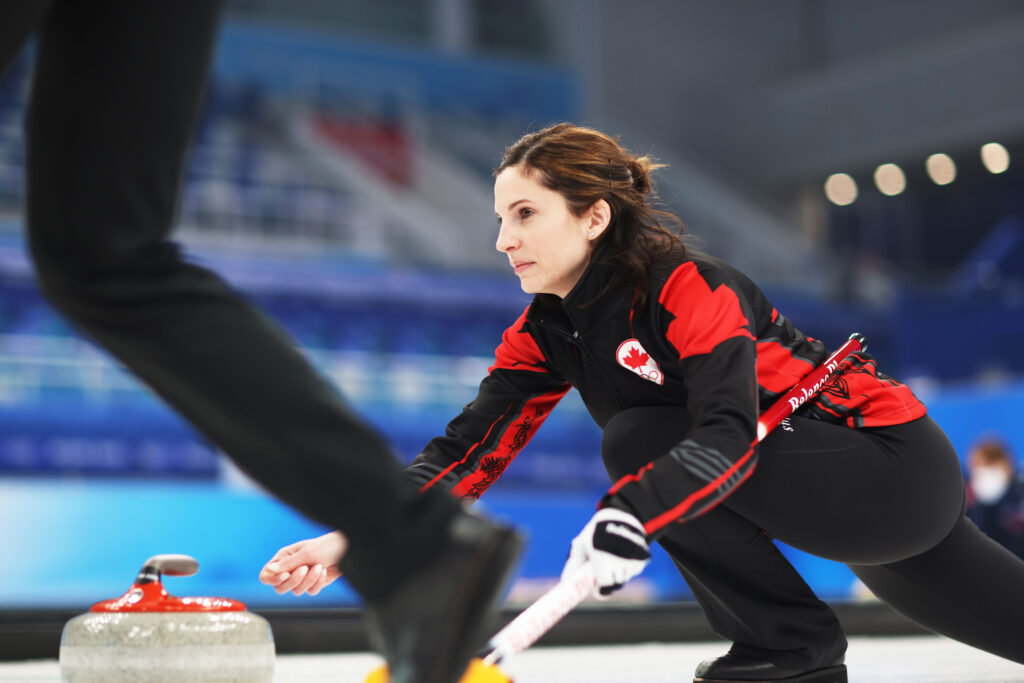
That tension was one of the hardest adjustments for me.
You arrive knowing you’re one of the best in the world, but very quickly you realize you’re also just one of many athletes among many sports, all with their own routines, pressure, and expectations.
And unlike most competitions, the audience isn’t just fans of your sport. It’s the entire world. Suddenly, the spotlight feels brighter, and the margin for error feels smaller.
The pressure builds
That pressure became very real after we missed the podium at my first Olympics.
The next morning, I woke up to headlines that reduced my team’s entire experience to a failure. On social media, strangers said we were losers and didn’t deserve to be there. It was jarring. Up until that point, I had podiumed at all three international championships I had competed in, and the media attention was generally positive. This was different. This was global, negative, and hard to ignore.
What I wish someone had told me before that moment is this: you get to choose how much you let in.
You cannot control the headlines. You cannot control social media. But you can control how much you engage with it, when you look, and whether you let the comments define you. I thought I could handle it and it wouldn’t bother me, but it did.
Creating a boundary can be self-preservation. But it can also be difficult when you want to share your experience and reach new audiences, which can translate into sponsorships and opportunities in the future. It’s not easy to navigate.
Another thing I wish I had understood earlier is that trying harder does not always help.
When pressure increases, often the instinct is to do more. But the Olympics are not the place to step outside yourself. They are the place to trust yourself. You are there because of years of preparation and deserve the spot you earned on the team.
I struggled with that. I tied success too closely to outcome, and when we didn’t achieve the result we wanted, I carried that disappointment as failure. It took time and distance to see the bigger picture.
In reality, being an Olympian is something very few people ever experience. Once you’ve been there, you are an Olympian for life, regardless of where you finish. With perspective, I can honestly say I did my best, and I am proud of it.
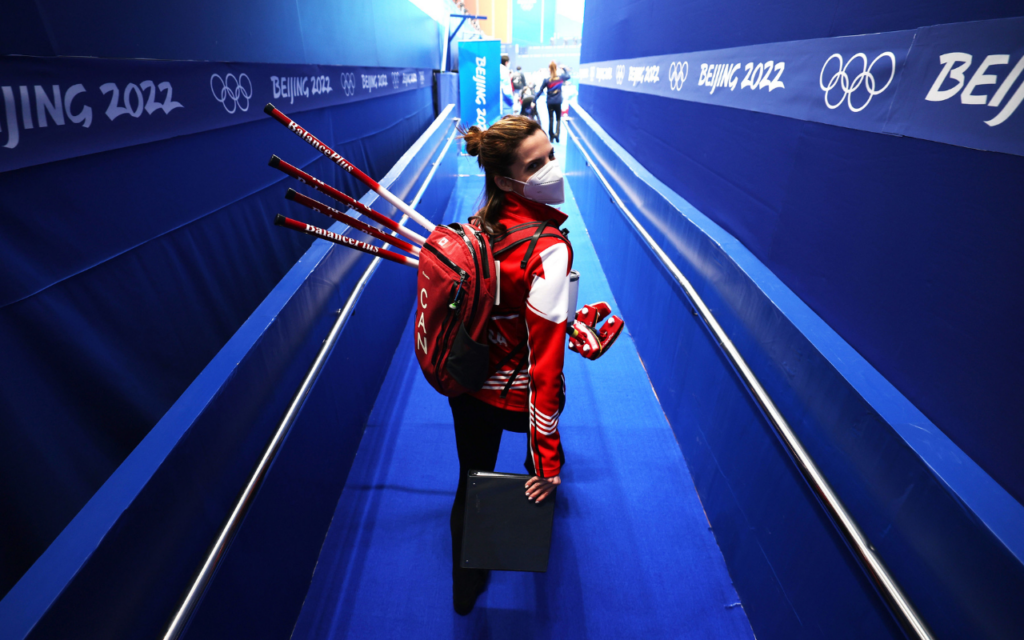
Moments of ‘normalcy’
There were moments at the Games that helped ground me, even when things felt heavy.
I remember walking into the nearly empty dining hall late one night after finishing a game and seeing a Canadian speed skater who had just won gold, sitting alone at a table, eating a McDonald’s ice cream cone. I remember thinking how ordinary it seemed. How human. How unlike how I pictured a gold medal celebration to look.
The Olympics are extraordinary, but they are also full of very normal moments. That normalcy matters.
I also wish I had been more honest about my needs. Everything is new at your first Olympics. Shared accommodations. Time zone changes. Media obligations. It’s exciting, but it’s also intense. As an introvert, I wish I had given myself more permission to step away and recharge.
Later in my career, and then again as Chef de Mission at the Gangwon 2024 Youth Olympic Games, I saw how important that is. The Games are magical, but they can also be consuming if you let them be.
You get to choose your perspective every day. Things will go wrong, but it’s up to you if you want to complain or laugh and move on.
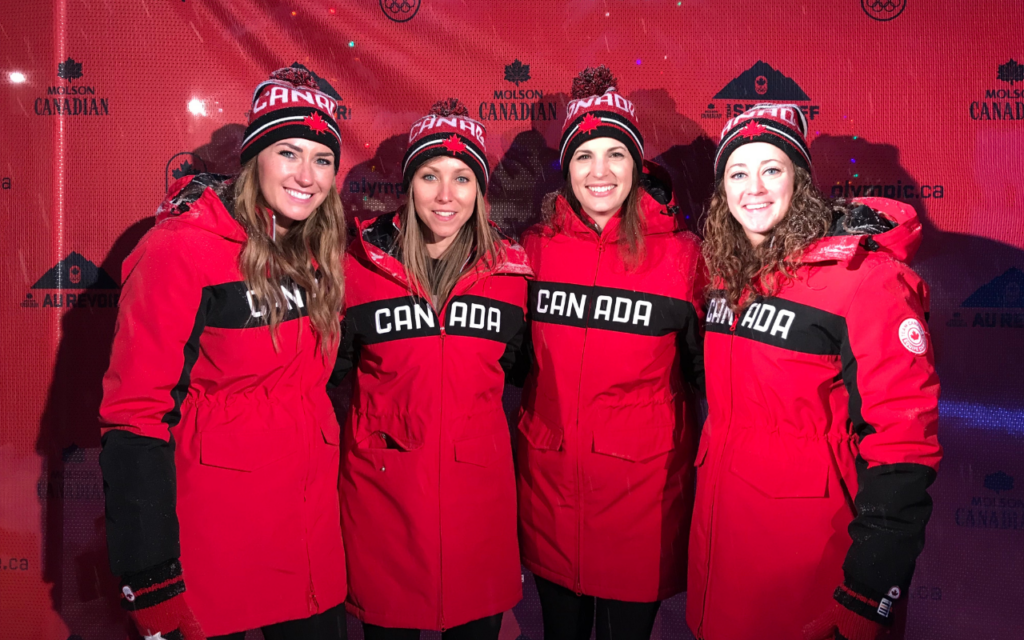
If I were talking to an athlete heading into their first Olympics now, I’d offer a few practical things:
- Connect with your support system early. You become part of a bigger national team, and the performance staff is there to support you in every sense. Use them!
- Take time for yourself. Journal, meditate, sleep. The Games are a marathon, not a sprint.
- Fuel yourself well. Scope out the food options early and find what works for you.
- Journal more than you think you need to. I wish I had written more to process my emotions, as well as to remember the experience more clearly now.
- Find some moments to reflect on how far you’ve come. At some point, you were probably a kid with an Olympic dream. And you made it happen! Every morning, when I put on my Team Canada kit, I reminded myself how lucky I was, and it set the tone for the day.
And if you’re reading this and your dream was never the Olympics, a lot of this still applies.
You don’t have to be an athlete to recognize this feeling. Any moment when expectations are high and eyes are on you can feel similar. The Olympics magnify what already exists: pressure, comparison, self-doubt, and the desire to prove yourself.
Which brings me to the one thing I wish someone had said to me before my first Olympics.
Be yourself.
Not the version you think others want. Not the version you think will impress people. Just you. Do the things that got you there. Trust your preparation. Experience the roller coaster of emotions that comes with high performance. You might win a medal, or you might leave disappointed, but all of it is part of your unique story.
For athletes and fans alike, the Olympics are unforgettable. Not because they are perfect, but because they are real.