
Over the past few years, pediatrician Areej Hassan has noticed a concerning trend among her teenage patients: increasingly, they come seeking help for completely normal experiences like vaginal discharge, which they mistake for signs of a health problem.
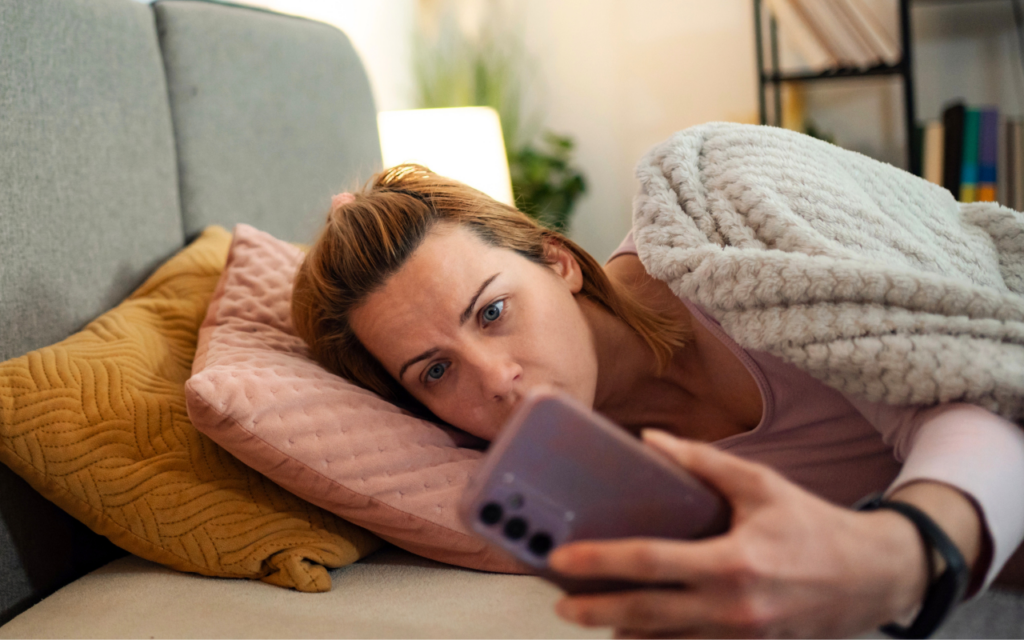
What’s behind this, Hassan suspects, is the growing role of social media, which is riddled with misinformation, as a source of guidance about health. “I think the worst part is that people have figured out how to make money off of this,” Hassan says.
In her research on vaginal health content on social media, she’s seen posts selling everything from vaginal deodorants to cleansers to makeup, all part of a larger “vagina industry” that aims to help consumers improve the look or scent of their vagina.
Unfortunately, many of these products are not only ineffective but also lead to serious side effects, including vaginal rashes and burns or disturbance to the healthy bacteria in the vaginal canal. “When you’re putting in all these random products in there,” Hassan says, “you’re upsetting that delicate balance and then causing more issues.”
Promotions for these products also teach young women and girls to see their bodies’ natural condition as “gross and unhealthy”, pushing the false idea that a healthy vagina must be free of odor and discharge.
Meanwhile, most users aren’t equipped to properly fact-check what they encounter. A 2024 study, for example, surveyed young women about the health information they see on TikTok, and while almost all participants reported that they believed health misinformation was prevalent on the platform, only about half thought they’d actually been exposed to it themselves.
Most participants also rated themselves as less susceptible to believing health misinformation than others. Because of this false sense of security, lead author of the study Ciera Kirkpatrick says, “[Participants] may be less cautious themselves when they encounter things that are potentially misleading.”
Health providers can also only do so much to counteract this influx of misinformation, she adds.
“With social media, there’s just so much content constantly,” says Kirkpatrick. “It’s kind of this proliferation of information that’s hard to control.”
The doctor-patient divide
When patients rely too much on the Internet for health information, this can actually damage their relationships with health providers. Obstetrician-gynecologist Gianna Seeland, for example, says her patients often arrive with their own beliefs about the diagnosis or treatment they should receive and then become upset when Seeland disagrees.
“Having patients come in anchored to that idea that that’s what they need, it can be very difficult to explain to them why it’s not necessary,” she says. “You can feel that there’s a distrust developing between you and the patient because they think you’re giving them the wrong advice.”
Still, Seeland doesn’t blame her patients for seeking out guidance online. “I think it comes from a good place, that patients are just trying to understand their symptoms,” she says.
Patients may also feel like gynecologic issues in particular are too sensitive or embarrassing to discuss face-to-face with providers. “Social media is a nice way to be able to get information related to topics that might be a bit taboo or stigmatized,” adds Kirkpatrick.
The medical system also tends to give less priority to women’s health, making female patients more likely to be dismissed by providers and, as a result, more hesitant to seek professional advice. Plus, Hassan points out, the medical system’s disinterest in female patients’ needs is what makes this misinformation so easy to spread in the first place.
“These myths get propagated because vaginal health is not a well-funded area,” she says. “There’s still so much that we don’t know about… I wish we lived in a time where it took more of a priority.”
Stay tuned for the next instalment in this series, where we dig more into how to spot health misinformation online!


Zoe Cunniffe