
I have spent my career advancing women’s leadership. Long before I became President
and CEO of CARE Canada in 2020, I had the opportunity to build teams and organizations
that supported it and mentored the next generation of women stepping into it. My focus
was on the kind of leadership the world tends to recognize – the kind that comes with a
title and an office. Getting more women into those spaces mattered. It still does. However,
it is only part of the picture. My work with CARE Canada showed me another part of a much
larger picture.
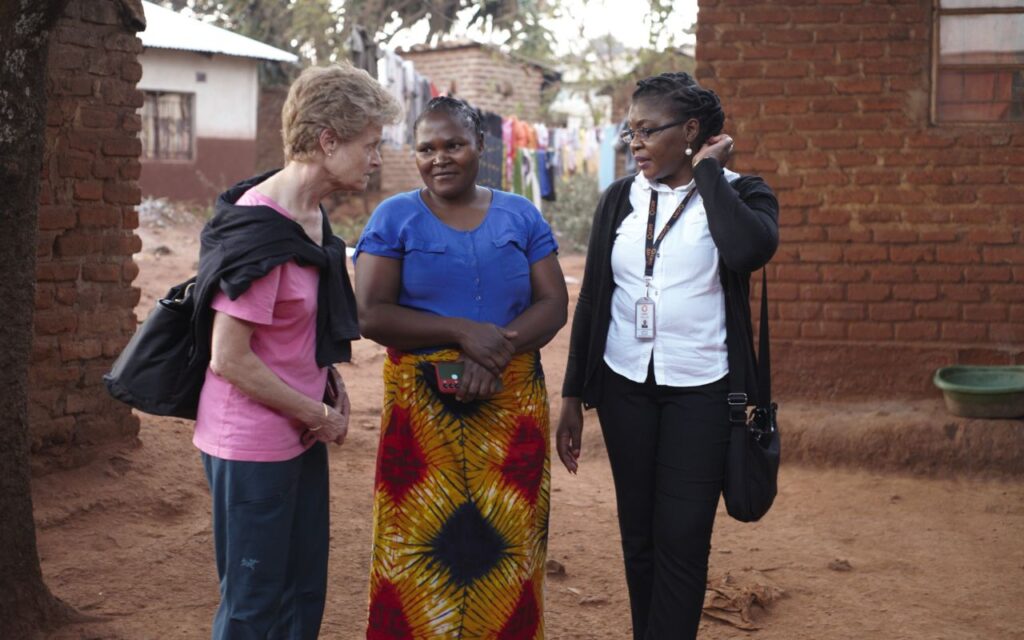
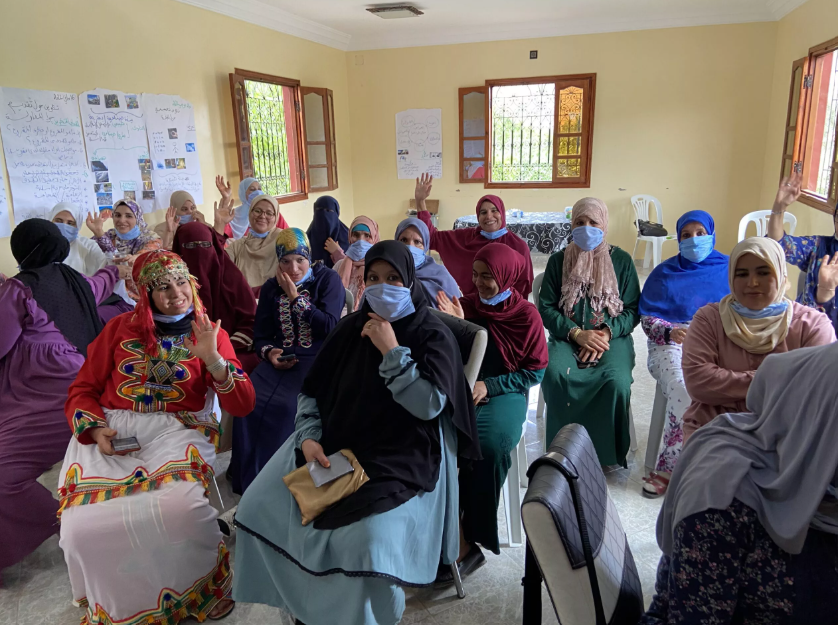
In places like Ukraine, Zambia, Syria, and Morocco, I have had the privilege of meeting
women who are organizing food distribution after emergencies, advocating for girls’
education, and finding creative ways to stabilize their communities in moments of stress.
They are not appointed to these leadership roles. They step into them because the moment
invites a call to action. And women answer that call.
A few years ago, during a visit to Zambia, I met Loveness. She embodies that leadership
spirit. She is a community entrepreneur with Live Well, a social enterprise founded by
CARE to equip women with health expertise, entrepreneurial skills, and the confidence to
run a business. During my visit, she shared how this support has enabled her to secure her
children’s education, build her independence, and create new opportunities for her family.
“My friends say I am a superwoman,” she told me quietly.
I smiled. She deserved that well-intended praise. But inwardly I thought, this is exactly the
problem. Here is a woman leading with strategy, empathy, and determination, and the
most the world has offered her is the label of a DC comics character.
I have always ‘known’ that women lead in profound, undervalued ways. What I have not
fully grasped until joining CARE was the scale of this form of leadership: how many women,
in an infinite number of places, are lifting up their families and communities – and how the
world fails to see this as ‘leadership’.
Women across the globe, including here in Canada, carry disproportionate responsibility
for the well‑being of our communities. We fill gaps in social services, and shoulder invisible
care work that keeps families afloat. Yet women’s leadership is often dismissed as
helping, volunteering, or being a dutiful caregiver or neighbour rather than what it truly is:
strategic, adaptive, community‑anchored leadership.
We celebrate leadership when it shows up in boardrooms and overlook it when it shows up
in other important places – living rooms, shelters, or crisis response networks. We reward
leadership that is formal, yet undervalue leadership that is relational, intuitive, and
grounded in care. Research by CARE finds that 91 per cent of women surveyed in conflict-
affected countries take active, leading roles to protect and support their communities. Yet
only 0.04 per cent of the 7.8 million media stories on conflict published between 2013 and
2023 talked about women leaders. Women are doing the work. The world is simply not
paying attention.
Witnessing the way women’s leadership is viewed has brought a shift in me. I have stopped
assuming leadership needs to come with a title and see how often it is borne from people
responding to the realities in front of them, long before an organization acknowledges it.
And I have begun to ask, why our systems continue to overlook the half of our communities
who are making an impact – now.
We are living in a moment of extremes: escalating climate shocks, deepening inequality,
and rising violent conflict. Yet there is another reality – one of resilience, and the quiet,
steady progress that women leaders create every day in families, communities, and
economies. Investing in women’s leadership is how we bridge these two worlds. It is how
we move from being consumed by crisis to cultivating solutions, from reacting to
emergencies to building futures that are safer and fairer.
Investing in women’s leadership is not an act of charity. It is an act of strategy.
When women lead, communities stabilize. When women lead, systems are more humane.
When women lead, solutions are more sustainable.
For that to happen, we must expand our definition of leadership. We must value forms of
power without titles or credentials. We must build systems that recognize expertise borne
from lived experience. And we must ensure that women have the resources, safety, and
opportunities needed to continue doing what we have always done: lead.
I came to CARE Canada with a career’s worth of commitment to women’s leadership. The
women I have met in some of the world’s most challenging places expanded my
understanding. I am better for it, and our world will be too – when we learn to see what
has been in front of us all along.


Barbara Grantham