

There’s a version of motherhood many women are handed long before they ever live it – one that’s polished, selfless, and paints a picture of an idealized experience. But in recent years, a different conversation has been taking shape; one rooted in honesty and the reality that love and struggle can exist side by side.
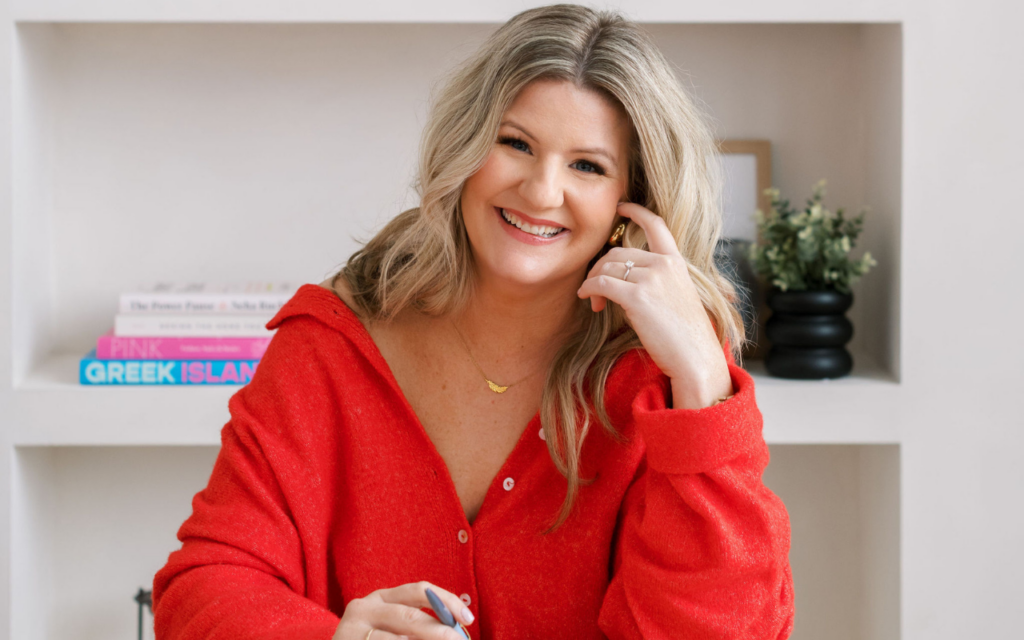
Libby Ward has been speaking openly about that reality for years. Through her ever-growing online community, she’s helping women give voice to the parts of motherhood that are often kept quiet: the struggles, the guilt, the moments of feeling like you’re barely holding it together.
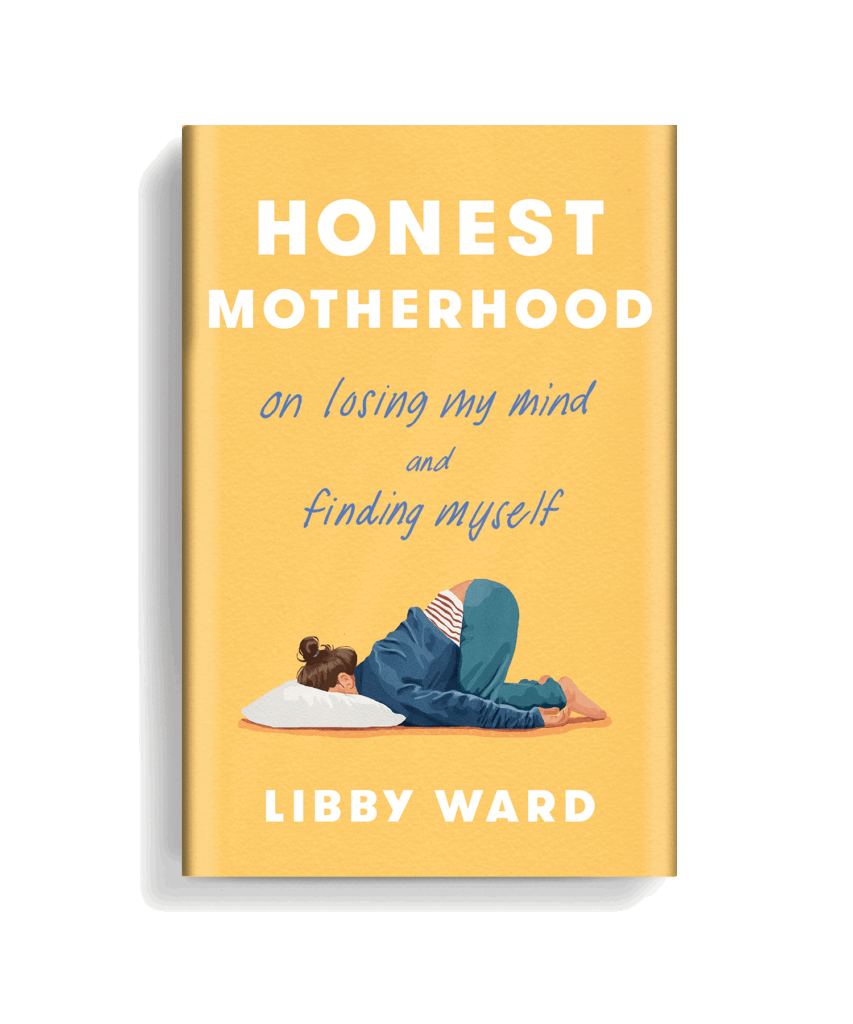
And now, her new book, Honest Motherhood: On Losing My Mind and Finding Myself, takes that honesty even further.
We sat down with Libby to learn more about what honest motherhood really looks like, how she navigated the gap between expectation and reality, and why telling the truth can be so freeing.
THT: One of the things I’m always curious about is how authors think about, and describe, their own work. How would you describe the book to somebody?
Libby Ward: It’s a great question. I would definitely describe it as a memoir.
It’s really about all the ways that I sort of lost it in motherhood, and how my self-sacrificing, over-functioning, people-pleasing ways were catching up with me. I realized that I couldn’t actually do it all. I found myself in the rubble, and then clawed my way out by being radically honest with myself about my needs, my capacity, the difficulties I faced, and what I could actually do about them.
It’s also a look at the cultural story of motherhood – how our culture and the systems around us affect our experience, as well as our personal histories and how our own childhoods shape the way we move through motherhood.
THT: What was your relationship like with the idea of motherhood before you had your kids, and how did that change?
Libby Ward: Before becoming a mom, my understanding of motherhood was very different from the reality. I was surrounded by women who only spoke of the positives – especially in my rural community and church, where motherhood was put on a pedestal. It was presented as fulfilling, joyous, life-completing work. And yes, those things exist, but what I didn’t see was the honesty about the difficult parts.
Then I had my daughter. Sure, people were excited at first, but very quickly she became ill and was hospitalized. I stayed in the hospital with her, physically recovering myself, yet completely invisible – not a patient, not really supported, just there to care for her. I got mastitis, had no help, and felt completely exhausted, guilty, and invisible. I remember crying in the shower, looking at myself and thinking, How is this my reality?
I went from being this glowing pregnant person, celebrated by everyone as I joined “Club Motherhood,” to feeling invisible, exhausted, and guilty for feeling exhausted, while simultaneously wanting someone to care that I was not okay. I loved my child, but I wondered if I even mattered. That was my initiation into motherhood.

THT: You describe your “breaking point” in the book, which happened shortly after your second child was born. What was that time in your life like?
Libby Ward: I was working part-time as an educational assistant. My partner was a police officer working rotating shifts – nights and days – so he was rarely home, and when he was, he was often sleeping. I was in charge of the children and managing the invisible mental load of everything in the house. On top of that, I was in school part-time, caring for both of my disabled, aging parents, and volunteering at my church.
In the first six months after my second child was born, I was deteriorating day by day but keeping up the facade: nice Facebook posts, taking my family to church in matching outfits, talking about the positives, organizing volunteer initiatives. In public, no one would have guessed I was deeply depressed, full of rage, and resentful of everyone around me.
One night in the winter, when I was coming home from a charity shoebox packing party, about 10 shoeboxes fell out of my trunk when I got home. Everything – broken candles, broken glass – spilled onto the icy ground. I knelt down to put it all back together, and in that moment, I realized: I am this shoebox. I am broken inside. I cannot keep up the facade. I cannot enjoy the life I’ve built.
That was the first time I was honest with myself: I couldn’t do it all, I wasn’t enjoying motherhood, I wanted to run away, and I was depressed. After that Christmas season, I finally sought help.
THT: You touch on the idea of this “ideal mother” – the perfect facade, the Facebook posts, the appearances we maintain. Why do you think women push themselves so hard to meet that ideal?
Libby Ward: I think there are two main reasons. First is social conditioning. Everyone around us is doing it, and social media amplifies the pressure: Pinterest moms, cook-from-scratch moms, expert advice everywhere. We see others living a certain way and think we need to do the same to be good mothers.
The second reason is internal. For me, therapy revealed that childhood experiences shaped this drive. I had to be responsible for my mom from a young age, and I learned that making everyone happy was how I stayed attached and belonged. That became my measure of self-worth: being good, working hard, self-sacrificing, being the martyr. Even women without trauma often grow up learning to suppress their needs, prioritize everyone else, and fear they’re not good enough.
So, social pressures and internalized conditioning combine. Both need to be acknowledged. Society’s expectations push us to overfunction, but our own history teaches us to comply and sacrifice. That mix creates what I see as an epidemic of burnt-out mothers who struggle to set limits, say no, and prioritize themselves.
THT: What was the writing process like for you? Was it cathartic? Was it difficult to relive some of those moments?
Libby Ward: Aside from motherhood, it was the hardest thing I’ve ever done. To start, I struggled with imposter syndrome – that little voice saying, Who are you to write this book? You’re not an expert, not a therapist. At first, that made my writing feel like I had something to prove. I tore my own voice from the manuscript, and it became bland, a book no one would want to read.
It took about six months and encouragement from my editor to realize the power in my own voice, in telling my story exactly the way I speak online and in real life. Once I embraced that, the writing became easier. I was just telling my story in my voice, but figuring out what to say when, which stories to tell, and what details to give was challenging.
So yes, writing was hard, but it was also cathartic. I learned things about myself, my life, my motherhood, and my children as I went.
THT: You mentioned your online voice! You have amassed a large following on TikTok and Instagram by sharing your experiences online. Can you talk about what that community means to you, especially when you’re sharing vulnerable experiences that maybe women weren’t saying out loud before?
Libby Ward: Before I started sharing online, I felt a lot of shame about struggling to enjoy motherhood or dealing with its hard parts. There’s this taboo that you must love every moment – otherwise people assume you don’t love your children or yourself, or that you’re a “bad mom.”
My mission has been to show other mothers that two things can be true at once: you can love your child and still struggle with aspects of motherhood. Sharing online helped me realize I wasn’t alone and broke the bubble where everyone pretended motherhood was always sunshine and rainbows. At the same time, my sharing helped others realize they weren’t alone either, creating a feedback loop: less shame leads to more honesty, which leads to even more connection and support.
This kind of openness unravels the tight bind of shame many women live with. Building this community has been everything to me. It’s changed my life. More importantly, it has helped women validate their experiences and take action to care for themselves, to feel whole, and to realize they really matter. That’s my goal: to help women see that their experiences and needs are valid, and that they can do something about it.
THT: Having gone through this process, what does honest motherhood look like to you now?
Libby Ward: When I first started sharing online, I thought honest motherhood was simply talking openly about the hard parts of motherhood with one another. And that’s still true – there’s power in that. But through therapy, healing, and writing the book, I’ve realized what mothers really need most is a daily practice of honesty with ourselves.
Every season, every day, is different. Honest motherhood now means waking up and asking myself: Did I sleep enough? Is my to-do list realistic? Do I have the capacity to take on this project, knowing my ADHD and my child’s needs? It’s about honestly assessing what I can handle and adjusting accordingly.
It’s not about setting one boundary or making one decision and moving on. It’s about showing up every day, intentionally stating the truth to myself or others, and deciding what to do with it instead of spiralling. Honest motherhood means being radically honest about what’s important that day, accepting changes, and responding to challenges as they come.