
Love has a way of surprising us – sometimes it’s fleeting, and sometimes it comes back when we least expect it.
In her new memoir, If Only Love, author Shelley Saywell tells the story of a high school romance she lost – and then found again decades later. What starts as young love grows into a deeply moving story about an unlikely reunion and the life that followed, set against the heartbreak of eventually losing her husband Daniel to cancer.
The book moves between the past and the present, showing just how love shapes who we are, even in the hardest moments.
We caught up with Saywell to hear more about her writing, the lessons of loving and losing, and why second chances at love are worth holding on to.
THT: For anyone who isn’t familiar with your new book, how would you describe it?
Shelley Saywell: The memoir is, primarily, a love story. But it’s also a story of grief. I would describe it as a book about the kind of connection you make with someone in this world. When you make it, you just hold on. That takes a certain amount of risk and courage on both parts. As you know, life throws things at you, but for me, it’s about what remains when everything has been thrown at you. What remains, and what is worth everything to me, is loving someone deeply and knowing them deeply.
THT: Can you give us a glimpse into your love story with Daniel?
Shelley Saywell: I first fell in love with Daniel in 1972, in Japan. It was a high school romance. We completely lost touch – this was long before Facebook. Even as a documentary filmmaker and researcher, I had no idea how to find him. That’s common with international students. You graduate, everyone scatters around the world, and after a few years, you lose track of each other.
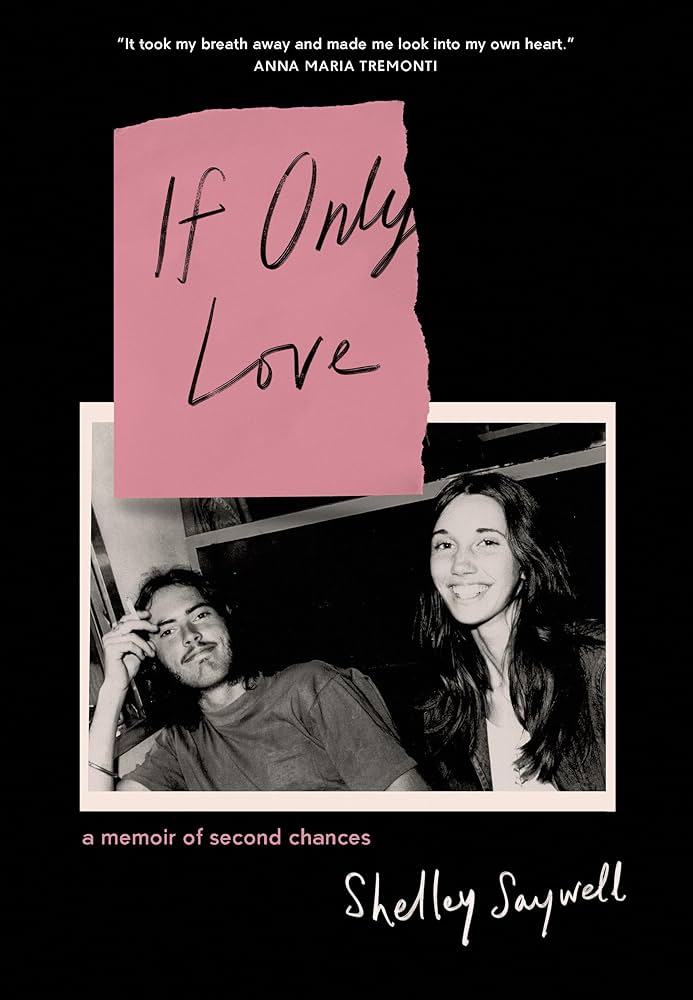
For years, when I was feeling low or struggling in relationships, I would look at a photograph I had of him – the one that’s now on the cover of the book – and wonder what had happened to him. I remembered that time in my life as when I was happiest.
Then, in the early 2000s, I reconnected with him through Classmates.com. I had signed up and forgotten about it. Six months later, I got an email notification that a new classmate had joined. It was him. That began a new chapter of communication that changed our lives almost overnight.
THT: The book isn’t written linearly. It moves across timelines and memories. How did you piece the story together and create that flow?
Shelley Saywell: I was in very deep grief when I began the book – so deep that I wasn’t really leaving my house for a while. One of the things about grief – and I know everyone experiences it differently – is that it’s very hard to stay in the present. In the early period, the present is too painful. The only way I could escape it was by going into memory, because that allowed me to be with my love when he was alive.
So I did a lot of that. Then the reality of the situation would hit me in an incredibly painful way and pull me back into the present. Around that time, I also rediscovered our emails from when we reconnected years later, which existed on yet another timeline.
So the book moves across three timelines: the year we were 17 in Japan, the year in our 40s when we reconnected and fell in love again, and the year of his illness and death.
It felt natural to write it that way because that’s how my mind was working. I don’t think we think in linear patterns. Our thoughts are tangential. One memory leads to another. In my grief, time made no sense. I was 17 again, then in my 40s again, then in the hospital with him. It was all happening at once in my heart and mind, so I wrote it that way.
THT: You’ve spent your career telling other people’s stories through films and documentaries, keeping them at the centre. What was it like to flip that and put yourself at the centre of the story?
Shelley Saywell: Completely different. I had always written – film proposals, scripts – so writing itself wasn’t foreign to me. But turning the lens on myself was very, very different.
When I was making films, I was passionately involved in those stories. No matter how hard they were to fund or how difficult they were to get on camera, it always felt worth it because they were stories the world needed to hear. It would sound a bit pompous to say that about myself.
So I wrote the book for myself. I wasn’t thinking beyond getting through each day and trying to dive into what I was feeling. The biggest difference, though, was the decision I had to make to be incredibly honest. As a filmmaker, I always mined for truth. I tried to get the people I was filming to open up, but I was also very protective of them. There were things they didn’t want to share or weren’t comfortable sharing.
I decided very early on that if I was going to do this, I had to lay it all out. I had to be completely honest about the ground I was standing on. Otherwise, what was the point?
THT: This is a very personal story, the one of your and Daniel’s love. What made you decide that this story needed to be told and shared publicly?
Shelley Saywell: I never really wrote it to be published. I wrote it for me. But it’s also been part of a larger process of both letting go and holding on. Letting go of someone you love when they die, to free them and to free yourself, while holding on because you carry them in your heart, and that becomes part of who you are. You have to process all of that. The book was the same way. I had to write it, then let it go, then it came back, and now it’s out in the world. The most amazing part has been the emails from women I’ve never met, in the States and in Canada, sharing their love stories with me.
THT: What do you hope readers take away from your story?
Shelley Saywell: I kept telling my team I just hoped the book wouldn’t be too sad. And they said, no, it’s not – because just when it gets excruciatingly sad, there’s so much joy woven in. I hope readers feel that.
Of course, my story doesn’t have the ending I wanted, but I don’t regret a single moment. And when you get a second chance, you grab on. To quote Sheryl Crow, whose song I listened to until I wore it out, “If only love comes around again, it will have been worth the ride.” And I can tell you, absolutely, it was worth the ride, 100 per cent. There are things I might want to change in my life, but that is not one of them.