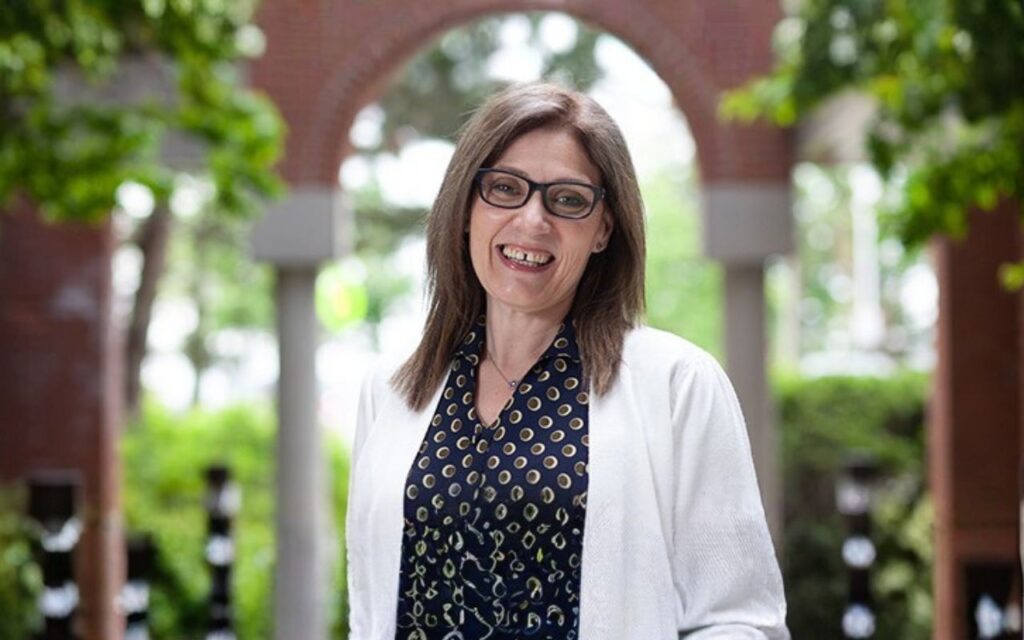


In our culture of “Top 30 under 30” and “20-something disruptors,” it’s easy to internalize the idea that success has an expiry date. But Helen Hirsh Spence is living proof that meaningful work doesn’t end at 40, 50 or even 65, and that the story of midlife is one of transition, not decline.
At 76, Hirsh Spence isn’t retired like some 90 per cent of other Canadians in their seventies. Instead, she’s busy redefining what growth, contribution and relevance look like in later life.
While she went from high school principal and nonprofit board leader to social entrepreneur and age-advocacy consultant, this wasn’t the result of some dramatic reinvention moment, but a gradual reorientation over time.
Hirsh Spence’s journey reflects a broader shift happening for many women as they move through midlife. Rather than stepping away from meaningful work, many are channeling decades of experience into new forms of leadership, mentorship and impact into their later years.
The path, however, is rarely frictionless. Cultural expectations around age and relevance can still shape how women are perceived, even as their knowledge and perspectives deepen.
That was part of Hirsh Spence’s motivation for creating Top Sixty Over Sixty – an initiative designed to help businesses address age biases and myths, and leverage the talent of the multigenerational workforce, as well as empower mature adults to build on their knowledge, skills, and experience to create purposeful new paths.
Moving through transitions, not decline
It was when Hirsh Spence attended a high-school reunion around the age of 60 that the idea first struck her. As she saw her “incredibly smart and capable” classmates, she quickly realized they’d disappear from influence and visibility as they left the workforce.
“I thought, ‘Oh my god, this will happen to a whole generation of us’ … That’s really what the trigger was.” Recognizing that expertise and wisdom were being lost – not because people were incapable, but because society was structured to obscure their value – was her awakening.
Today, Hirsh Spence focuses on shifting how we think about aging: not as a downward slope, but as a continuum of purpose, contribution and evolving identity.
Everyday ageism in society
Societal attitudes around aging continue to lag behind demographic realities. Today, people are living longer than ever; life expectancy now often exceeds around 100 years, meaning most Canadians will see several decades of life after traditional retirement age.
Yet ageist attitudes remain pervasive: 70 per cent of Canadians aged 50 and older report experiencing at least one form of everyday ageism, which Hirsh Spence defines in her TEDx Talk as “The only discriminatory practice that is still socially acceptable, unchallenged and largely unnoticed.”
Everyday ageism can include things from negative assumptions about ability and worth to all sorts of qualified comments, like Hirsh Spence’s example: “‘Oh, you look good for 56’ … but if you use that phrase with any other kind of bias, people would be horrified. It’s just gone under the radar.”
The workplace is a common site of these biases. Employers often hold stereotypes that older workers are less productive or less adaptable, which can lead to discrimination in hiring, training opportunities and advancement.
And these attitudes can chip away at confidence long before women face structural barriers. For many, there’s an internal loss of certainty that they belong or can contribute meaningfully.
Ageism is also gendered
Women often encounter ageism differently from men. Research shows that gendered age bias – where older women are perceived as less valuable sooner and more frequently than older men – is widespread. For example, older women are more likely to be excluded from training opportunities and judged as “past prime” earlier than their male peers.
This aligns with Hirsh Spence’s observation about the subtle yet constant pressure women face: “If I had a beer belly and a bald head, I would be considered distinguished as an older gentleman … but once women hit 50, they’re dismissed.”
Her insight underscores how ageism intersects with sexism, shaping not just what women get opportunities for, but how they in turn see themselves.
Longevity, purpose and the ‘new map of life’
Despite the workplace challenges older Canadians face, our labour force is aging: within about 25 years, workers 55 and older went from about one in 9.5 to one in every 4.6 workers. That means we have both opportunities and challenges – from labour shortages to the need for workplaces that value diverse age experiences.
Yet Canada’s cultural script still assumes life follows a neat arc: “Learn, earn, retire,” as Hirsh Spence aptly puts it, noting it’s a model that made sense at a time when life expectancy hovered around 62, but no longer matches reality.
Hirsh Spence argues that longer lives necessarily expand what a fulfilling career and purpose can be. As people live into their eighties and beyond, the choices available at 40, 50 or 60 become more than detours from a “primary path.” They instead become essential chapters of a full life.
Her message for women navigating these transitions? Disregard your chronological age. Aging isn’t a countdown; it’s a count-up to wisdom, experience and unparalleled value. Hirsh Spence encourages a reframe from fear and decline to intentional design of the decades ahead, in a “new map of life.”
And that message reminds us that transitions, like aging and career evolution, are not about being “too old” to contribute. They’re about reimagining what it means to live a full life – long, layered and rich with potential well beyond traditional timelines.

Emma Caplan-Fisher